ROVE Dash Cam Review: Five Models Compared by Driving Need
A research-led comparison of five ROVE dash cams, including recording coverage, parking power, app feedback, support, and reasons to skip each model.
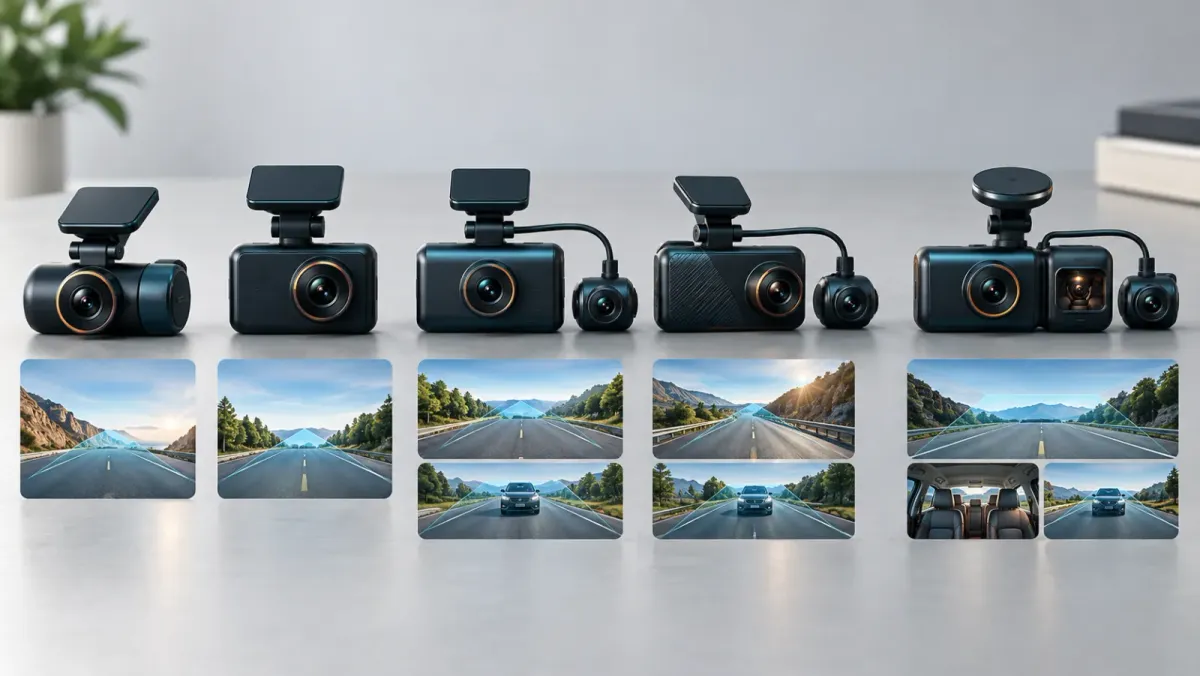
ROVE offers front-only, front-and-rear, and three-channel dash cams. The right model depends on required views and acceptable installation work. The DUAL favors broad coverage, the DUAL PRO adds detail, and the R3 adds a cabin camera.
Research disclosure: This comparison uses current product pages, manuals, retailer feedback, and independent reviews. DashCamPilot has not physically tested these cameras.
Which ROVE dash cams are currently available?
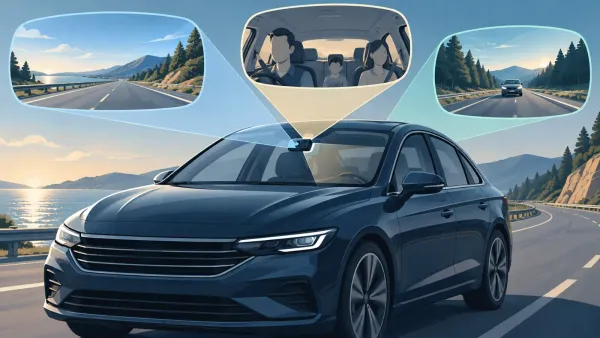
ROVE's current lineup contains five camera systems. Two record only forward, two record forward and rearward, and one adds cabin coverage.
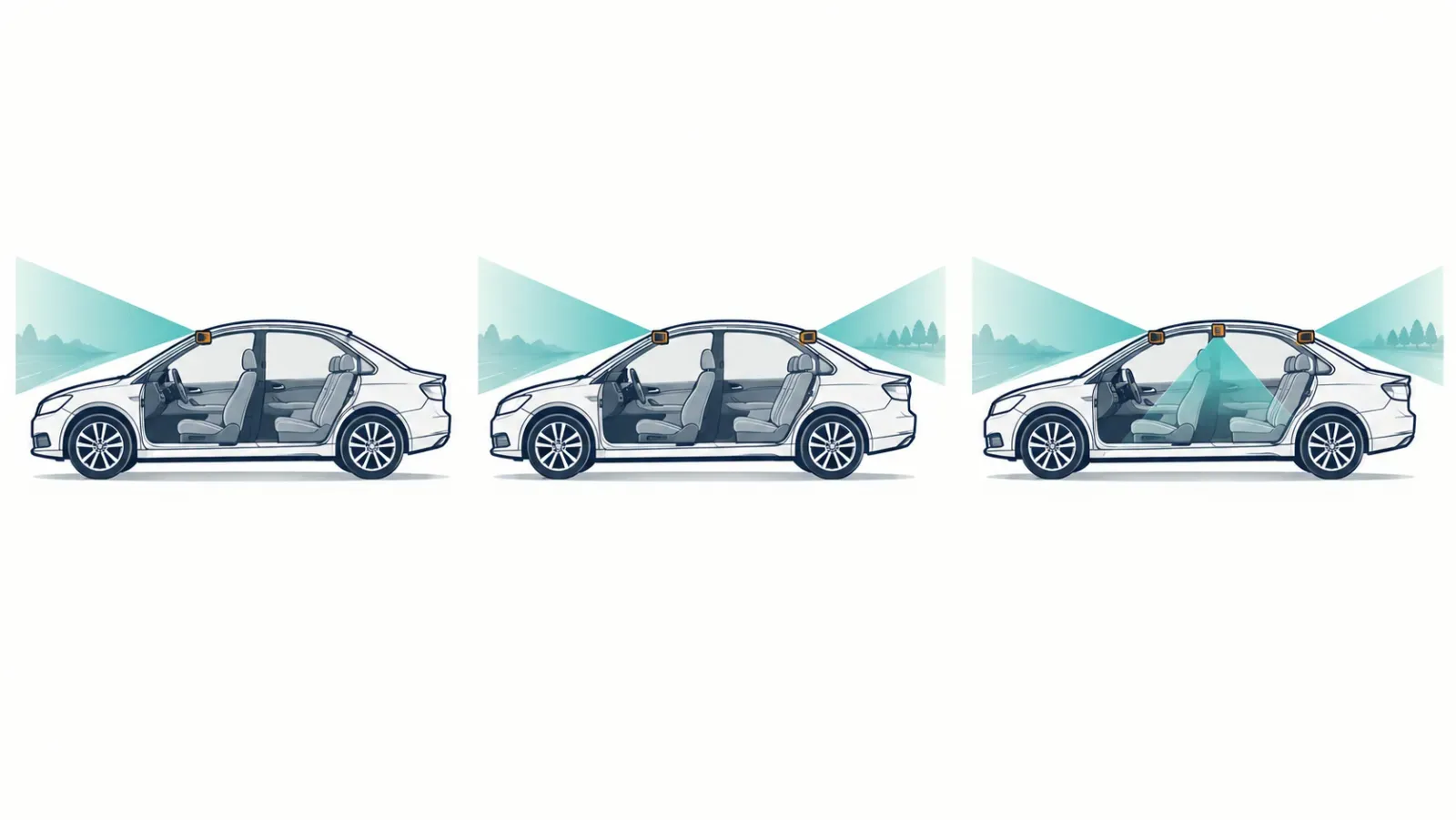
Left: front-only coverage. Center: front and rear coverage. Right: front, cabin, and rear coverage.
| Model | Camera coverage | Documented recording | Main distinction |
|---|---|---|---|
| R2-4K | Front only | 2160p output at 30 fps | Wi-Fi 6 and simple single-camera setup |
| R2-4K PRO | Front only | 2160p output at 30 fps | Dual-band Wi-Fi and 1440p at 60 fps |
| R2-4K DUAL | Front and rear | Upscaled 2160p front, 1080p rear | Includes a rear camera and 128 GB card |
| R2-4K DUAL PRO | Front and rear | Native 2160p front, 1440p rear | Higher-resolution sensors and included CPL filter |
| R3 | Front, cabin, and rear | 1440p, 1080p, and 1080p | Touchscreen and infrared cabin illumination |
The official store marked the R2-4K PRO sold out during this review. Availability can change faster than a camera's documentation.
This lineup does not produce one universal winner. Start with the required directions, then use our dash cam buying criteria for the exact bundle.
Is the R2-4K or R2-4K PRO enough for front-only recording?
The R2-4K and R2-4K PRO are reasonable only when forward coverage solves the whole problem. Neither package records behind the vehicle or inside the cabin.
Both models use a Sony IMX335 5 MP sensor and advertise 2160p output at 30 frames per second. Both also include GPS, a 150-degree lens, a supercapacitor, USB-C, and support for cards up to 512 GB.
The R2-4K advertises Wi-Fi 6 transfers up to 6 MB/s. The PRO lists dual-band Wi-Fi up to 8 MB/s and also offers 1440p recording at 60 frames per second.
The important limitation is sensor resolution. A 5 MP sensor does not natively capture the 8.3 MP frame required for 3840 by 2160 output. Treat the 4K label as an output format, not proof of native 4K detail.
Choose either front-only model if:
- Rear or cabin footage is not essential.
- You want fewer cables and a simpler installation.
- You accept local recording without a rear channel.
Skip both if: an incident behind the vehicle could be as important as one ahead.
What does the R2-4K DUAL add?
The R2-4K DUAL adds a separate rear camera and a larger front sensor. It is the most straightforward ROVE choice for drivers who need two directions.
ROVE says its IMX675 front sensor records native 2.5K and processes that video into 2160p output. The rear camera records 1080p. That distinction matters because the product name alone suggests more captured front detail than the sensor provides.
The package includes a 128 GB card, front and rear mounts, cables, and trim tools. It supports cards up to 1 TB and advertises 5 GHz file transfers up to 20 MB/s.
An independent Tom's Guide review found easy setup and useful daytime footage. It also found weak low-light recording, distracting default screen behavior, and loud voice prompts.
Choose the DUAL if: you prioritize practical daytime front-and-rear coverage and a complete basic bundle.
Skip it if: poorly lit roads are common, or rear low-light detail is an essential requirement.
Is the R2-4K DUAL PRO worth choosing instead?
The DUAL PRO is the strongest documented ROVE option for front-and-rear recorded detail. Its sensor and resolution claims are materially different from the non-Pro DUAL.
The DUAL PRO manual lists an 8 MP Sony IMX678 front sensor and 5 MP IMX675 rear sensor. It documents 2160p front and 1440p rear recording at 30 frames per second.
The package supports cards up to 1 TB. ROVE includes a 128 GB card and a CPL filter, but the parking hardwire kit remains separate.
TechRadar's hands-on review found a convenient suction mount, simple setup, and helpful transfers for larger files. It described front footage as crisp and rear footage as serviceable.
Choose the DUAL PRO if: front-and-rear detail matters more than minimizing cost or equipment.
Skip it if: the non-Pro DUAL meets your coverage needs, or you do not want larger high-resolution files.
Who is the ROVE R3 designed for?
The ROVE R3 is for drivers who need front, cabin, and rear views together. Rideshare work and passenger-facing use justify its extra camera and wiring.
It records 1440p forward, 1080p inside, and 1080p rearward at 30 frames per second. Its front-only mode can produce 2160p output, but that is not the simultaneous three-channel setting.
The R3 adds a 3-inch touchscreen and four infrared LEDs around the cabin lens. It also includes GPS, dual-band Wi-Fi, a supercapacitor, and support for cards up to 512 GB.
Cabin recording creates privacy and audio-consent responsibilities. A third channel also increases storage use and the number of clips involved in reviewing one event.
Choose the R3 if: passenger interactions are part of the event you need to document.
Skip it if: you never need cabin footage, or a simpler two-camera installation would cover every important direction.
What should you know about ROVE parking mode before buying?
Automatic ROVE parking mode needs a compatible three-lead hardwire kit. The standard accessory-socket cable cannot keep the camera powered after a switched socket turns off.
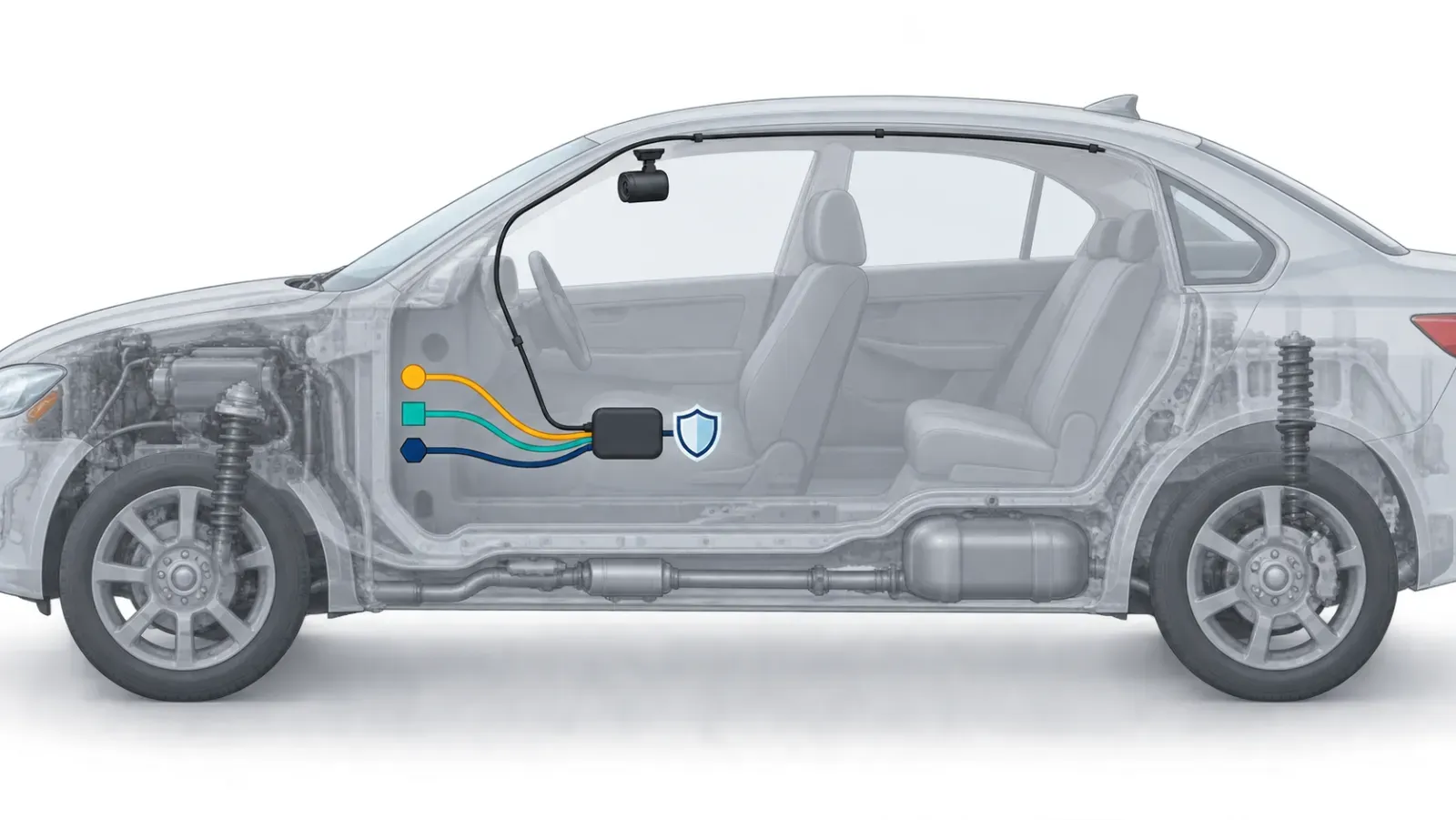
Constant power, ignition-switched power, and ground pass through a protected hardwire module before reaching the camera.
The current R2 manual documents time-lapse, motion, and collision-only parking recording. The available choices can vary by model and firmware.
The hardwire kit connects constant power, ignition-switched power, and ground through the fuse box. It also provides voltage conversion and a low-voltage cutoff.
Do not connect a dash cam directly to battery terminals. Our installation guide explains vehicle-specific routing and mounting considerations.
Parking takeaway: Buy the camera and its supported power path as one system. A parking-mode menu cannot replace constant power.
How useful are the ROVE app, GPS, and storage tools?
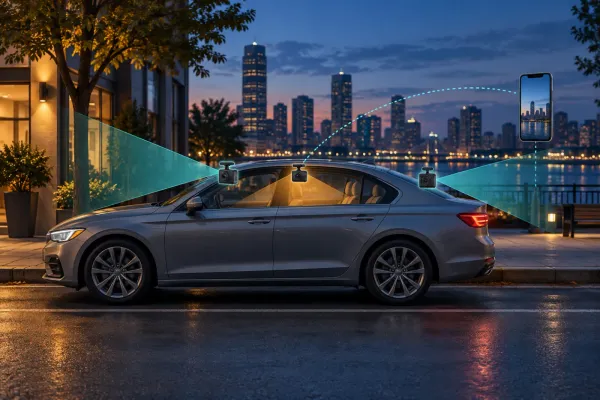
ROVE provides two retrieval paths: nearby phone access and direct card access. The app is convenient, but it should not be your only plan for recovering important footage.
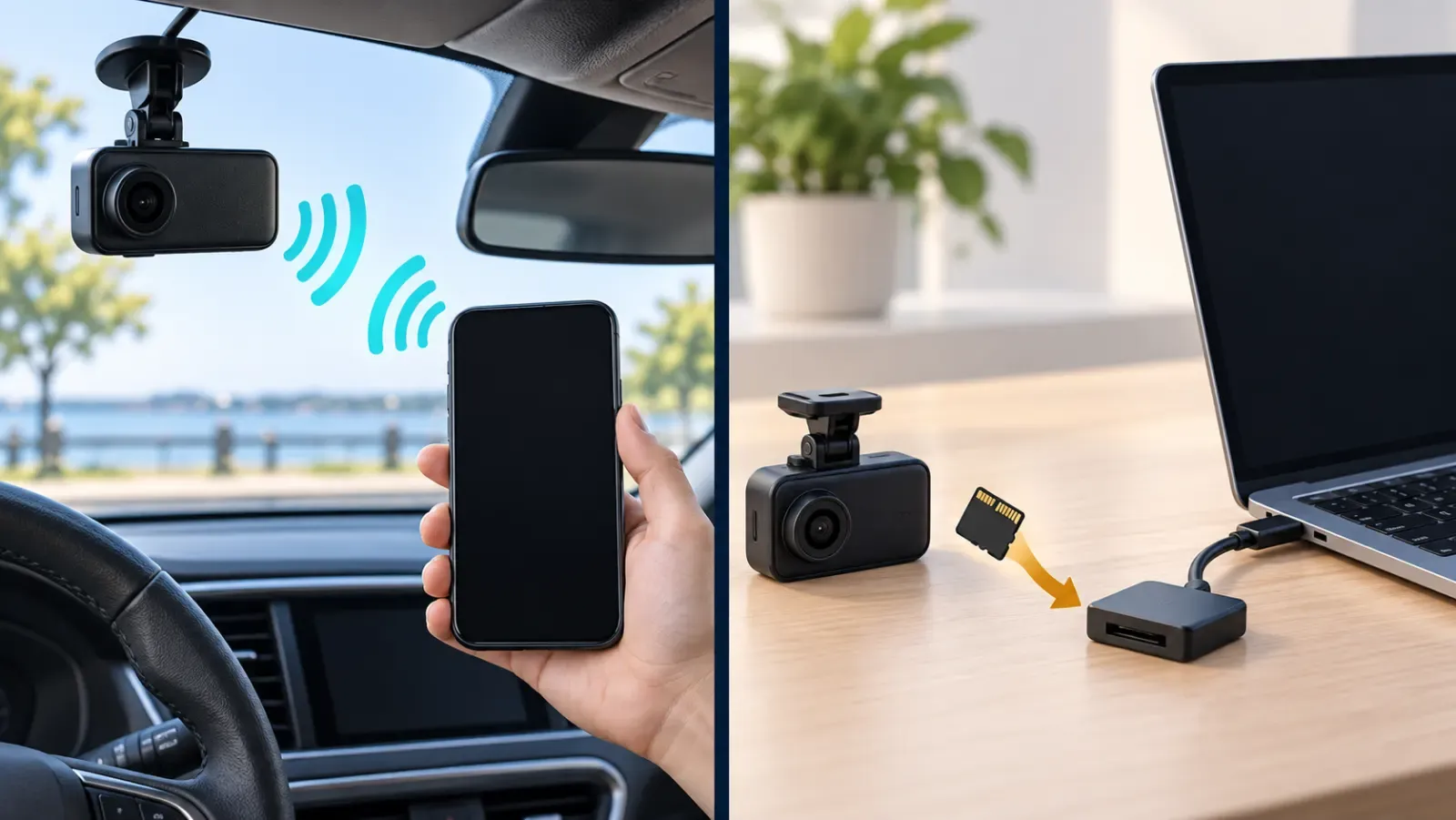
Left: a nearby phone connects directly to the camera. Right: the memory card provides a separate computer retrieval path.
The app supports all five current models. It offers live view, clip management, settings, GPS data, and firmware updates over the camera's local Wi-Fi connection.
The current Google Play listing showed a 4.2 rating from 11.4K reviews. Visible recent reviews repeatedly reported login, discovery, connection, and loading problems.
ROVE also publishes a desktop GPS player and a manual firmware process. Those alternatives matter when the phone workflow is unavailable.
Use the exact model's capacity and choose a compatible high-endurance dash cam card. Format it in the camera, then rehearse saving a harmless clip.
What do customer reviews and ROVE support terms reveal?
Customer feedback is encouraging but too limited to establish long-term reliability. Read it as a set of ownership themes, not a performance test.
Best Buy showed 4.8 from 11 reviews for the R2-4K DUAL during research. Picture quality and installation ease were the most common positive themes.
That sample was small, and many visible reviews were marked incentivized. It cannot prove how the camera performs across years, vehicles, climates, and firmware versions.
ROVE publishes a 30-day return period and one-year limited warranty. Registration, purchase proof, seller eligibility, shipping, and exclusions can affect a claim.
Support experiences vary. Confirm the seller, current return route, and warranty conditions before purchase, especially outside the United States.
Which ROVE dash cam should you choose?
Choose the R2-4K DUAL for uncomplicated front-and-rear coverage in mostly well-lit driving. Choose the DUAL PRO when higher recorded detail on both channels justifies the larger files.
Choose the R3 only when cabin recording is genuinely useful. Choose an R2-4K single-channel model when fewer cables matter more than rear evidence.
| Driving need | Best ROVE fit | Main reason to pause |
|---|---|---|
| Simple forward recording | R2-4K | No rear coverage |
| Faster front-only workflow | R2-4K PRO | Availability was limited during research |
| Everyday front and rear | R2-4K DUAL | Independent review found weak low-light recording |
| Higher-detail front and rear | R2-4K DUAL PRO | Larger files and separate parking hardware |
| Front, cabin, and rear | R3 | More wiring, storage use, and privacy duties |
No resolution label guarantees a readable plate in every scene. Lighting, motion, angle, exposure, glass, and compression still affect usable detail.
The safest conclusion is conditional. Define the view, installation, storage, and retrieval workflow before letting the model name settle the decision.