What Cars Have Built In Dash Cam Specification Chart By Year (2026 Factory Data)

Quick Answer
Factory built-in dash cams are available on select vehicles from Tesla (Dashcam/Sentry Mode), BMW (Drive Recorder), Mercedes-Benz (Dashcam), General Motors (Corvette PDR and Surround Vision Recorder), Genesis, Rivian (Gear Guard), and Toyota/Lexus. System capabilities range from impact-triggered clips to continuous multi-camera loop recording. Most factory setups require specific optional equipment packages, infotainment firmware activations, or user-supplied external USB storage drives.
Finding a car with a true built-in dash cam saves drivers from the frustration of dangling windshield power cords, failing suction cup mounts, and intrusive fuse-box wire taps. However, car buyers frequently assume that any modern vehicle equipped with forward collision cameras or a 360-degree parking monitor automatically records their driving footage. In reality, those optical feeds are almost always locked behind driver-assist safety firewalls. As of the 2026 model year, genuine factory-integrated drive recording remains limited to select models from automakers like Tesla, BMW, Mercedes-Benz, General Motors, Genesis, and select Toyota/Lexus trims, each governed by specific hardware packages, trim levels, and external storage requirements.

What Cars Have Built In Dash Cam: 2020–2026 Factory Specification

📤 Share Image
Factory-integrated drive recorders leverage either existing Advanced Driver Assistance Systems (ADAS) camera arrays or dedicated optical sensors wired directly into the central infotainment processor. The following specification chart indexes vehicles offering verified factory-engineered drive recording across the 2020 to 2026 model years, delineating optical channels, native resolution, capture triggers, and compulsory hardware packages.
Data Scope and Verification Standards
This reference data spans production model years 2020 through 2026 for North American specification vehicles, covering all relevant powertrain and engine configurations. Specifications reflect production line factory options, over-the-air (OTA) software feature unlocks, and OEM port-installed hardware docks. Factory drive recorder availability depends strictly on specific optional equipment packages (such as BMW Parking Assistant Plus or Mercedes-Benz Augmented Reality Video) and cannot be generalized across base trim levels. Always verify specific vehicle build sheets, Monroney window stickers, and physical glovebox USB/SD interfaces prior to purchase. Last reviewed: October 2026.
How to read this chart: The "Specification" column details the official OEM trade name and optical channel count (the number of synchronized angles recorded). "Value" denotes native video resolution and continuous frame rate. The "Notes" column establishes critical real-world dependencies, including external storage media requirements, mandatory package codes, and continuous loop versus incident-only capture rules.
Factory Integrated Drive Recorder Comparison Table
| Year | Model / Engine | Specification | Value | Notes |
|---|---|---|---|---|
| 2020–2026 | Tesla Model 3, Model Y, Model S, Model X (All Powertrains) | Tesla Dashcam & Sentry Mode (4-Channel) | 1080p @ 30–36 FPS | Records front, rear, and side pillar/repeater cameras simultaneously. Standard across all trims; requires user-supplied USB storage formatted to exFAT. |
| 2020–2026 | BMW 3, 5, 7, 8 Series, X3, X5, X7, i4, iX (All Engine Options) | BMW Drive Recorder (4-Channel Surround) | 1080p @ 30 FPS | Requires Parking Assistant Plus (Option 5DN) or Professional. Event-triggered (up to 40 sec total: 20 sec pre-collision, 20 sec post-collision) or manual trigger. Stores to internal flash or export USB. |
| 2021–2026 | Mercedes-Benz C, E, S-Class, GLC, GLE, GLS, EQS (All Powertrains) | MBUX Dashcam (1-Channel Forward) | 1080p @ 30 FPS (720p early 2021 models) | Requires Augmented Reality Video for Navigation (Option U19). Often locked behind a $200 digital store activation; requires dedicated high-speed external USB storage. Must manually re-enable loop recording per trip on select software revisions. |
| 2020–2026 | Chevrolet Corvette Stingray, Z06, E-Ray (6.2L V8, 5.5L V8, Hybrid) | GM Performance Data Recorder (1-Channel + Telemetry) | 1080p @ 30 FPS | Standard on 2LT/3LT, optional on 1LT. Cosworth-engineered system recording high-definition forward video synchronized with CAN-bus telemetry (speed, steering, RPM, G-force) and cabin audio. Requires SD card (FAT32/exFAT). |
| 2022–2026 | Cadillac CT4-V / CT5-V Blackwing (3.6L Twin-Turbo / 6.2L Supercharged) | Cadillac PDR / Drive Recorder (1-Channel Forward) | 1080p @ 30 FPS | Includes Daily Drive / Dashcam mode and Valet mode alongside track telemetry. SD card slot positioned in the glove compartment; continuous overwrite loop mode available. |
| 2023–2026 | Genesis G80, G90, GV70, GV80 (2.5T, 3.5T V6, Electrified) | Genesis Built-in Cam 2 (2-Channel Front & Rear) | 1440p QHD Front / 1080p Rear @ 30 FPS | Standard on upper trims in international and select North American model configurations. Internal high-endurance memory plus smartphone Wi-Fi direct export; continuous parking surveillance supported via secondary auxiliary battery. |
| 2021–2026 | Toyota Tundra, Sequoia, Crown, RAV4, Tacoma (i-FORCE, Hybrid, V6) | Toyota Integrated Dashcam (1-Channel Forward Dock) | 1080p @ 30 FPS (Full HD) | Factory pre-wired OEM accessory mounted behind the rearview mirror. Includes industrial micro-SD card (16GB standard); continuous loop recording, impact G-sensor lock, and parking surveillance. Fully tied into vehicle power bus without exposed wires. |
| 2022–2026 | Lexus NX, RX, TX, GX, LX (All Powertrain Configurations) | Lexus Integrated Dashcam (1-Channel Forward) | 1080p @ 30 FPS HDR | OEM pre-wired windshield dock; factory or port-installed option. Features automatic incident capture, adventure continuous recording, and parking surveillance mode with low-voltage cutoff. |
Footnote: Table reflects factory-integrated and factory-pre-wired hardware. Forward collision-avoidance ADAS cameras (e.g., Honda Sensing, Subaru EyeSight) cannot be accessed or written to external storage and are intentionally excluded.
Visual Specs: Resolution and Channel Breakdown
System architectures vary dramatically by manufacturer, dividing the market between comprehensive 360-degree perimeter systems and focused single-channel forward-facing cameras.
Number of camera feeds saved simultaneously by respective vehicle recording architectures.
Year-by-Year Factory Drive Recorder Changes Across Automakers
Factory-installed automotive dash cam systems have evolved from niche track performance utilities into complex, cloud-integrated vehicle security platforms over the past seven model years.
2020 to 2022: Telemetry Logging and Early Four-Channel Capture
Early implementation of built-in recording split into two distinct engineering philosophies. General Motors spearheaded the technology with the Cosworth-engineered Performance Data Recorder (PDR), featured primarily on the C7/C8 Corvette and Cadillac V-Series models. The PDR focused on high-bitrate forward 1080p video synchronized directly to CAN-bus telemetry, such as steering angle, braking pressure, engine RPM, and lateral acceleration. Concurrently, Tesla pioneered consumer vehicle security by repurposing its external Autopilot computer vision cameras, deploying Tesla Dashcam and Sentry Mode. This established the automotive industry's first consumer 4-channel surround recording suite, saving discrete video streams from forward, rearward, and lateral blind-spot repeater cameras directly to a user-supplied USB flash drive.
2023 to 2024: Software-Locked Recorders and Cloud Integration
During the 2023 and 2024 model years, traditional European luxury automakers transformed physical camera hardware into digitized, monetizeable software options. Mercedes-Benz consolidated dash cam functionality into its central MBUX (Mercedes-Benz User Experience) infotainment ecosystem. Rather than including recording standard on vehicles equipped with forward Augmented Reality navigation cameras, Mercedes-Benz established an over-the-air digital store paywall, requiring customers to purchase a permanent digital license ($200) to activate loop recording.
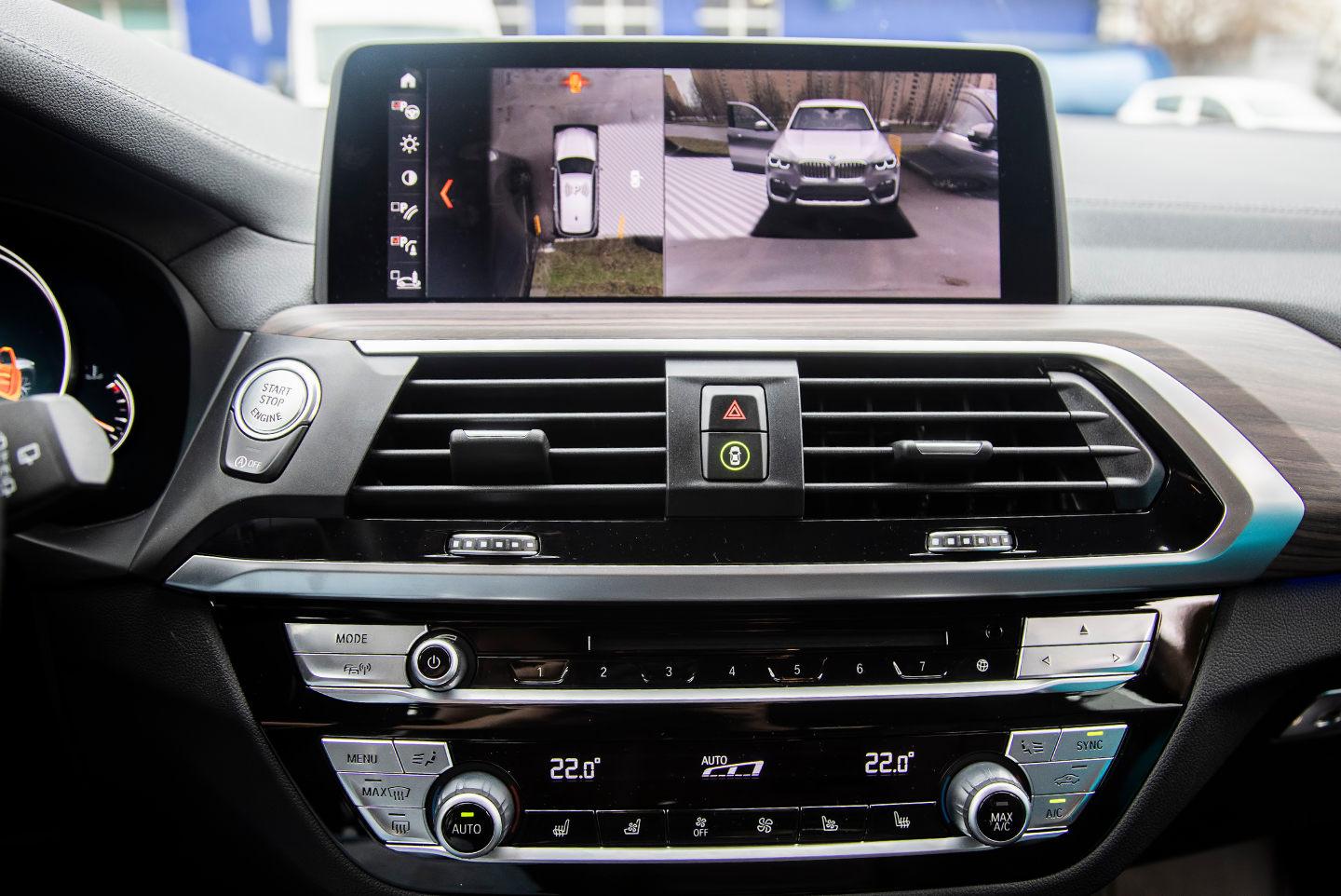
Similarly, BMW enhanced its BMW Drive Recorder within Operating System 8 and 8.5. Drive Recorder repurposed the vehicle’s four surround-view parking cameras (mounted in the front kidney grille, side mirrors, and tailgate) to operate as a continuous collision-mitigation buffer. If the vehicle’s airbag or chassis deceleration sensors detect a collision, the system automatically writes up to 20 seconds of footage captured prior to impact and 20 seconds immediately following impact directly to internal vehicle storage.
2025 to 2026: 4K Optical Sensors and Standardized Multi-Angle Suites
Model years 2025 and 2026 mark a critical transition toward higher optical fidelity and dedicated dual-channel modules. Genesis expanded its Built-in Cam 2 system across the G80, GV80, and flagship G90, elevating forward camera resolution to 1440p (QHD) alongside a 1080p rear window sensor, complete with embedded non-volatile storage and integrated voice recording. Concurrently, Tesla's rollout of "Hardware 4" (HW4) across its production lines introduced 5-megapixel camera sensors, significantly improving nighttime dynamic range and license plate legibility at highway velocities. Furthermore, cloud tethering became standard among premium OEMs, allowing sentry-style security alerts to stream brief video previews directly to owner smartphone apps via embedded 5G modems.
Never assume a car with front-facing camera glass or 360-degree parking cameras has a usable dash cam. Most production vehicles equipped with forward-facing ADAS cameras (such as Subaru EyeSight, Toyota Safety Sense, or Honda Sensing) direct optical feeds strictly into dedicated autonomous braking processors. The vehicle architecture does not write, loop, or export this video data to infotainment or external storage due to strict manufacturer liability, regulatory certification, and proprietary processing boundaries.
What Cars Have Built In Dash Cams by Trim Level and Hardware Package
Built-in dash cam capability is almost never uniform across an entire vehicle lineup. Access depends strictly on selecting specific trim levels, proprietary technological packages, or port-installed options.
Tesla and Genesis: Standard vs Executive Package Deployments
- Tesla (Model 3, Y, S, X, Cybertruck): Standard across all configurations. Because Autopilot computer vision hardware is integral to the vehicle’s basic architecture, every trim level includes Tesla Dashcam and Sentry Mode out of the factory at no additional fee.
- Genesis (G80, G90, GV70, GV80): Gated behind top trim packages. The Genesis Built-in Cam 2 system requires configuring models with the Prestige Package or Executive Package. Base Standard and Advanced trims lack the dedicated secondary high-speed video capture processing module and rear camera hardware integration.
BMW and Mercedes-Benz: Tech Packages and In-Car App Stores
- BMW: Requires the Parking Assistance Package (Option Code 5DN or ZPK) or Parking Assistant Professional. This package equips the vehicle with the four optical surround cameras in the bumpers and mirrors. Without Option 5DN, the BMW ConnectedDrive Store will not permit purchasing or activating the Drive Recorder software application.
- Mercedes-Benz: Requires two prerequisites: the Augmented Reality Video for Navigation (Option Code U19) hardware package, followed by a software license purchase through the Mercedes me connect digital store. Models equipped with standard Active Brake Assist alone do not possess the required video capture feed routing.
Toyota and Lexus: Factory Pre-Wired Accessories vs Infotainment UI
- Toyota & Lexus: Unlike systems that render directly through the native infotainment screen, Toyota and Lexus utilize a genuine factory-engineered physical dash cam unit positioned behind the rearview mirror. This unit mates into a pre-wired factory power and CAN-bus harness concealed within the headliner. It is ordered as a factory-installed line item or port-installed option across mid-to-high trims (e.g., Limited, Platinum, TRD Pro, F-Sport) and interfaces with smartphones via dedicated Wi-Fi direct applications.
General Motors: Performance Data Recorder (PDR) Model Availability
- Chevrolet Corvette (C8 Stingray / Z06 / E-Ray): Included standard on 2LT, 3LT, 2LZ, and 3LZ trim packages. On entry-level 1LT/1LZ trims, the PDR is available exclusively as an a la carte standalone option.
- Cadillac V-Series (CT4-V Blackwing / CT5-V Blackwing): Available through the optional Technology Package or as a standalone factory option. Base Cadillac sedan and SUV trims do not support continuous PDR drive recording.
📋 How to Verify Built-In Dash Cam Equipment Before Buying
Check under optional packages for specific automaker build codes: BMW Option 5DN (Parking Assistant Plus), Mercedes Option U19 (MBUX Augmented Reality), GM Option UQT (Performance Data Recorder), or Toyota/Lexus Option Code PK (Integrated Dashcam).
Check the vehicle glovebox, center console, or footwell. GM PDR requires an SD card slot in the glove compartment; Tesla requires a dedicated high-speed USB-A/C port in the glovebox; Mercedes MBUX requires a multimedia-labeled USB-C port in the central console.
Power on the vehicle ignition and search the infotainment home menu for native apps: "Drive Recorder" (BMW), "Dashcam" (Tesla & Mercedes-Benz), or "PDR" (GM). Confirm the app launches rather than redirecting to a digital subscription purchase store.
Factory Integrated Dash Cam Components, Channels, and Audio Specs
Understanding the engineering compromises built into OEM drive recorders clarifies why their capabilities differ considerably from dedicated aftermarket dash cam hardware.
Optical Sensors and Central Infotainment Computer Architecture
True factory-integrated dash cams operate on centralized hardware architecture. Rather than relying on a standalone processor mounted inside an adhesive windshield housing, the system routes raw video streams via shielded coaxial cables (such as FAKRA or automotive Ethernet) directly into the vehicle’s central autonomous driving or infotainment compute unit. This system utilizes a dedicated multi-axis accelerometer (G-sensor) inside the vehicle’s Restraint Control Module (RCM) to lock video files automatically upon detecting sudden deceleration, airbag deployment, or high lateral force events.
Storage Interfaces: USB Drive and SD Card Requirements
Automakers almost never provide non-volatile internal recording storage out of the box due to continuous write wear limitations on vehicle memory chips. Drivers must supply compatible external media to initialize recording:
- Tesla Dashcam: Demands an external USB 3.0 drive formatted to exFAT or FAT32 with a sustained write speed of at least 4MB/s (solid-state drives or endurance flash recommended).
- General Motors PDR: Requires a full-size SD Card (Class 10, UHS-I or UHS-3 recommended) formatted to exFAT for continuous video and telemetry file generation.
- Mercedes-Benz MBUX: Mandates an external USB-C drive formatted to exFAT inserted into the multimedia-designated data port. Standard phone-charging-only USB ports will not register the device.
Audio Exclusion and Two-Party Consent Wiretap Compliance
A common complaint regarding built-in dash cams—specifically across Tesla, BMW, and Mercedes-Benz—is the complete absence of cabin audio recording. Unlike aftermarket systems that capture interior audio by default, factory systems intentionally mute or eliminate cabin microphones from the drive recorder pipeline.
Automakers omit interior audio capture to protect themselves from severe criminal and civil liabilities under strict regional two-party consent eavesdropping laws (e.g., California, Florida, Massachusetts, and Germany). In these jurisdictions, recording conversations inside a vehicle without the explicit consent of all passengers constitutes illegal wiretapping. GM's PDR circumvents this in its "Valet Mode" by placing visual warning notifications on the infotainment screen.
Built In Dash Cam Reliability: Storage Wear, 12V Battery, and Legal Use
While factory-integrated dash cams provide unmatched aesthetic integration without visible cables, their performance in continuous parking surveillance and high-temperature environments presents engineering trade-offs when contrasted with specialized aftermarket equipment.
OEM Built-in Systems vs Aftermarket Dash Cams
Factory systems eliminate windshield suction cups, loose 12V cigarette lighter wires, and secondary battery packs. However, high-end aftermarket systems (such as BlackVue or VIOFO) utilize dedicated Sony STARVIS 2 image sensors designed specifically for license plate legibility under harsh headlight glare and zero-light conditions, whereas OEM cameras are tuned primarily for machine-vision obstacle avoidance or daytime parking monitors.
✅ OEM Built-In Dash Cams
- Zero visible wires or intrusive windshield hardware
- Integrated directly with central infotainment and CAN-bus
- Impact protection tied to vehicle crash/airbag G-sensors
- Multi-angle 360-degree perimeter coverage (Tesla/BMW)
- Covered under factory bumper-to-bumper vehicle warranty
❌ OEM Built-In Dash Cams
- No interior cabin audio capture on most systems
- Restricted continuous recording (often event-only clips)
- Higher power drain during active parking surveillance
- Lower night-time dynamic range than Sony STARVIS 2 sensors
- Gated behind costly trim packages or paid digital stores
Parking Surveillance Modes and 12V Auxiliary Battery Drain
Operating continuous motion-detection surveillance while a vehicle is parked demands constant electrical draw. In traditional internal combustion engine (ICE) vehicles, running continuous parking monitoring threatens to deplete the standard 12V lead-acid starter battery, stranding the motorist. Consequently, systems like BMW Drive Recorder remain in a ultra-low-power sleep state, waking optical capture only when chassis shock sensors register an impact.
Conversely, Tesla Sentry Mode operates continuously by keeping the car’s primary vehicle compute unit awake. This operational state draws roughly 200 to 300 watts, causing a vehicle range degradation of approximately 1 to 2 percent (equivalent to 3 to 6 miles of driving range) per 24 hours of parked surveillance. If high-voltage battery charge drops to 20%, Sentry Mode automatically disables itself to protect driving range.
Event-Only Clips vs Continuous Loop Recording
Drivers must recognize the critical operational boundary separating continuous loop recorders from incident-buffered event systems. Tesla and Toyota record continuously, overwriting old driving video files sequentially once storage reaches maximum capacity. BMW Drive Recorder operates strictly as an event-buffered recorder: it writes video to temporary volatile memory in a continuous 20-second rolling loop, but only commits those files permanently to disk if a crash occurs or the driver manually holds the camera button on the center console.
Legal Admissibility of Video and Telemetry Overlays
Footage recorded from factory-integrated systems is fully admissible in North American civil courts, criminal proceedings, and insurance liability arbitration. GM's PDR and Tesla Dashcam provide distinct evidentiary advantages by watermarking time codes, GPS location, steering input, and calibrated wheel speed directly into file metadata or visible frame overlays. This objective telemetry eliminates disputed eyewitness testimony regarding pre-impact braking or traveling speeds.
What Cars Have Built In Dash Cam Questions Answered
Can you add a factory dash cam to a car that did not come with one from the factory?
On vehicles like BMW and Mercedes-Benz, you can activate the factory dash cam post-delivery through the in-car software store if, and only if, the car was built with the required prerequisite physical hardware (Option 5DN Parking Assistant Plus for BMW, or Option U19 Augmented Reality for Mercedes). If your vehicle lacks these physical factory camera harnesses, the software cannot be installed. However, Toyota, Lexus, and Subaru offer official pre-wired OEM dash cam accessories that plug directly into empty factory harnesses hidden in the headliner behind the rearview mirror.
Why do built-in dash cams not record sound inside the vehicle cabin?
Automakers intentionally disable cabin audio on factory systems like Tesla Dashcam, BMW Drive Recorder, and Mercedes MBUX Dashcam to prevent customers from violating strict two-party consent wiretapping and eavesdropping statutes in states like California, Florida, and Pennsylvania, as well as European privacy directives. GM’s PDR is one of the few exceptions that records cabin audio, but it displays prominent on-screen valet warnings to remain legally compliant.
Does having a 360-degree parking camera mean my car can record driving footage?
No. The vast majority of production vehicles equipped with 360-degree surround-view cameras (including Nissan, Hyundai, Honda, Ford, and Audi) use those cameras solely as an ephemeral video feed for parking maneuvering. The video output is routed exclusively to the infotainment screen and is discarded instantly, with no compute architecture, G-sensor event triggers, or storage controllers to record or export video.
Will using a factory built-in dash cam drain my 12V starter battery?
While driving, the vehicle alternator or high-voltage DC-to-DC converter powers the camera system without affecting battery health. During parked surveillance, automakers mitigate 12V drain differently: BMW Drive Recorder remains completely powered off until a collision wake-up sensor trips, whereas Tesla Sentry Mode operates continuously from the primary high-voltage battery pack and shuts off automatically when the vehicle battery charge drops to 20%.
Final Recommendations for Factory Built In Dash Cam Buyers
Securing a vehicle with a genuine factory-integrated dash cam delivers clean, wire-free windshield visibility, direct CAN-bus telemetry synchronization, and crash-verified structural resilience. However, genuine OEM recording systems remain limited to an exclusive group of manufacturers—led by Tesla, BMW, Mercedes-Benz, General Motors, Genesis, and select Toyota/Lexus trims. Before finalizing your vehicle purchase, thoroughly check the Monroney window sticker for required hardware package codes (such as BMW Option 5DN or Mercedes Option U19), check the in-car digital store, and always format a dedicated high-endurance, high-write-cycle USB drive or SD card to ensure uninterrupted video capture on the road.