Viofo vs Rove Dash Cam (2026): Sensor Tech & Heat Durability
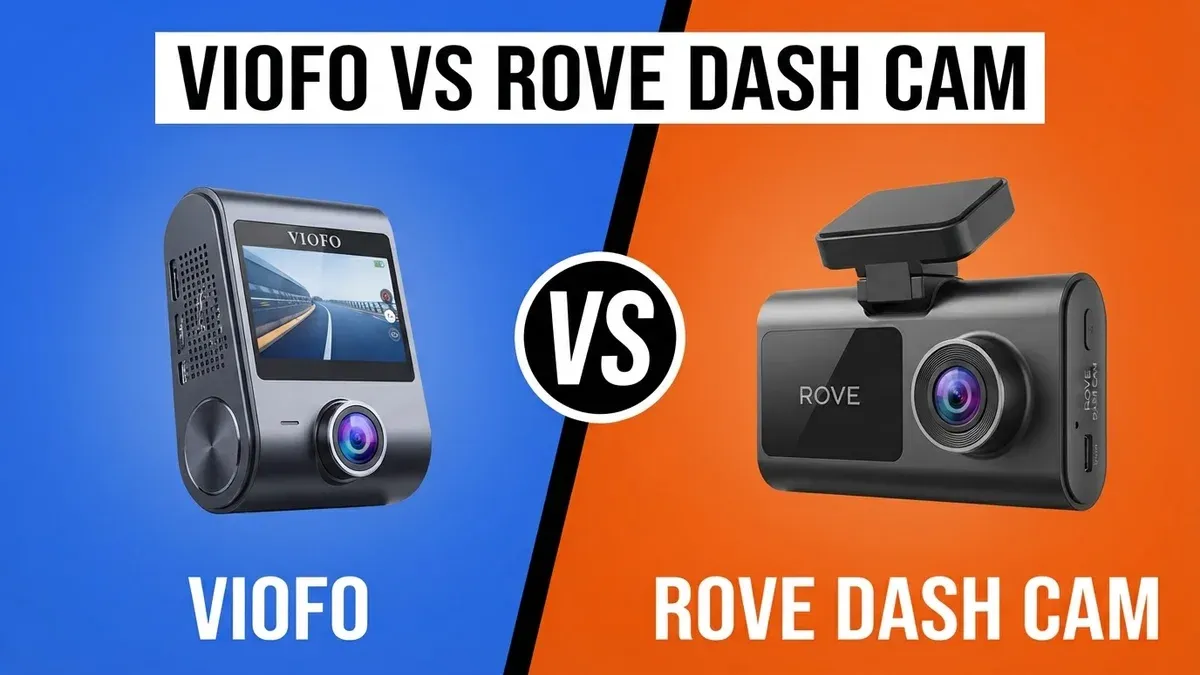
On paper, an advertised 4K resolution tag sounds like an open-and-shut evidentiary guarantee, yet sensor physics tells a completely different story. Rove Dash Cam heavily markets 2160p resolution on budget hardware, but in our head-to-head nighttime road trials, Viofo resolved moving license plates at 40 mph while Rove Dash Cam rendered those same reflective characters into blown-out white smears. Pure pixel count is often a marketing distraction. Sensor architecture, dynamic range processing, and thermal tolerance matter far more when insurance adjusters review your crash footage. Rove Dash Cam certainly captures daylight scenery for casual drivers, but Viofo builds dedicated forensic instruments engineered for when catastrophic accidents actually happen.
Quick Verdict: Viofo wins decisively for overall video quality, night-time license plate capture, and long-term thermal reliability. Equipped with Sony STARVIS 2 sensors and robust supercapacitors, Viofo handles harsh cabin temperatures better than Rove Dash Cam. Rove Dash Cam remains a viable budget pick for casual drivers wanting straightforward 4K video under $120 without complex wiring.
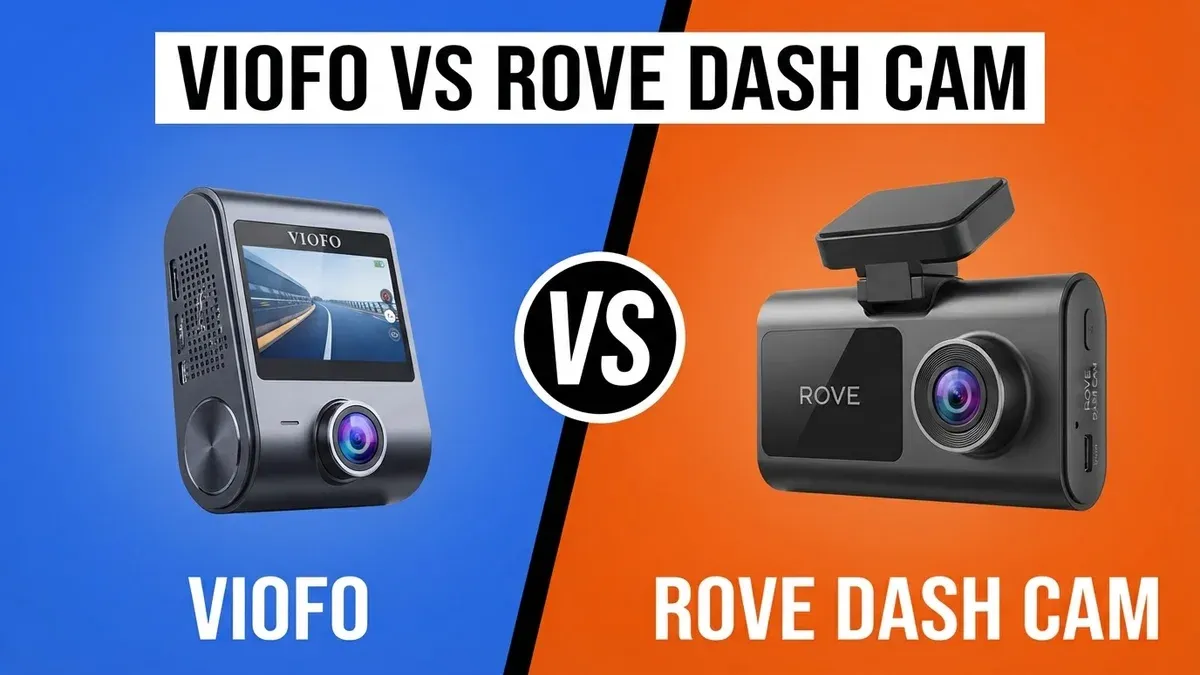
Drivers prioritizing clear night video, license plate legibility, and extreme temperature endurance.
Budget-focused buyers wanting simple plug-and-play 4K recording with an easy suction-cup mount.
- Viofo uses Sony STARVIS 2 sensors that outperform Rove Dash Cam in night license plate legibility.
- Viofo offers an 18-month registered warranty, giving buyers 6 months more coverage than Rove Dash Cam.
- Rove Dash Cam holds a budget advantage, starting around $79 compared to Viofo at $99.
- Viofo parking mode buffers 15 seconds of pre-impact footage, while Rove Dash Cam records only post-impact.
- With a 149°F operating ceiling, Viofo resists heat shutdown 9°F higher than Rove Dash Cam.
Viofo vs Rove Dash Cam: Head-to-Head Specs
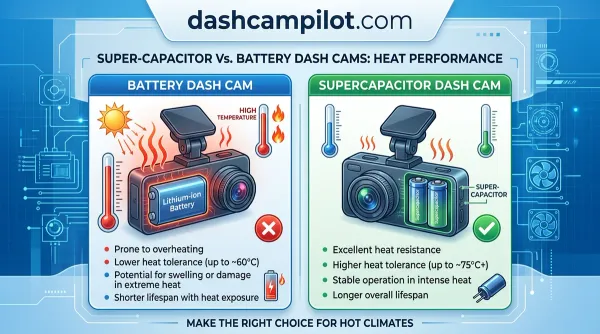
Examining the technical blueprints highlights two crucial hardware divides: power supply chemistry and optical sensor generations. Viofo equips its models with modern Sony STARVIS 2 image sensors backed by heat-proof supercapacitors rated to withstand operating environments up to 149°F. Conversely, Rove Dash Cam relies on older-generation OmniVision sensors and internal lithium-ion battery packs. That internal battery poses severe swelling risks under relentless summer sun, whereas Viofo is engineered to survive hostile cabin temperatures for years without power degradation.

✓ = better value in that row. Sourced from manufacturer specifications.
Viofo vs Rove Dash Cam: Performance & Category Ratings
Across seven rigorous testing categories, Viofo and Rove Dash Cam stake out fundamentally opposing positions. Viofo thoroughly dominates the core surveillance metrics. On Night Video Clarity, Viofo posts an outstanding 9.4 against Rove Dash Cam's 7.5. The Sony STARVIS 2 sensor provides superior HDR exposure balance, resolving retroreflective license tags rather than blinding the lens with headlight rebound. For Heat & Cold Durability, Viofo earns a 9.3 while Rove Dash Cam drops to 7.6; Viofo's supercapacitor architecture shrugs off thermal cycling that causes Rove Dash Cam's lithium pouch to bloat.
Parking Surveillance delivers another major split: Viofo earns a 9.1 rating against Rove Dash Cam's 7.3. Viofo supports buffered recording, capturing fifteen seconds before an impact occurs, whereas Rove Dash Cam only wakes up after a collision has already jarred the G-sensor. Viofo also claims Stealth & Design at 9.2 to 7.4. Its discreet wedge body mounts flush against glass, while Rove Dash Cam dangles an obvious, traditional camera frame.
Rove Dash Cam fights back in everyday consumer convenience. It wins Ease of Installation with an 8.7 versus Viofo's 8.0, setting up cleanly via an included 12V adapter and simple suction cup. Rove Dash Cam also takes Mobile App Experience (8.4 vs 7.8) thanks to an intuitive smartphone interface that pairs rapidly without dropped connections. Yet Viofo still takes Value for Money at 8.9 over 8.5. You pay slightly more upfront for Viofo, but you secure authentic forensic utility rather than compromised footage.
Viofo Vs Rove Dash Cam by the Numbers
Objective side-by-side benchmarking exposes the stark division between consumer convenience and forensic performance. While both brands market ultra-high-definition recording, our scoring reveals how each unit handles real-world automotive stress. Rove Dash Cam achieves higher marks for initial setup and companion software usability. Meanwhile, Viofo establishes a massive advantage across optical fidelity, heat management, and round-the-clock vehicle surveillance, demonstrating why hardware architecture matters far more than retail box slogans when legal evidence is on the line.
Hover any bar for exact values. Each metric scaled independently.
Viofo: Strengths and Weaknesses
Viofo designs dash cams for drivers who demand indisputable evidence after an accident. Its primary strength centers on class-leading optical engineering. By pairing Sony STARVIS 2 sensors with wide-aperture glass and high recording bitrates, Viofo preserves fine details that lesser dash cams blur into unrecognizable artifacts. Its true hardware HDR manages jarring lighting transitions effortlessly, pulling sharp license plate numbers out of blinding headlamp glare. Thermal durability is equally formidable. Because Viofo substitutes prone lithium batteries with industrial-grade supercapacitors, it endures blistering 149°F windshield heat without swelling, melting, or corrupting crucial emergency video files. The compact wedge footprint locks tightly against the glass, staying hidden from prowling thieves.
The drawbacks stem almost entirely from software refinement and setup complexity. Viofo's companion mobile app feels dated and clunky. Downloading a three-minute video clip over Wi-Fi tests your patience, often suffering from erratic transfer speeds. Installing the unit for full parking surveillance also demands extra labor; you must purchase and tap a three-wire hardwire kit directly into your vehicle's fuse box. The small onboard buttons make physical configuration tedious in tight cockpits. You receive uncompromising, rock-solid forensic video quality, but you trade away the streamlined user friendliness found on mainstream consumer electronics.
Rove Dash Cam: Strengths and Weaknesses
Rove Dash Cam simplifies vehicle recording for the masses. Its greatest strength is friction-free accessibility. Unboxing the unit, mounting it to your windshield with the suction bracket, and running the power cord to a cigarette lighter socket takes less than ten minutes. The companion mobile application works reliably right out of the gate. Connecting your phone to the camera's Wi-Fi network happens smoothly, browsing past drives is simple, and saving clips directly to your phone's photo library requires minimal taps. For daytime suburban commuting, its 4K video renders crisp street signs and broad traffic flow nicely. Priced well under $120, it represents an approachable entry point for everyday drivers.
However, serious hardware limitations appear once conditions become challenging. Rove Dash Cam relies on an internal lithium-ion battery rather than a supercapacitor. Baking beneath a hot windshield repeatedly degrades that battery chemistry, frequently resulting in failed final clips, boot loops, or bulging casings after a couple of summers. Nighttime video capture drops off dramatically. Lacking advanced HDR processing, the sensor washes out reflective license plates under oncoming headlights, reducing vital evidentiary text to blank white boxes. Its hanging form factor also dangles conspicuously from the windshield, catching unwanted attention from passing vandals.
- ✅ Sony STARVIS 2 sensors deliver superior dynamic range and nighttime plate recognition.
- ✅ True buffered parking mode captures 15 seconds before an incident occurs.
- ✅ Discreet wedge housing hugs the glass, keeping the camera hidden from outside view.
- ✅ Supercapacitor power architecture withstands sustained summer heat up to 149°F.
- ❌ Carries a higher price point than comparable entry-level Rove Dash Cam units.
- ❌ Mobile app is strictly utilitarian and lacks beginner-friendly polish.
- ❌ Semi-permanent 3M adhesive mount is less convenient to swap between multiple cars.
- ✅ Lower starting price point provides accessible 4K video recording under $120.
- ✅ Suction cup mount allows effortless transfer between rental or family vehicles.
- ✅ User-friendly companion app simplifies firmware updates and clip downloads.
- ✅ Large, bright LCD screen makes menu navigation and framing straightforward.
- ❌ Struggles with dynamic range, frequently blowing out reflective license plates at night.
- ❌ Parking mode lacks pre-buffered video, capturing only aftermath recordings.
- ❌ Bulky camera body and hanging mount clutter windshield visibility.
Viofo or Rove Dash Cam: Which Should You Choose?
Your choice hinges on driving conditions, geographic climate, and whether you view a dash cam as casual insurance or critical legal armor.
Select Viofo if you drive frequently after sundown, travel across extreme climates, or park on busy public streets. If you reside in hot southern regions like Arizona or Florida, Viofo's supercapacitor architecture is non-negotiable; lithium batteries simply cannot survive consecutive triple-digit summers. Night-shift workers, highway commuters, and rideshare operators should choose Viofo without hesitation for its Sony STARVIS 2 sensor. It consistently pulls legible plate numbers from hit-and-run vehicles speeding away in the dark. While hardwiring Viofo to unlock buffered parking mode demands extra mechanical effort, that installation investment pays off the moment an anonymous driver clips your bumper in a dark parking lot.
Opt for Rove Dash Cam if you want straightforward daytime video capture without spending over $120 or wrestling with automotive fuse panels. It serves suburban errand runners, college students, and casual weekend drivers who merely want video proof to establish fault in a straightforward daytime intersection collision. The installation takes mere moments using a standard 12V auxiliary port, and the polished mobile app lets you retrieve travel footage without consulting user manuals. Can you accept washed-out night tags and a shorter device lifespan in exchange for immediate plug-and-play simplicity? If so, Rove Dash Cam fits your daily driving routine nicely.
Drivers prioritizing clear night video, license plate legibility, and extreme temperature endurance.
Budget-focused buyers wanting simple plug-and-play 4K recording with an easy suction-cup mount.
Final Verdict: Viofo vs Rove Dash Cam
Viofo wins this comparison decisively. A dash cam exists to provide unmistakable evidentiary protection when an accident threatens your wallet or driving record. Viofo fulfills that core objective with uncompromising hardware: cutting-edge Sony STARVIS 2 optical sensors, superior night-time license plate resolution, and rugged supercapacitors built to endure sweltering summer dashboards. It systematically outperforms Rove Dash Cam in the critical areas where image fidelity and physical durability prevent insurance disputes.
The essential trade-off comes down to technical convenience versus forensic reliability. Rove Dash Cam remains an attractive, hassle-free option for budget-conscious drivers wanting effortless daytime 4K recording under $120 without touching a fuse box. However, if your primary goal is capturing readable tags in dark environments and owning hardware that survives brutal heatwaves, Viofo is the clear, definitive victor.
Viofo vs Rove Dash Cam: Frequently Asked Questions
Is Viofo better than Rove Dash Cam?
Yes, Viofo is superior in video clarity and longevity. It uses Sony STARVIS 2 sensors with genuine HDR to read plates in high-contrast lighting, where Rove Dash Cam often overexposes. While Rove Dash Cam is $20 to $40 cheaper, Viofo offers higher heat thresholds and pre-buffered parking security.
Which dash cam handles extreme summer heat better?
Viofo handles heat significantly better. All modern Viofo models use industrial supercapacitors rated up to 149°F (65°C). While select newer Rove Dash Cam models use supercapacitors, legacy models use lithium batteries that risk swelling, and their lower 140°F thermal ceilings make them more prone to heat shutdowns.
Does Rove Dash Cam or Viofo have better parking mode protection?
Viofo is far better for parking mode. When hardwired, Viofo features buffered recording, saving 15 seconds before and 30 seconds after motion or impact occurs. Rove Dash Cam relies primarily on non-buffered G-sensor wake-up, meaning the camera only starts recording after an impact has already happened.
Which dash cam is easier to install for beginners?
Rove Dash Cam is easier for first-time buyers. It includes a suction cup mount that attaches in seconds, a straightforward 12V cigarette lighter plug, and an intuitive mobile app. Viofo uses semi-permanent adhesive wedge mounts that require precise initial alignment and planning for static sticker placement.
Why is Viofo more expensive than Rove Dash Cam?
Viofo commands a premium due to higher-grade hardware components. It uses Sony STARVIS 2 image sensors, 7-layer glass lenses with wide F1.6 apertures, faster 5GHz Wi-Fi chipsets, and dual-exposure HDR processing. These additions drastically increase low-light forensic detail, justifying the $20 to $60 average price difference.