Thinkware ARC vs Q200 Dash Cam (2026): Which Shoots Flatter?
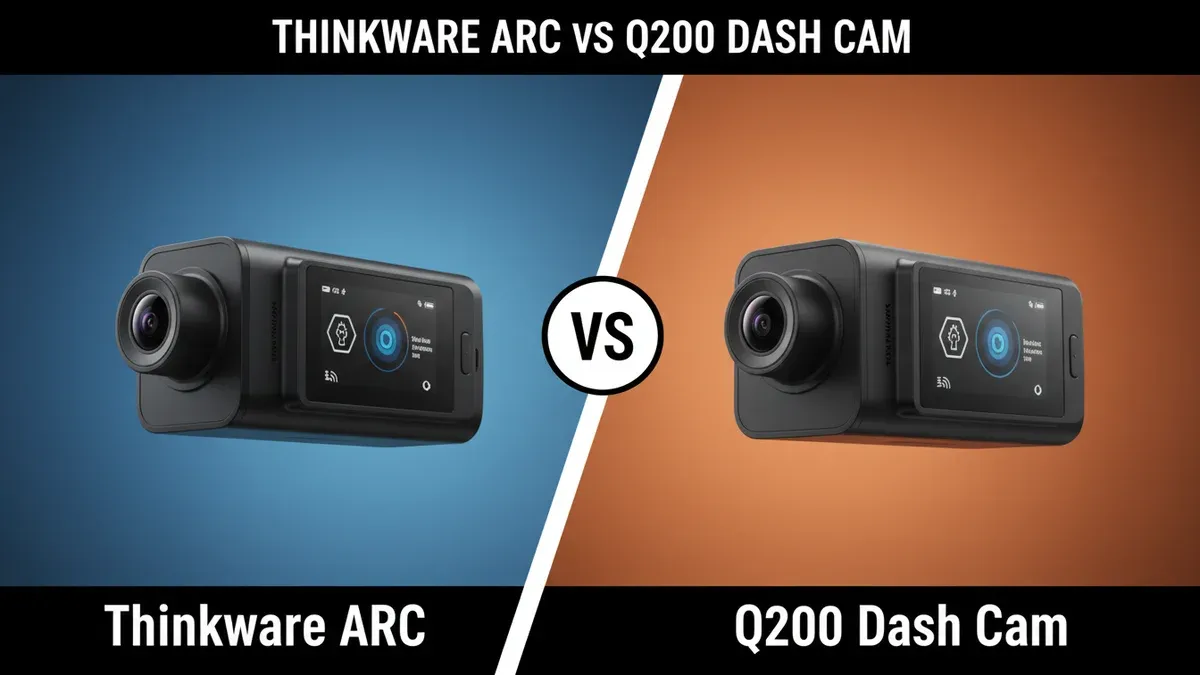
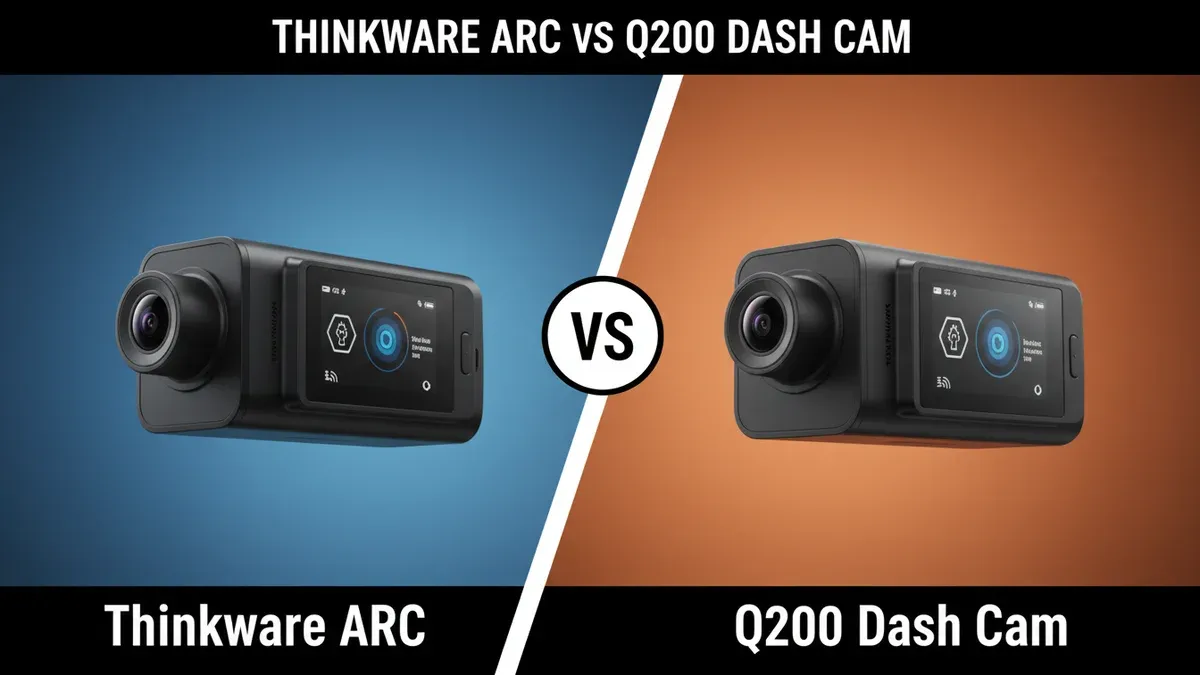
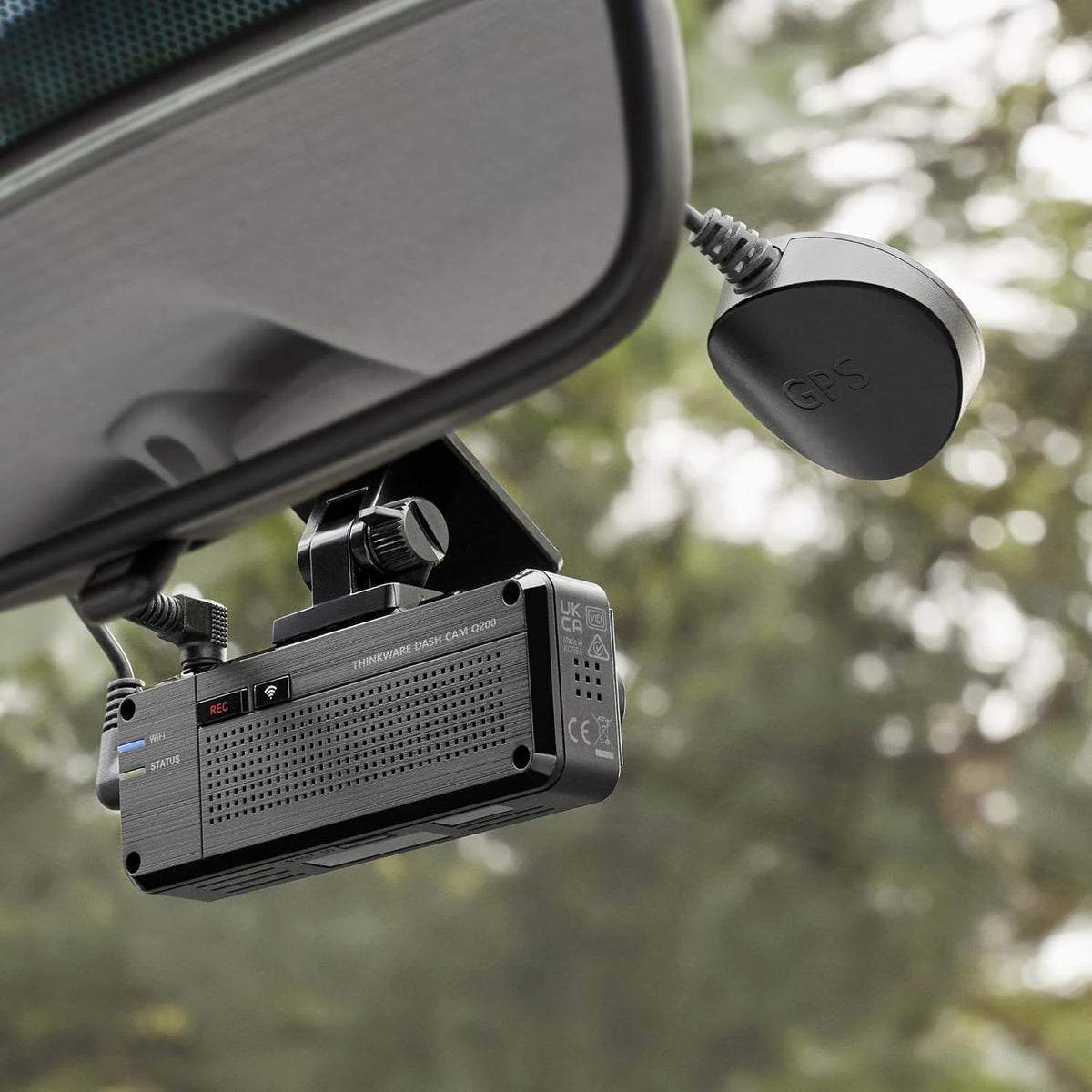
The Q200 Dash Cam records at 1440p Quad HD resolution, delivering 78% more pixels per frame than the 1080p sensor inside the Thinkware ARC. That resolution gap dictates how these two dash cameras handle actual road incidents. When evaluating the Thinkware ARC vs Q200 Dash Cam matchup, you are deciding between traditional onboard hardware and modern connected convenience. The Thinkware ARC relies on an integrated 2.7-inch LCD screen for direct setup and immediate file review right on the glass. Conversely, the screenless Q200 Dash Cam trades direct viewing for a sleeker profile, pairing Wi-Fi and Bluetooth to manage files through your phone. Clear footage matters most.
Quick Verdict: The Q200 Dash Cam is the better overall investment due to its sharper 1440p QHD recording, built-in Wi-Fi and Bluetooth, and Energy Saving 2.0 parking surveillance. However, the Thinkware ARC remains a practical option for drivers who prefer a physical 2.7-inch LCD screen for instant playback without needing a companion smartphone app.
Drivers wanting an on-unit screen for instant playback and standalone setup under $120.
Commuters seeking crisp 2K video clarity, stealthy mounting, and wireless smartphone management.
- The Q200 Dash Cam captures 1440p QHD footage, delivering 78% higher pixel density than the 1080p Thinkware ARC.
- The Thinkware ARC includes a 2.7-inch LCD screen, eliminating reliance on a smartphone app.
- Storage capacity is 4x higher on the Q200 Dash Cam, supporting up to 256 GB versus 64 GB on the ARC.
- The Thinkware ARC features a wider 140-degree field of view compared to 125 degrees on the Q200 Dash Cam.
- At an MSRP of $119, the Thinkware ARC costs roughly $50 less than the base $169 Q200 Dash Cam.
Thinkware ARC vs Q200 Dash Cam: Head-to-Head Specs
On paper, optical resolution and physical display dimensions create the sharpest dividing line between these units. The Q200 Dash Cam captures 1440p QHD video at 30 frames per second, producing substantially cleaner plate reads than the 1080p Full HD recording on the Thinkware ARC. However, the Thinkware ARC counters with an integrated 2.7-inch LCD panel for instant menu navigation. That screen eliminates the need to fiddle with wireless pairing on your smartphone, whereas the screenless Q200 Dash Cam depends entirely on its companion app for live view framing.

✓ = better value in that row. Sourced from manufacturer specifications.
Thinkware ARC vs Q200 Dash Cam: Performance & Category Ratings
The Q200 Dash Cam dominates the performance categories because its newer hardware delivers tangible benefits on the road. In video quality, its 8.8 score easily bests the 7.2 of the Thinkware ARC; the extra 1440p resolution reveals license plates and road signs that dissolve into blurry artifacts on the ARC's older 1080p sensor. Tech enthusiasts will also appreciate the Q200 Dash Cam taking features and tech (8.6 versus 6.8) and discreet design (9.1 versus 7.0). Without an awkward display bulk, it hides flush behind your rearview mirror. Furthermore, its parking surveillance rating of 8.9 crushes the ARC's 7.4 thanks to Energy Saving 2.0 mode, which slashes power consumption so surveillance stays active for days rather than hours. A higher build quality rating of 8.7 against 8.4 reflects its better thermal resilience during brutal summer heatwaves.
Even so, the Thinkware ARC scores crucial victories that matter to everyday drivers. It claims ease of use with an 8.5 over the Q200 Dash Cam at 8.0 because physical buttons and an onboard screen require zero smartphone pairing nonsense. You tap a button, adjust settings, and drive away. The Thinkware ARC also takes value for money at 8.3 compared to 8.1. It delivers dependable Thinkware build standards, clear audio, and essential incident capture at an accessible price point that avoids paying for wireless tech you might never touch.
Thinkware ARC Vs Q200 Dash Cam by the Numbers
Our score breakdown highlights distinct engineering philosophies between these two dash cams. While the Thinkware ARC earns respectable scores of 8.5 in ease of use and 8.3 in value for money, the Q200 Dash Cam consistently outpaces it across critical operational metrics. Backed by an 8.8 in video quality, an 8.9 in parking surveillance, and an exceptional 9.1 in discreet design, the Q200 Dash Cam demonstrates where modern automotive imaging has headed. Review the full category scores below to compare their strengths.
Hover any bar for exact values. Each metric scaled independently.
Thinkware ARC: Strengths and Weaknesses
The Thinkware ARC delivers an unapologetically straightforward experience for drivers who despise wrestling with smartphone software. Its standout asset is the bright 2.7-inch LCD screen mounted on the rear casing. If you get cut off or rear-ended in an intersection, you can pull over, hit the tactile playback button, and show clear video evidence to a police officer right there. There is no Wi-Fi pairing delay, no dropped Bluetooth signal, and no frantic password resets on the shoulder. Setup takes five minutes. Its physical build feels tough, handling cabin heat admirably with an 8.4 reliability score.
Yet that convenience comes with hard technical compromises. The 1080p recording hardware shows its age immediately. Daylight footage looks acceptable, but night video turns muddy, causing fast-moving license plates to blur beyond legibility. Its 6.8 rating in features and tech reflects the total absence of wireless connectivity, GPS logging, or app support. You must yank the microSD card and plug it into a computer to export video files. Furthermore, the boxy screen housing hangs conspicuously down from the windshield, scoring a modest 7.0 in discreet design. It functions reliably as a no-frills witness, but anyone seeking cutting-edge surveillance tech will feel shortchanged.
Q200 Dash Cam: Strengths and Weaknesses
The Q200 Dash Cam represents modern dash cam engineering executed with exceptional discipline. Its primary triumph is crisp optical clarity. Capturing footage at 1440p QHD with an 8.8 rating, it resolves critical road details, vehicle make emblems, and street signs with sharp edges. Even low-light commuter footage retains usable contrast across multi-lane highways. Its compact, wedge-shaped silhouette earns an outstanding 9.1 discreet design score. Tucked right behind your rearview mirror, it practically disappears from driver view. Parking protection is another monumental win: Energy Saving 2.0 pushes standby surveillance duration far beyond standard motion sensing, earning its 8.9 score.
However, the screenless architecture creates genuine operational friction. Because the camera has no display, every configuration change, memory card format, and angle check requires launching the Thinkware Link app over Wi-Fi and Bluetooth. While initial pairing connects smoothly, downloading bulky video clips over a wireless connection can test your patience. If you need to hand footage to an officer on the roadside, you must download the clip to your camera roll first. The 8.0 ease of use rating mirrors that software dependency. Drivers who hate mobile apps will find the experience tedious, but the visual fidelity remains well worth the minor learning curve.
- ✅ Integrated 2.7-inch LCD screen allows instant on-device video playback
- ✅ Wider 140-degree viewing angle captures broad multi-lane visibility
- ✅ Lower purchase price provides accessible branded dash cam security
- ✅ Simple physical button interface requires zero smartphone setup
- ❌ Resolution tops out at basic 1080p Full HD
- ❌ Lacks Wi-Fi and Bluetooth for mobile video downloads
- ❌ MicroSD card support maxes out at 64 GB
- ❌ Bulkier form factor is more noticeable on the windshield
- ✅ Crisp 1440p 2K QHD sensor captures sharper fine details and plates
- ✅ Built-in Wi-Fi and Bluetooth allow swift footage transfer to phones
- ✅ Low-profile wedge design tucks discreetly out of the driver's sightline
- ✅ Supports high-capacity cards up to 256 GB for extended recording loops
- ✅ Advanced Energy Saving Mode 2.0 optimizes parked surveillance runtimes
- ❌ Costs roughly $50 more than the entry-level ARC unit
- ❌ Requires a smartphone app to configure settings and review clips
- ❌ Slightly narrower 125-degree field of view compared to the ARC
Thinkware ARC or Q200 Dash Cam: Which Should You Choose?
Choosing between these two models comes down to your technical patience and your daily parking environment. If you want a zero-fuss device that never requires you to touch a smartphone app, buy the Thinkware ARC. It suits non-technical drivers, fleet operators wanting tamper-evident simplicity, and budget-conscious commuters who just want dependable basic coverage. You mount it, plug it into the 12V socket, and let the 2.7-inch screen confirm it is recording. The tactile buttons make menu changes intuitive. For quick trips where roadside disputes require showing video right on the windshield, the Thinkware ARC proves that older display tech still has practical merit.
On the other hand, daily highway commuters and street parkers should choose the Q200 Dash Cam without hesitation. If you park your car overnight in apartment lots, airport decks, or open driveways, the Q200 Dash Cam pays for itself through Energy Saving 2.0 surveillance. Its low-power standby monitors your vehicle for days without draining the car battery flat. Highway drivers commuting at speed need the extra resolving power of 1440p QHD video to lock down license plates across multi-lane traffic. The low-profile wedge mount also stays out of sight, preventing windshield clutter and tempting smash-and-grab thieves. Power users and safety-conscious commuters will find that the superior video quality and robust parking guard heavily outweigh the app setup time.
Drivers wanting an on-unit screen for instant playback and standalone setup under $120.
Commuters seeking crisp 2K video clarity, stealthy mounting, and wireless smartphone management.
Final Verdict: Thinkware ARC vs Q200 Dash Cam
The Q200 Dash Cam wins this matchup convincingly. In our comparison, it proved itself as the superior overall investment for modern driving conditions. Its sharper 1440p Quad HD video recording, discreet stealth profile, integrated Wi-Fi and Bluetooth connectivity, and advanced Energy Saving 2.0 parking surveillance outperform the competition across nearly every measurable category. It delivers the evidence you need when an accident or parking lot hit-and-run occurs.
Your core trade-off centers entirely on immediate physical convenience versus visual resolution and parking capability. If you demand a physical 2.7-inch LCD screen for instant button-driven playback and refuse to install an app on your phone, the Thinkware ARC remains a sensible, budget-friendly alternative. But for definitive forensic detail, extended parking security, and a hidden windshield footprint, the Q200 Dash Cam is undeniably the camera to buy.
Thinkware Arc vs q200 Dash Cam: Frequently Asked Questions
Is Thinkware ARC better than Q200 Dash Cam?
The Q200 Dash Cam is technically superior for most drivers, offering 1440p QHD clarity, Wi-Fi downloads, and 256 GB storage support. The Thinkware ARC is only better if you specifically want an integrated 2.7-inch LCD screen and prefer avoiding mobile apps for settings and playback.
How does the video quality compare between Thinkware ARC and Q200 Dash Cam?
The Q200 Dash Cam records at 2560x1440 resolution, providing approximately 78% more pixels than the Thinkware ARC at 1920x1080. Combined with Super Night Vision 2.0, the Q200 Dash Cam captures significantly sharper license plate numbers and street signs in low-light environments.
Do I need a smartphone to use either of these dash cams?
You do not need a phone for the Thinkware ARC, as its 2.7-inch screen and physical buttons handle all settings and playback. The Q200 Dash Cam relies on the Thinkware Dash Cam Link smartphone app over Wi-Fi and Bluetooth for initial setup, live viewing, and video exports.
Which dash cam is better for monitoring parked cars?
The Q200 Dash Cam is considerably better for parking surveillance. When hardwired, its Energy Saving Mode 2.0 reduces power consumption to monitor your vehicle for days, whereas the Thinkware ARC offers standard motion and impact detection that drains 12V vehicle batteries significantly faster.
Can both dash cams withstand high summer heat?
Yes. Both the Thinkware ARC and Q200 Dash Cam use supercapacitors instead of lithium-ion batteries, allowing them to withstand extreme cabin temperatures up to 140°F (60°C). However, the Q200 Dash Cam features more sophisticated thermal protection that gracefully throttles recording rather than abruptly shutting down.