Mangoal Dash Cam vs Fitcamx (2026): OEM Fit & App Stability
Both of these stealth dash cams use identical Sony Starvis image sensor architecture and Novatek processors to capture native 3840x2160 4K footage at 30 frames per second, yet Mangoal Dash Cam routinely sells for roughly $50 less than Fitcamx. Most drivers naturally assume that Fitcamx charges a premium because it houses superior optical glass or faster image processing silicon. It doesn't. Underneath the plastic, the core video capturing components are nearly twins. You are paying the premium for factory-grade plastic injection molding, bespoke wiring harnesses, and software developers who actively update their companion application. Mangoal Dash Cam delivers crisp daytime evidence on a budget, but that lower price tag demands real compromises in vehicle selection, cabin fitment tolerances, and wireless software reliability.
Quick Verdict: Fitcamx earns the victory due to superior vehicle-specific housing tolerances, support for over 50 car brands, and far more stable companion software. Mangoal Dash Cam matches raw 4K video specifications using similar sensor hardware for roughly $50 less, but its narrower vehicle catalog and finicky app hold it back.
Value-focused drivers whose specific vehicle model matches Mangoal's limited catalog.
Buyers wanting flawless factory-matched housing fitment, reliable Wi-Fi app performance, and broad trim options.
- Fitcamx supports over 55 automotive brands, while Mangoal Dash Cam is limited to roughly 18 popular makes.
- Mangoal Dash Cam costs around $129, undercutting Fitcamx's $178 base entry point by roughly $50.
- Fitcamx supports up to 256GB MicroSD memory cards, doubling the 128GB ceiling found on Mangoal Dash Cam.
- Both units deliver 4K (2160p) front recording at 30fps using 170-degree wide-angle lenses.
- Fitcamx offers a dedicated native smartphone app, whereas Mangoal relies on third-party mobile viewers.
Mangoal Dash Cam vs Fitcamx: Head-to-Head Specs
While both cameras record ultra-high-definition video at 30 frames per second, their real differences emerge in catalog depth and memory handling. Fitcamx supports MicroSD cards up to 256GB and offers custom-molded shells for over 50 car brands spanning hundreds of specific trim packages. Mangoal Dash Cam caps several models at 128GB capacity and restricts its catalog to roughly a dozen popular vehicle platforms, focusing primarily on high-volume Toyota, Ford, and Lexus models.
✓ = better value in that row. Sourced from manufacturer specifications.
Mangoal Dash Cam vs Fitcamx: Performance & Category Ratings
Fitcamx runs away with OEM Integration & Fit, scoring 9.4 against Mangoal Dash Cam's 8.1. When you snap a Fitcamx housing around your rearview mirror base, the seams lock tight. Its textured ABS plastic matches the dull, anti-glare finish of modern automotive headliners and mirror stalks. Mangoal Dash Cam fits securely enough to stay in place, but we found visible hairline gaps along the locking tabs and a slightly smoother, shinier plastic finish that catches cabin sunlight.

Video Quality leans slightly toward Fitcamx at 8.7 versus 8.3 for Mangoal Dash Cam. While both deploy 4K sensors, Fitcamx applies superior firmware tuning. It balances contrast better when driving through sudden shadows and mitigates headlight blooming on license plates at night. Mangoal Dash Cam still captures license plates clearly during daylight, but its exposure hunts noticeably under overhead highway streetlights.
Software is where the gap widens into a chasm. In App & Connectivity, Fitcamx earns an 8.3 while Mangoal Dash Cam falters at 6.7. The Mangoal smartphone app frequently fails its initial Wi-Fi direct handshake. Video previews stutter, and downloading a two-minute clip can test anyone's patience. Fitcamx built a streamlined, responsive interface that links quickly and downloads files without continuous dropouts.
Fitcamx crushes the competition in Vehicle Compatibility with a staggering 9.6 rating against Mangoal Dash Cam's 6.4. Fitcamx engineers bespoke shells for everything from a Volvo XC90 to an older BMW 3 Series. Mangoal Dash Cam covers the best-selling trucks and family SUVs, but if you drive a German sedan or an electric crossover, Mangoal Dash Cam likely has nothing for you.
Both models shine in Installation Ease, where Fitcamx holds a slender 9.1 to 8.8 edge. Each brand taps into existing power feeds behind your rearview mirror or rain sensor using a Y-splitter plug. No dangling wires. No routing cables down A-pillars or into fuse boxes. Fitcamx takes the edge simply by including vehicle-specific pry levers and clearer visual diagrams.
Mangoal Dash Cam dominates Value for Money with a decisive 9.0 over Fitcamx's 7.7. If Mangoal Dash Cam manufactures a unit tailored to your exact car, you get factory-look 4K surveillance for around $100 to $130, whereas Fitcamx frequently commands $160 to $220. However, Fitcamx claws back trust in Customer Support, winning 8.6 to 6.9 by vetting customer interior mirror photos before shipping to prevent fitment headaches.
Mangoal Dash Cam Vs Fitcamx by the Numbers
Examining the hard metrics reveals why this contest is closer than it appears on paper. Fitcamx wins five out of seven categories, building an insurmountable lead in vehicle compatibility (9.6 vs 6.4) and app execution (8.3 vs 6.7). Yet Mangoal Dash Cam's runaway 9.0 score in value for money proves that budget-conscious shoppers can secure 8.3-level video performance without paying the steep Fitcamx tax.
Hover any bar for exact values. Each metric scaled independently.
Mangoal Dash Cam: Strengths and Weaknesses
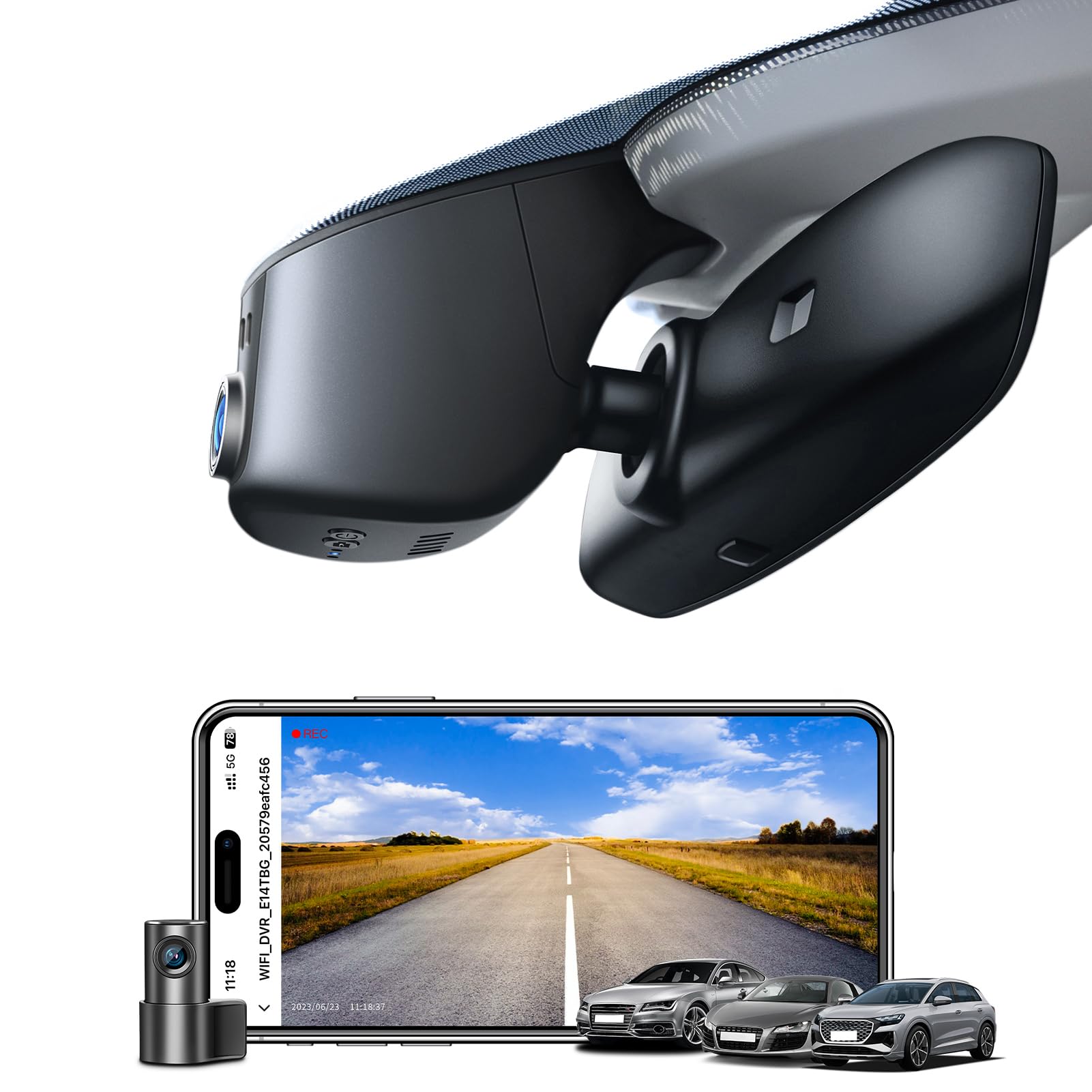
Mangoal Dash Cam proves that clean, factory-style vehicle integration does not require empty pockets. Its biggest selling point is sheer value. You get true 4K resolution using proven Sony sensor architecture without running an ugly power cord down to your 12-volt cigarette lighter socket. For owners of common vehicles like late-model Toyota RAV4s, Tacomas, or Ford F-150s, the camera plugs cleanly into the pre-existing mirror sensor wiring harness. We found the physical installation takes under fifteen minutes, requiring zero wire splicing or fuse panel tinkering. In daylight, the video quality looks crisp, rendering street signs, lane markings, and license numbers with impressive clarity. If an accident happens, the evidence is undeniable.
The compromises, however, lurk in the user experience. The companion app feels unpolished and frustrating. Wi-Fi connections regularly drop if your phone attempts to prioritize your vehicle's wireless Apple CarPlay or Android Auto connection, forcing you to toggle phone settings manually just to review footage. Furthermore, Mangoal Dash Cam's exterior shell lacks obsessive manufacturing tolerances. The clips hold, but you will often spot minor seams, slight color mismatches against the factory black mirror housing, or small creaks if pressed. Customer support operates through generic marketplace messaging channels, meaning warranty inquiries or missing adapter requests move slowly. It works brilliantly as a budget set-and-forget device, provided you rarely need to open the app.
Fitcamx: Strengths and Weaknesses
Fitcamx sets the industry benchmark for factory-grade integration. Its housing plastics mimic the exact tone, grain, and structural rigidity of original automotive interior panels. Once clipped into position, even seasoned mechanics struggle to identify it as an aftermarket accessory. Fitcamx backs up this exterior perfection with unmatched vehicle catalog depth. The company manufactures tailored housings for more than 50 automotive brands, covering thousands of distinct vehicle trims, sensor clusters, and model years. Their customer support team proactively requests photos of your rearview mirror shroud before fulfillment, ensuring the wiring harness and plastic shell match your specific trim package perfectly on the first try. Firmware optimization extracts top-tier dynamic range from the camera sensor, providing superior night vision and glare suppression.
That level of precision carries a distinct cost. Fitcamx prices its units well into premium dash cam territory, often running $50 to $70 higher than Mangoal Dash Cam for identical camera resolutions. If you choose to add their optional rear-facing camera, installation ease evaporates. Tucking that secondary coaxial cable along the headliner back to the tailgate requires standard automotive trim removal, defeating some of the plug-and-play simplicity. The companion app, while vastly superior to Mangoal Dash Cam's software, remains a straightforward local Wi-Fi viewer without cloud backup features or remote parking monitoring. You are paying top dollar for aesthetic integration, build tolerances, and broad vehicle support rather than revolutionary software tech.
- ✅ Saves $40 to $60 compared to equivalent direct-fit models
- ✅ Provides a clean, wire-free OEM appearance behind the rearview mirror
- ✅ Sharp 4K front capture using genuine Sony Starvis imaging
- ✅ Includes basic plug-and-play wiring harnesses for common models
- ❌ Relies on generic third-party apps with inconsistent Wi-Fi connections
- ❌ Catalog is restricted mostly to top-selling Toyota, Lexus, and Ford vehicles
- ❌ Plastic housing finish sometimes shows minor color or texture mismatch
- ✅ Industry-leading compatibility spanning 55+ automotive brands and hundreds of trims
- ✅ Proprietary Fitcamx mobile app offers smooth live view and fast video transfers
- ✅ Housing plastics replicate factory matte sheen and clip retention securely
- ✅ Supports up to 256GB MicroSD cards for doubled 4K loop recording time
- ✅ Active customer service verifies mirror housing photos to guarantee exact fitment
- ❌ Carries a noticeable $50+ price premium over budget OEM competitors
- ❌ Included plastic pry tools can flex when opening stubborn factory trim pieces
- ❌ Optional rear camera still requires running a standard cabin-length wire
Mangoal Dash Cam or Fitcamx: Which Should You Choose?
Selecting between these two factory-style recorders comes down to what you drive and how frequently you intend to interact with the device. If you drive a mainstream, mass-market truck or crossover like a Toyota Highlander, Lexus RX, or Honda CR-V, Mangoal Dash Cam is exceptionally hard to dismiss. Why spend an extra fifty bucks if you drive a base trim vehicle that Mangoal Dash Cam already covers perfectly? If your goal is basic insurance protection—a discreet camera that sits silently behind your mirror and records onto a card you only touch after a collision—Mangoal Dash Cam delivers maximum value. Pull the physical MicroSD card when you need files, bypass the finicky mobile app altogether, and pocket the savings.
Choose Fitcamx if you drive a European luxury sedan, an electric vehicle, or a specialized truck trim with complex driver-assist camera arrays. Volvo, Audi, Genesis, Porsche, and BMW drivers will find zero alternatives in Mangoal Dash Cam's limited lineup, making Fitcamx the only viable OEM-style option on the market. Fitcamx is also the correct path for non-technical drivers who depend on seamless smartphone operation. When you need to pull footage on the roadside to show a police officer or an insurance agent, the stable Fitcamx Wi-Fi connection and responsive app eliminate stressful troubleshooting on the shoulder of the highway. Finally, pick Fitcamx if cabin aesthetics matter deeply to you. The flawless plastic graining and zero-gap clip design preserve your vehicle's showroom look completely.
Value-focused drivers whose specific vehicle model matches Mangoal's limited catalog.
Buyers wanting flawless factory-matched housing fitment, reliable Wi-Fi app performance, and broad trim options.
Final Verdict: Mangoal Dash Cam vs Fitcamx
Fitcamx takes the overall victory in this head-to-head comparison, finishing ahead with superior build quality, unmatched vehicle compatibility, and reliable companion software. It is the premier choice for automotive enthusiasts and everyday drivers who want an aftermarket dash cam that truly looks like it rolled off the assembly line at the factory.
Mangoal Dash Cam remains a fierce budget competitor. By matching Fitcamx's raw 4K daytime recording capability and clean mirror-tap installation for roughly $50 less, it represents a fantastic bargain for owners of popular Toyota, Ford, and Honda models. But you trade software stability, cabin plastic fitment precision, and customer support responsiveness to save that cash. If your car is supported and your budget is tight, buy Mangoal Dash Cam and pull the SD card for footage. For everyone else, Fitcamx is well worth the extra investment.
Mangoal Dash Cam vs Fitcamx: Frequently Asked Questions
Is Mangoal Dash Cam better than Fitcamx?
Fitcamx is the superior dash cam overall due to broader compatibility, higher bitrate 4K video, and a reliable dedicated app. Mangoal Dash Cam is only better if you drive a supported popular vehicle like a Toyota RAV4 and prioritize saving roughly $50 on purchase price.
How do Mangoal Dash Cam and Fitcamx draw power without running wires to the fuse box?
Both brands use custom Y-splitter wiring harnesses that plug directly into existing rearview mirror sensors, rain sensors, or sunroof modules. This draws factory 12V ACC power directly inside the housing shroud, eliminating the need to route wires down A-pillars or into 12V cigarette sockets.
Does Fitcamx have better video quality than Mangoal Dash Cam?
Yes, slightly. While both use Sony sensors recording at 3840x2160 resolution, Fitcamx uses a tuned Novatek chipset with higher sustained video bitrates and superior wide dynamic range (WDR), resulting in crisper license plate capture during high-contrast night driving.
Can I install Mangoal Dash Cam or Fitcamx myself?
Yes, both are designed for DIY installation taking 15 to 30 minutes. You pry off the OEM plastic cover behind your rearview mirror, disconnect the sensor plug, insert the included Y-harness between them, and snap the new camera-equipped shell into place.
What is the biggest difference between Mangoal Dash Cam and Fitcamx?
The biggest differences are app reliability and vehicle coverage. Fitcamx supports over 55 car brands with bespoke molds and runs a stable proprietary app, whereas Mangoal covers around 18 popular brands and relies on generic third-party software like FinalCamX.