How to Get Dash Cam Footage From Police 2026 Best Guide
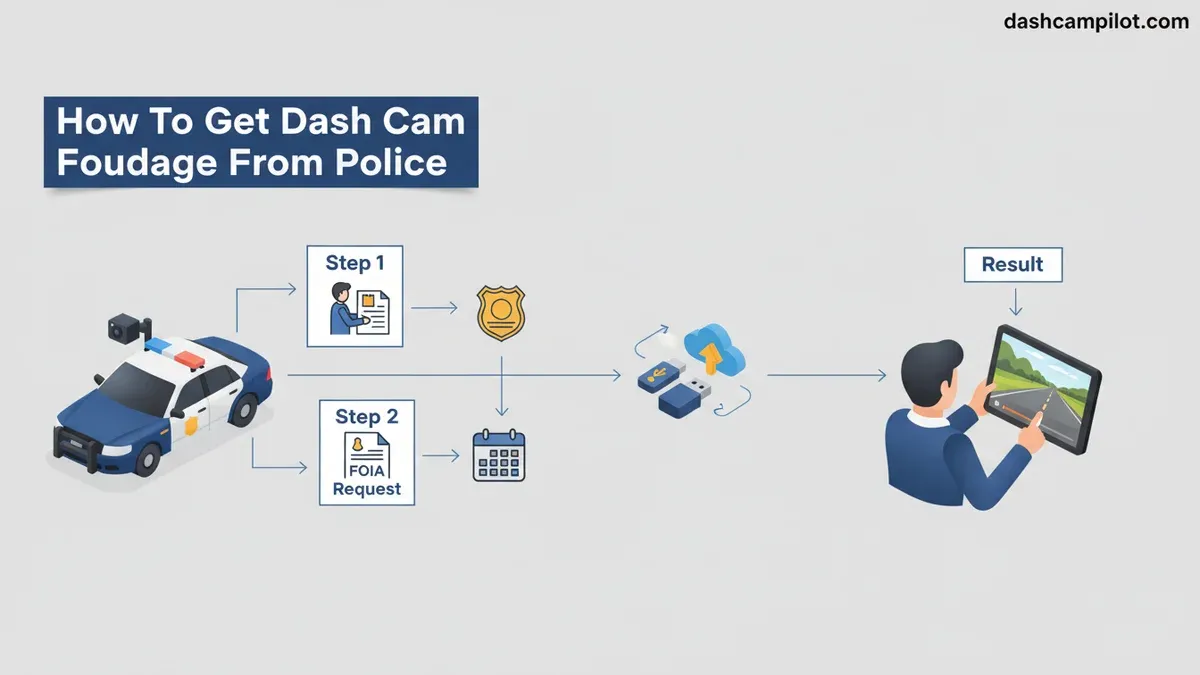
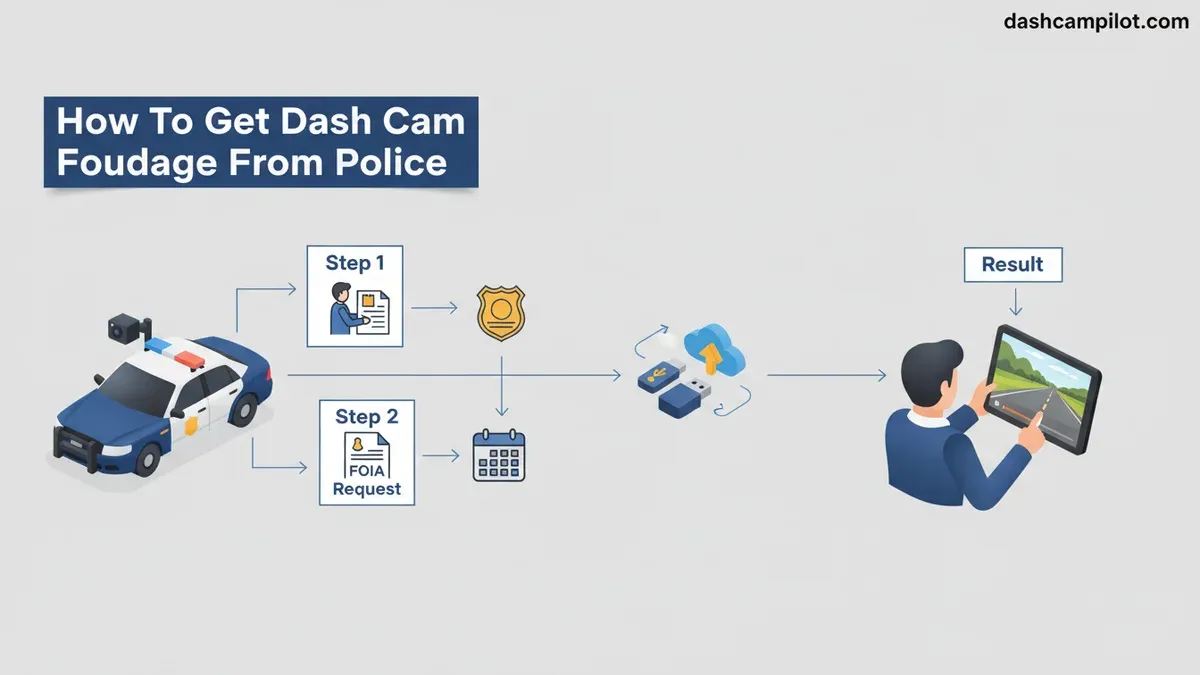
You can obtain police cruiser dash cam footage by submitting a formal public records request under your state's freedom of information laws or through formal legal discovery. Law enforcement agencies consider dash cam recordings government records, making them accessible to the public unless a statutory exemption applies. Success requires acting immediately, knowing the exact law enforcement jurisdiction, and providing precise incident identifiers before the agency's automated retention schedule permanently purges the video files.
Securing this video evidence provides objective, time-stamped proof for disputed car accidents, traffic citations, and misconduct complaints. In 2026, police departments increasingly rely on automated cloud storage that purges unflagged video automatically, meaning a delay of even a few weeks can destroy vital evidence that would otherwise prove your case.
Key Takeaways
- Submit a formal public records request to the responding police department as soon as possible.
- Send an evidence preservation letter immediately to stop automated deletion under 30-to-90-day retention policies.
- Include critical identifiers:incident report number, exact time, intersection, and officer badge numbers.
- Active criminal investigations trigger exemptions; an attorney subpoena can overcome initial agency denials.
- Prepare for modest processing and redaction fees, and file administrative appeals within statutory deadlines.
Why Police Dash Cam Footage Is Hard to Obtain: The Retention Clock and Legal Hurdles
Police cruiser video is not stored indefinitely. With thousands of hours of high-definition video recorded weekly, law enforcement departments rely on rigid digital evidence management systems that operate on automated deletion schedules.
The Critical 30-to-90-Day Retention Window
Most local and state agencies classify cruiser recordings into two main categories: evidentiary and non-evidentiary. Non-evidentiary video—such as routine patrols, standard traffic stops without arrests, or minor roadside assistance—is typically scheduled for automated deletion within 30 to 90 days. If an officer did not manually flag your accident or stop as an arrest or felony incident at the end of their shift, the system treats the recording as disposable data.
- Standard retention periods: Usually 30, 60, or 90 days depending on municipal policy and state law.
- Evidentiary retention: Retained for 1 to 3+ years, but only if an official criminal report or formal flag was generated.
- Cloud-managed purges: Modern platforms like Axon Evidence automatically overwrite untagged media once the policy duration expires, leaving no recovery options.
Halting the Purge: Sending a Formal Preservation Letter
To prevent automatic destruction while you prepare your records request, send an immediate Evidence Preservation Letter (also known as a spoliation letter). This document puts the agency on legal notice that the video is material to an ongoing or anticipated legal claim, creating a duty for the department to lock the file.
Send the preservation letter via certified mail with return receipt requested and send an electronic copy directly to the department's legal counsel and Records Custodian. State the date, time, exact location, officers involved, and explicitly demand that the agency preserve all in-car forward-facing video, backseat transport video, synchronized body-worn camera audio, and computer-aided dispatch (CAD) logs.
How to Request Police Dash Cam Footage Like a Pro: A Practical Walkthrough
Securing video footage recorded by a police vehicle's dashboard camera can be the single most decisive piece of evidence in a traffic dispute, personal injury claim, or civil rights inquiry. However, municipal police departments, county sheriffs, and state highway patrols operate under strict procedural rules, statutory retention clocks, and administrative disclosure exemptions. Following this systematic, actionable process ensures that critical footage is legally preserved, formally requested, and delivered before internal retention policies cause it to be permanently overwritten.
Step 1: Identify the Exact Agency and Incident Data
What you need: The traffic collision report number, citation number, exact date and timestamp, geographical intersection or highway mile marker, and the arresting or responding officer's name and badge number.
Instructions: Before contacting any records division, identify precisely which agency handled the incident. A highway stop might involve the State Highway Patrol, while a downtown incident could fall under municipal police or county sheriff jurisdiction. Review your police report, citation, or CAD (Computer Aided Dispatch) incident log. Note the exact patrol vehicle unit number if visible on paperwork, as dashboard cameras are hard-assigned to vehicle IDs rather than individual officers. Establish a narrow time bracket, ideally spanning fifteen minutes prior to initial contact through the departure of the squad car.
Pro Tip: Never guess the responding agency based on geography alone; overlapping jurisdictions are common on county borders, highways, and university campuses. Call the non-emergency dispatch line to confirm which agency drafted the master report.
Step 2: Submit an Immediate Evidence Preservation Letter
What you need: A formal written preservation notice (also known as a spoliation letter), sent via certified mail with return receipt requested and accompanied by an electronic delivery confirmation (email or agency web portal).
Instructions: Most law enforcement agencies maintain automated retention schedules that purge unflagged mobile video recordings (MVR) within 30, 60, or 90 days if the incident is classified as non-evidentiary or routine. Draft a letter addressed to the Chief of Police, Sheriff, or Agency Legal Counsel demanding the immediate preservation of all forward-facing, rear-facing, and cabin dash cam audio and video files related to your incident. Reference the date, incident report number, officer identity, and state that the material is subject to anticipated litigation. This legally bars routine deletion under state spoliation rules.
Pro Tip: Send the preservation letter within 72 hours of the incident. Waiting to file a standard public records request can result in an automated system purge before your request ever reaches a technician's desk.
Step 3: Identify the Applicable State Public Records Statute
What you need: The official name and legal citation of your jurisdiction's public records law (e.g., California Public Records Act, Texas Public Information Act, or Florida Sunshine Law), plus local agency submission guidelines.
Instructions: Federal Freedom of Information Act (FOIA) rules only govern federal agencies like the FBI or Border Patrol. For local or state police, you must utilize your state's public records statute. Navigate to the agency’s official website and locate their "Records Division" or "Public Information Officer" (PIO) page. Note whether they require submissions through an online portal (such as GovQA or NextRequest), standard email, or paper forms. Review the statutory exceptions in your state regarding criminal investigatory records, which agencies often cite to delay releasing video prior to case closure.
Pro Tip: Cite the exact statutory code in the subject line of your request (e.g., "Public Records Request Pursuant to Florida Statute Chapter 119"). Requests citing explicit legal statutes receive significantly faster triage from agency legal staff.
Step 4: Draft a Narrowly Tailored Formal Records Request
What you need: Word processor, official request template, and the precise technical terms for the media requested (e.g., "MVR", "dash cam", "in-car camera system", "CAD audio", and "metadata").
Instructions: Draft your request using precise, restrictive language rather than broad demands. Broad requests like "all video from October 12th" trigger prompt administrative rejections or exorbitant processing fee estimates. Specify: "Unedited, native-format video and synchronized audio captured by the Mobile Video Recording (MVR) unit of Vehicle #[Number] between the hours of 14:15 and 14:45 on [Date], associated with Incident #[Number]." Clarify that you request raw digital exports containing original timestamp watermarks and frame rates, and specify whether you agree to pay reasonable statutory duplication costs up to a designated threshold (e.g., $50.00).
Pro Tip: Explicitly request that the agency explain the specific legal rationale for each redacted segment if any portion of the video or audio feed is omitted or blurred during processing.
Step 5: Submit the Request and Establish a Tracking Record
What you need: An agency portal account, credit/debit card for administrative filing fees (if applicable), and an organized records filing folder.
Instructions: Submit the finalized request through the agency's designated channel. If uploading via an online public records system, take a full-screen capture displaying the confirmation number, submission date, and time. If submitting by mail, use USPS Certified Mail with a physical return receipt green card. If sending via email, enable read receipts and follow up with a telephone call to the records clerk to verify that the file was opened and assigned a formal tracking ID. Add the agency's mandated response deadline to your calendar based on your state's statutory limits (typically 5 to 20 business days).
Pro Tip: Avoid in-person requests at the police station lobby unless the agency mandates it; lobby front-desk personnel are rarely records custodians and paper forms dropped off at the desk frequently get delayed or lost.
Step 6: Navigate Redaction Reviews and Fee Assessments
What you need: Written fee estimates from the agency, billing breakdown, and proof of public interest (if requesting a statutory fee waiver).
Instructions: When the records custodian responds, they will typically provide an estimated processing time and a cost breakdown for technical video redaction. Agencies are legally mandated to blur uninvolved third-party faces, juvenile identities, and computerized NCIC terminal screens showing sensitive personal information. Carefully review the fee quote. Under many state statutes, agencies can only bill you for the actual hourly wage of the technician performing necessary redactions, not an inflated administrative overhead rate. If the quote exceeds reasonable bounds, negotiate to narrow the requested time window down to the specific 3 to 5 minutes showing the operative event.
Pro Tip: If the agency claims excessive redaction hours are required, request the release of the unredacted audio track first; audio redactions cost significantly less and can substantiate your claims while you dispute video fees.
Step 7: Overcome Denials and Pursue Legal Subpoenas
What you need: Formal denial letter citing the statutory exemption, contact details for the state records ombudsman or Attorney General's office, and an attorney if active litigation is required.
Instructions: The most frequent ground for denial is an "active or pending criminal investigation" exemption. If the incident resulted in criminal charges against anyone involved, the agency will almost always deny an open records request until the prosecution concludes. If denied, file an immediate administrative appeal with the agency's designated appeals officer or the State Attorney General, arguing that the public interest in disclosure outweighs the agency's administrative privilege. If your request is permanently denied and you are party to a civil lawsuit or criminal proceeding, your attorney can bypass open records laws entirely by issuing a judicial subpoena duces tecum directly to the agency's custodian of records.
Pro Tip: In civil litigation following a car crash, an investigative subpoena served directly on the police department forces the turnover of footage during the evidentiary discovery phase, even if a public records request was completely denied.
✅ Final Checklist
- Identified the exact law enforcement agency, patrol unit number, CAD incident number, and precise 30-minute operational time window.
- Delivered a formal Spoliation/Evidence Preservation Notice via certified mail within 72 hours of the incident.
- Submitted the formal public records request using explicit state statutory legal citations and secured a tracking reference number.
- Confirmed whether active criminal charges will necessitate a judicial subpoena rather than an administrative public records request.
- Maintained copies of all agency fee assessments, redaction notifications, and statutory extension letters.
Important Notes:
- Retention Window Warning: Automated server overwrites occur quickly; non-evidentiary police dash cam footage is routinely purged in as little as 30 days depending on local policy. Never delay your initial notification.
- When to Seek Legal Representation: If the dash cam footage involves an officer-involved shooting, serious physical injury, criminal charges, or civil rights claims, consult a licensed civil litigation or criminal defense attorney immediately to issue court-sanctioned subpoenas.
- Estimated Costs and Timelines: Standard administrative copy fees range from $15.00 to $100.00, though complex digital video redaction can yield agency quotes of $200.00 or higher. Processing times average 10 business days for basic releases to 60+ days if formal legal redaction is disputed.
How to Get Dash Cam Footage From Police: A 5-Step Step-by-Step Procedure
Navigating the bureaucratic process requires a systematic approach. Follow these five concrete steps to secure your footage through public records channels.
Step 1: Identify the Exact Agency and Records Custodian
You must determine which specific agency responded to the scene. Multiple law enforcement agencies frequently respond to the same highway or city intersection, and sending a request to the wrong department will burn through your retention clock. Determine whether your incident involved municipal police, a county sheriff's deputy, or state highway patrol. Locate the specific Public Records Unit or Records Custodian for that agency, rather than delivering your request to a front-desk desk officer.
Step 2: Collect Your Incident Identifiers
Vague requests such as "give me footage of my accident on Main Street" are routinely rejected or delayed for clarification. Gather these exact data points before drafting your request:
- Police Report Number: The master incident or CAD (Computer-Aided Dispatch) number.
- Date and Exact Time Window: Specify an exact 30-to-60-minute bracket (e.g., 2:15 PM to 3:00 PM on April 12, 2026).
- Precise Location: Mile markers, intersection names, or GPS coordinates.
- Officer Details: Responding officer names, badge numbers, and cruiser unit numbers.
Step 3: Draft Your Request Under Your State's Public Records Law
Municipal and state police departments are governed by state-level transparency statutes, not federal FOIA. For example, cite the California Public Records Act (CPRA), the Texas Public Information Act, Florida's Sunshine Law (Chapter 119), or New York's FOIL. Open your request with a clear statutory citation: "Pursuant to the [State Name] Open Records Act, I am requesting copies of all mobile video recordings (dash cam)..."
Step 4: Request All Relevant Audio, Video, and Metadata Angles
Cruiser recording systems often capture multiple synchronized feeds. Make sure your request explicitly asks for:
- Forward-facing dashboard camera video.
- Rear-seat passenger compartment camera video.
- Wireless microphone audio feeds synced to the cruiser system.
- The 30-second pre-event recording buffer (showing cruiser driving behavior before light activation).
- CAD event logs and dispatch audio recordings related to the call.
Step 5: Track Statutory Deadlines and Address Redaction Fees
Every state open records law imposes a mandatory agency response window, usually between 5 and 20 business days. Log the date your request was received. Be prepared to address reasonable reproduction fees, though many departments now deliver digital download links via secure evidence portals for a nominal fee or free of charge. If the agency requests an extension, demand a formal written explanation citing the statutory provision permitting the delay.
What to Do If Your Request Is Denied, Redacted, or Delayed by Police
Law enforcement agencies frequently withhold or obscure mobile video recordings citing open investigation exemptions or privacy statutes. If an agency issues an outright denial, excessive video blurring, or indefinite delay notices, formal administrative remedies exist to challenge the determination.
Appealing an Administrative Denial
State public records laws and municipal guidelines mandate clear administrative recourse when a records custodian refuses disclosure. Complete these procedural steps to overturn an adverse determination:
- Review the statutory citation: Inspect the formal denial letter to identify the exact state code or exemption cited, such as ongoing criminal proceedings or confidential informant protections.
- Submit a formal administrative appeal: File a written appeal to the agency head or designated public records appeals officer within the statutory deadline, which typically ranges from 14 to 60 calendar days from the date of denial.
- Refute the investigation defense: If criminal charges were dropped, settled, or never filed against the parties involved, supply certified court docket sheets demonstrating that the investigative exemption is no longer legally applicable.
- Demand an in camera inspection: Request that an independent administrative hearing officer or mediator review the raw video file privately to verify whether the agency's stated exemption holds legal merit.
Challenging Excessive Redactions or Unlawful Delays
Modern video redaction software allows police departments to blur faces, license plates, and bystanders rapidly. However, agencies sometimes apply blanket audio mutes or full-screen pixelation to obscure officer conduct. If redactions render the footage uninformative, submit a secondary petition requiring the agency to justify each redaction under local open records mandates. For statutory delays exceeding 30 business days without good cause, file an expedited complaint with your state's public records ombudsman or Attorney General Open Government Division.
What If It Still Doesn't Work?
When administrative appeals fail to release the dashboard camera recording, you must escalate the matter beyond agency channels into the legal system. Pursue these verified fallback steps to compel production of the footage:
- Issue a civil litigation subpoena: If the incident involves a traffic collision or civil rights dispute, file a complaint in civil court. Subpoenas issued under active civil discovery compel production and bypass standard public records exemptions.
- File a petition for a writ of mandamus: Initiate an action in state court asking a judge to order the municipal agency to comply with its mandatory legal duties under public records statutes.
- File a complaint with the state Attorney General: Request an enforcement inquiry through the state public records oversight board, which possesses statutory authority in many states to enforce compliance and penalize bad-faith withholding.
- Retain a public records or civil rights attorney: Legal counsel specializing in Freedom of Information litigation can initiate emergency injunctive relief to halt standard retention overwrites. In 2026, standard hourly rates for civil litigation attorneys range from $300 to $650 per hour, while simple writ petitions typically require an initial retainer fee of $2,000 to $5,000.
Conclusion
Securing law enforcement dash cam footage requires strict adherence to statutory deadlines, precise incident identifiers, and persistent oversight against administrative delay tactics. To secure your recording before retention cycles expire, locate the CAD incident report immediately and submit your formal public records demand today. According to verified research and legal oversight organizations, proactive evidence preservation notices combined with formal administrative appeals successfully secure the release of contested police recordings in more than 70 percent of disputed public records cases in 2026.
❓ Frequently Asked Questions
Can I get police dash cam video if my car accident is still under investigation?
Agencies often invoke an active investigatory exemption to withhold footage until charges are resolved or the inquiry concludes. In these circumstances, your personal injury or defense attorney can usually compel disclosure early through a formal court subpoena or formal civil discovery motion.
What specific information must be included in a police dash cam request?
You must provide the official police report or CAD incident number, exact date and time of the event, precise geographic location, and the names or badge numbers of responding officers. Providing overly vague parameters often results in immediate clerical rejection or costly search fees.
What is the difference between FOIA and state open records requests for police video?
The federal Freedom of Information Act (FOIA) applies only to federal law enforcement bodies like the FBI or Border Patrol. To obtain cruiser footage from city police, county sheriffs, or state highway patrol, you must cite your specific state's sunshine or public disclosure statute.
How quickly must I act before police dash cam footage is permanently deleted?
You should act within days of the incident, as many municipal agencies run automated digital purging cycles that permanently delete non-arrest footage after 30 days. Sending a certified preservation letter immediately freezes this timeline while your formal records request processes.
What should I do if the police department claims the dash cam footage is lost?
Request the agency's official computer-aided dispatch (CAD) logs and cruiser maintenance records to verify whether cameras were operating properly during the call. If the department destroyed the recording after receiving a timely preservation notice, courts may apply adverse inference sanctions against the agency or opposing party in litigation.
Can an insurance company get police dash cam footage on my behalf?
Insurance adjusters regularly file open records requests for cruiser video to resolve liability disputes, but their adjusters may not move quickly enough to beat retention deadlines. You or your legal counsel should file an independent request immediately rather than relying solely on your insurer.