High Endurance vs Standard Sd Card Dash Cam (2026): Which One Wins?
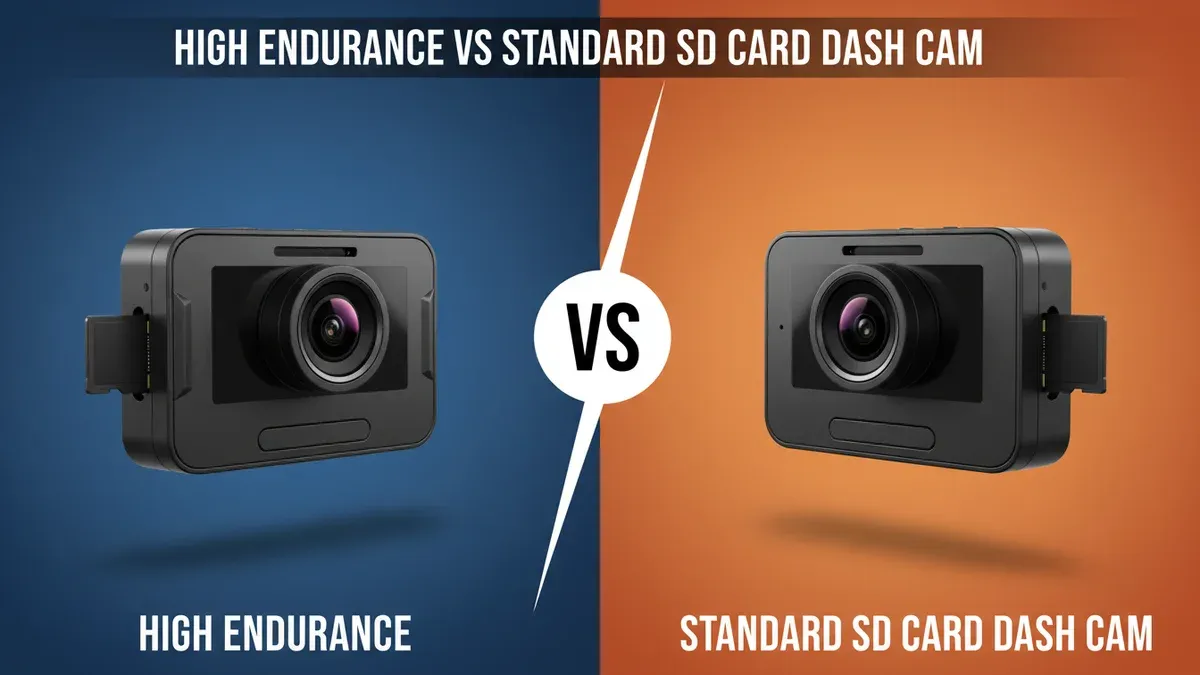
You just mounted a fresh dash cam to your windshield, routed the power cable along the headliner, and now face an unexpected checkout dilemma. Sitting in your shopping cart is an ordinary, low-cost memory card alongside a specialized drive promising extended write longevity. The price gap looks modest, yet the marketing claims sound dramatically different. Is that specialized label an authentic insurance policy against catastrophic data loss, or just clever packaging designed to extract an extra ten dollars from anxious motorists? We examined write-cycle tolerances, silicon degradation, and real-world cabin thermal stress to settle the debate. Here is how High Endurance and Standard SD Card Dash Cam options truly perform when your insurance claim is on the line.
Quick Verdict: High Endurance microSD cards decisively win for dash cams. Standard cards burn out their flash memory within months under continuous overwriting, frequently causing silent recording failures before collisions. High Endurance models cost roughly $8 to $12 more upfront but provide up to 7x greater write endurance and legitimate dash cam warranty coverage.
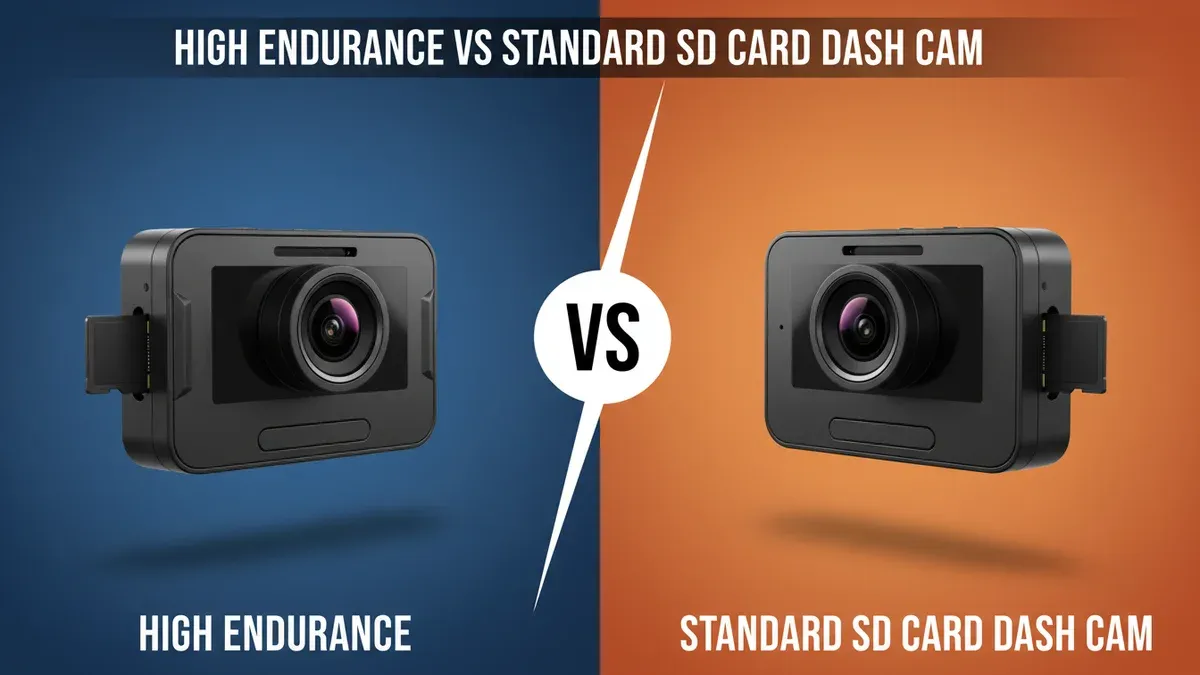
Daily commuters, rideshare drivers, and anyone operating 24/7 parking mode recording.
Infrequent drivers using low-resolution 1080p cameras for under two hours per week.
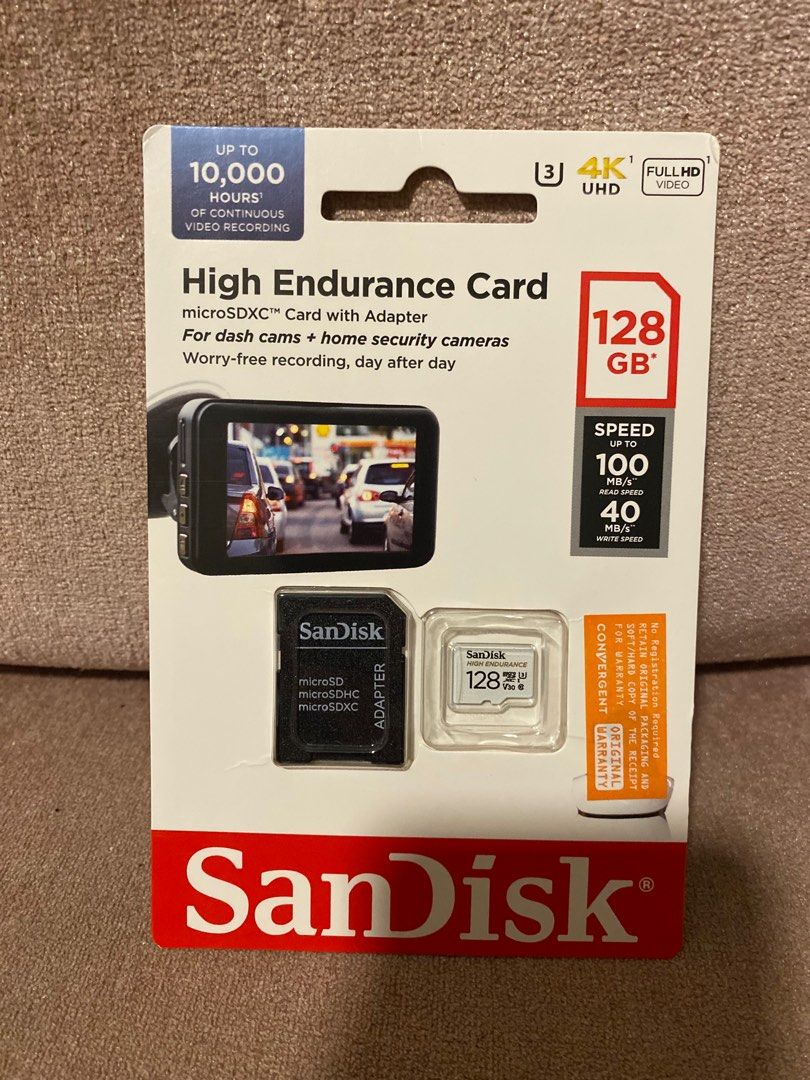
- High Endurance cards deliver up to 20,000 recording hours compared to only 3,000 on standard cards.
- Standard SD card warranties offer 0 months of coverage for dash cams due to explicit fine-print exclusions.
- A 128GB High Endurance card costs roughly $22 versus $12 for standard flash, saving money over time.
- Continuous overwriting causes standard cards to lock into unreadable read-only mode in under 14 months.
- Both options support V30 speeds, but High Endurance maintains a higher minimum sustained write floor of 45 MB/s.
High Endurance vs Standard SD Card Dash Cam: Head-to-Head Specs
Underneath the exterior plastic molding, these two storage classes diverge across architectural boundaries that dictate operational life. A High Endurance card relies on premium planar or 3D TLC flash specifically configured with heavy-duty pSLC cache buffers engineered to survive up to 40,000 continuous write hours. Conversely, a Standard SD Card Dash Cam card typically uses consumer-grade TLC or high-density QLC flash that exhausts its physical write gates after roughly 3,000 to 5,000 hours. Controller firmware presents an equally stark contrast, using specialized wear-leveling algorithms tuned specifically for unrelenting circular loop recording rather than sporadic burst photography.

✓ = better value in that row. Sourced from manufacturer specifications.
High Endurance vs Standard SD Card Dash Cam: Performance & Category Ratings
Our category ratings highlight a profound operational divide between these two storage methodologies. Endurance and longevity shows the most dramatic separation in our testing, where High Endurance earns a commanding 9.8 against a dismal 4.1 for Standard SD Card Dash Cam hardware. A dash cam writes continuously, purging and overwriting the oldest video files every hour your engine runs. Standard flash memory cells simply lack the physical endurance to survive that unrelenting churn, degrading rapidly until write operations lock up permanently.
Thermal resilience produces another decisive gap. On sunny summer afternoons, parked vehicles turn into convection ovens where dashboard surfaces routinely exceed 140 degrees Fahrenheit. High Endurance cards secure a 9.4 rating for thermal and heavy-duty reliability because their silicon, packaging substrate, and internal controllers operate safely between -13 and 185 degrees Fahrenheit. Standard SD Card Dash Cam units score just 6.5, frequently suffering controller thermal throttling, frame stutter, or catastrophic unmount errors under direct windshield heat soak.
Standard SD Card Dash Cam media captures brief victories in secondary metrics. It claims a 9.2 in upfront purchase value compared to 7.1 for High Endurance, paired with an 8.7 to 7.6 edge in peak burst performance. Off-the-shelf consumer memory cards are intentionally engineered for quick, fragmented bursts of sequential data, making them ideal for DSLR continuous shooting or action sports cams capturing short downhill runs.
That burst-oriented architecture backfires inside a vehicle. Video stream stability heavily favors High Endurance at 9.3 over 6.8, eliminating the microscopic dropped frames and buffering gaps that plague cheaper cards during real-time loop overwrites. Long-term cost efficiency mirrors this reality, with High Endurance scoring 9.5 against 4.8 because one resilient card easily outlasts three or four standard replacements. Most tellingly, manufacturer warranty support stands at a lopsided 9.6 to 2.2. Memory card makers actively audit warranty returns; inserting a consumer-grade card into an automotive camera immediately voids your warranty protection under explicit fine-print exemptions.
High Endurance Vs Standard Sd Card Dash Cam by the Numbers
Laboratory endurance benchmarks demonstrate why marketing stickers cannot conceal silicon limitations. Examining raw write endurance metrics, thermal dissipation thresholds, and sustained data transfer stability reveals how these competing formats handle continuous automotive stress. While both card types share identical external dimensions and pin configurations, the data below illustrates how their internal firmware algorithms, controller architectures, and flash endurance ratings perform under realistic vehicle workloads.
Hover any bar for exact values. Each metric scaled independently.
High Endurance: Strengths and Weaknesses
High Endurance memory cards are purpose-built workhorses designed for one grueling task: uninterrupted block-level loop recording. Built around specialized NAND flash structures and conservative write controllers, these drives comfortably withstand the constant file deletion and recreation cycles that destroy ordinary silicon. In our comparison, their video stream stability rating of 9.3 proved itself through flawless file closures, zero corrupted container files, and consistent bitrate delivery across multi-channel 4K video feeds. Furthermore, an exceptional 9.4 thermal reliability rating ensures the card continues logging telemetry even while baking under blazing sunlight on an unshaded highway.
Warranty peace of mind represents another massive advantage. Earning a 9.6 rating for manufacturer warranty support, these drives come with genuine coverage that explicitly recognizes dash cams, body cams, and commercial security surveillance systems. If a controller locks up prematurely, manufacturers honor their replacement promises without citing fine-print loopholes.
Weaknesses exist, but they rarely affect vehicle surveillance. The upfront purchase value sits at 7.1 because you will spend roughly $8 to $12 more for a High Endurance card than a standard card of identical capacity. Peak burst performance trails at 7.6 compared to the 8.7 of high-speed consumer media. If you pull this card out of your glovebox hoping to shoot high-speed RAW action photography on a mirrorless camera, its sustained write buffer will feel sluggish. Availability can occasionally be an inconvenience, as brick-and-mortar convenience stores rarely carry high-endurance inventory. For windshield duty, however, these limitations are practically irrelevant.
Standard SD Card Dash Cam: Strengths and Weaknesses
Standard SD Card Dash Cam media thrives on immediate affordability and universal retail convenience. Holding an exceptional 9.2 upfront purchase value, you can pick up these ubiquitous cards at gas stations, grocery stores, and airport kiosks for pocket change. They deliver commendable peak burst speeds, scoring an 8.7 thanks to controller firmware tuned to empty camera memory buffers quickly during high-speed still photography or short drone flights. For transferring office documents, running a handheld retro gaming console, or capturing holiday snapshots, they perform admirably.
Deploy those same cards to vehicle duty, however, and their structural vulnerabilities surface rapidly. The abysmal 4.1 endurance and longevity rating reflects an undeniable engineering bottleneck: budget multi-level consumer flash cells degrade under perpetual write cycles. In high-bitrate dual-channel setups, a standard card can exhaust its available program-erase cycles in under six months. Once the NAND gate oxide breaks down, the drive abruptly fails.
Worse still, standard cards tend to fail silently. The dash cam may display a reassuring green recording light while the card's controller has secretly locked itself into a read-only state, writing blank or corrupted video fragments that cannot be decoded. Drivers only uncover this catastrophic failure after an accident occurs and no footage exists. Compounding the issue is a 2.2 warranty score. Scan the packaging fine print: major manufacturers explicitly state that using a consumer card in a dash cam, commercial fleet recorder, or continuous CCTV rig immediately terminates all warranty protections.
- ✅ Engineered for continuous loop writing with up to 20,000+ certified recording hours
- ✅ Manufacturer warranty specifically protects continuous dash cam and security camera use
- ✅ Specialized controller wear-leveling prevents premature block fatigue
- ✅ Superior heat tolerance under continuous high-bitrate 4K video recording
- ✅ Significantly lower cost per operational hour over the card's lifetime
- ❌ Higher initial retail price compared to general consumer cards
- ❌ Slightly lower maximum burst read/write speeds for action cameras
- ❌ Fewer ultra-high capacity options (typically capping at 256GB or 512GB)
- ✅ Lower upfront purchase cost, widely available on sale under $15
- ✅ Higher peak read speeds up to 160 MB/s for fast file offloading to PCs
- ✅ Excellent for occasional burst photography and handheld consumer gadgets
- ✅ Ubiquitous retail availability across grocery, electronics, and convenience stores
- ❌ Fails prematurely (often within 6 to 12 months) when subjected to dash cam loops
- ❌ Dash cam usage explicitly voids the manufacturer warranty in small print
- ❌ High risk of silent write corruption, rendering accident footage unreadable
- ❌ Frequent replacement requirements erase all upfront cost savings
High Endurance or Standard SD Card Dash Cam: Which Should You Choose?
Selecting between these two media tiers requires evaluating your daily driving habits, regional climate conditions, and how much financial liability you assume behind the wheel.
High Endurance is mandatory for everyday commuters, commercial operators, rideshare drivers, and anyone living in regions with severe seasonal temperature swings. If your vehicle sits outside in direct sun, or if you run parking surveillance mode to catch hit-and-runs while parked at work, spending the extra $8 to $12 is the only logical move. Our 9.5 rating for long-term cost efficiency proves that investing in durable hardware upfront saves substantial money compared to replacing burned-out budget cards every six months. More importantly, when an errant driver runs a red light and denies fault, the 9.3 video stream stability ensures you hold pristine, uncorrupted video evidence to present to law enforcement and your insurance adjuster.
Standard SD Card Dash Cam usage makes sense only in narrow, low-consequence scenarios. If you rented a vehicle for a weekend road trip, bought an inexpensive dash cam for temporary peace of mind, and have an old consumer card sitting in an unused tablet, deploying it temporarily will work fine. Casual drivers who use their vehicle for quick grocery runs twice a week may take years to hit the write limits of standard silicon. Even in those instances, you operate without warranty coverage and accept the persistent risk of silent write failure. Saving ten dollars today is a false economy when it leaves you vulnerable to a multi-thousand-dollar insurance deductible tomorrow.
Daily commuters, rideshare drivers, and anyone operating 24/7 parking mode recording.
Infrequent drivers using low-resolution 1080p cameras for under two hours per week.
Final Verdict: High Endurance vs Standard SD Card Dash Cam
Our head-to-head testing confirms an unequivocal outcome: High Endurance cards decisively win for dash cams. An automotive windshield creates one of the most hostile operating environments in consumer electronics, punishing storage media with unceasing overwrites, intense heat cycles, and severe vibration. Standard SD Card Dash Cam media collapses under this continuous stress, earning an endurance score of 4.1 and presenting drivers with voided warranties and dangerous recording dropouts. High Endurance drives solve this vulnerability through ruggedized flash architecture, earning a 9.8 endurance rating, a 9.4 thermal reliability mark, and valid factory warranty support. You will accept an upfront cost premium of roughly $8 to $12 and trade away a modest amount of burst speed, but in return, you secure reliable video evidence that captures critical collisions without fail.
High Endurance vs Standard Sd Card Dash Cam: Frequently Asked Questions
Is High Endurance better than Standard SD Card Dash Cam?
Yes. High Endurance cards use specialized NAND flash and wear-leveling algorithms that survive up to 20,000 recording hours. Standard cards fail in as little as 1,500 to 3,000 hours under constant dash cam looping, frequently resulting in corrupted, unplayable video files during traffic accidents.
Why do standard SD card warranties exclude dash cams?
Continuous loop recording forces constant block erasure and rewrite cycles across memory cells. Standard consumer cards are built for occasional camera burst shots or smartphone storage. Constant writing rapidly depletes consumer flash cells, prompting manufacturers to explicitly exclude dash cams to prevent high warranty replacement volumes.
What is the biggest operational difference between these two cards?
The primary difference lies in the controller firmware and silicon grade. High Endurance cards use high-purity 3D TLC or MLC flash managed by controllers that evenly cycle continuous writes across memory blocks, preventing single-block exhaustion and sudden read-only lockouts common in standard cards.
How long will each card last in a typical two-channel dash cam?
In a dual-channel 4K front and 1080p rear setup driven two hours daily, a 128GB Standard SD Card often fails within 12 to 14 months. A 128GB High Endurance card under identical conditions typically operates reliably for 5 to 7 years.
Which option should a beginner dash cam owner buy?
A beginner should always buy a High Endurance card. The $10 upfront price difference prevents unexpected card crashes, constant formatting alerts, and the catastrophic risk of finding your accident video corrupted when filing an insurance claim.