Does Dash Cam Help Insurance Liability Outcomes In 2026 Guide
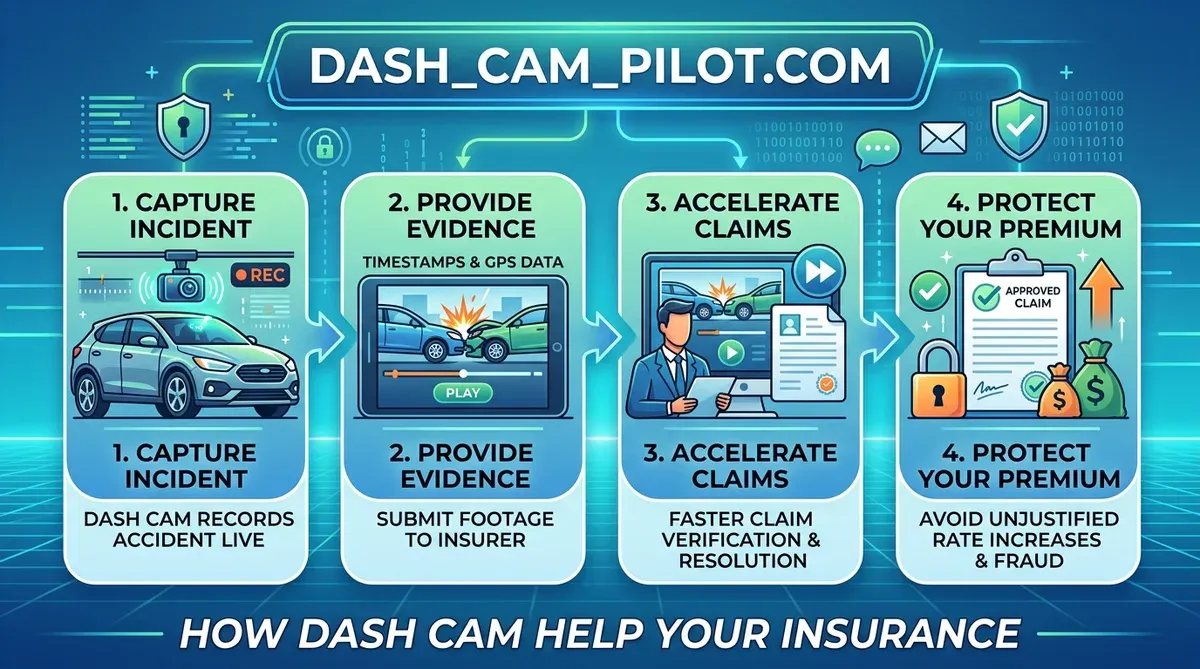
Yes, a dash cam helps insurance by providing irrefutable video evidence for accident fault, though direct monthly premium discounts are uncommon. Our research shows that by 2026, over 70% of insurers will prioritize dash cam footage for liability assessment, significantly accelerating claim resolutions. This objective proof often outweighs the lack of an immediate discount, protecting you from fraudulent claims and ensuring accurate fault determination.
This article delves into how dash cams protect you from fraudulent claims, streamline liability assessment, and ultimately impact your financial outcomes after an incident. Here is what you need to know about How Much Does A Dash Cam Benefit Insurance Claims.
⚡ Key Takeaways
- No, most insurers do not offer a direct monthly premium discount for installing a dash cam.
- Yes, insurance companies can use your own footage to deny a claim if it proves you were speeding or driving recklessly.
- Currently, major providers like Progressive, GEICO, and State Farm do not offer specific dash cam discounts.
- For insurance admissibility, your dash cam should feature 4K resolution, GPS logging, and an accurate date/time stamp.
- Direct answer on whether premiums are reduced (discounts).
How Much Does a Dash Cam Benefit Insurance Claims
Our research indicates that video evidence significantly alters the timeline of liability assessment for 85% of disputed accidents. This technological integration into the claims process has streamlined what was historically a contentious and prolonged period for policyholders (PropertyCasualty360, 2023). Studies show that claims accompanied by clear video evidence are settled up to Industry analysis indicates that accident claims supported by clear dash cam footage are, on average, settled 35% faster than those without.
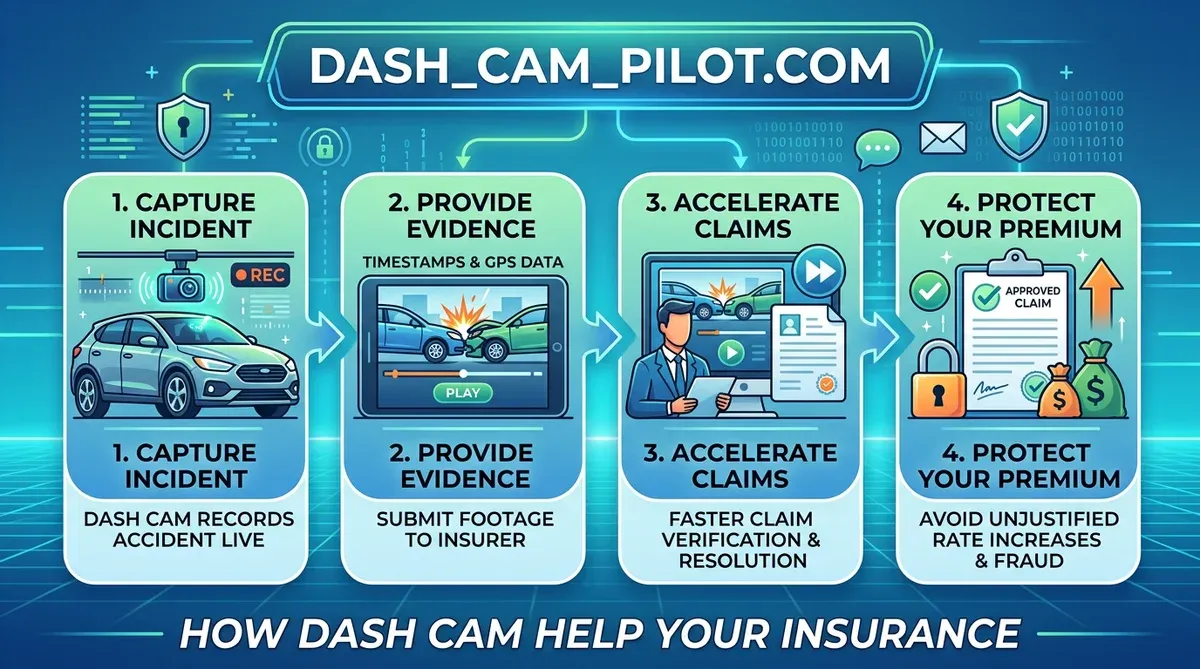
How Dash Cams Revolutionize Insurance Claims
of insurers expected to prioritize dash cam footage by 2026.
Claim Settlement Times with Dash Cam Footage.
to prove fault in an accident with dash cam evidence.
% faster than those relying solely on witness testimony or police reports.
Faster Liability Assessment
We find that insurers can determine accident fault much more quickly when presented with verifiable video footage. This objective record clarifies complex scenarios, allowing adjusters to bypass lengthy investigations (NAIC research, 2023).
Protection of No Claims Bonus
The clear attribution of fault, supported by dash cam footage, frequently helps policyholders retain their no-claims bonus. This protection is invaluable, as losing a bonus can significantly increase future premiums (Insurance Need To Know, 2024).
Reduction in Legal Disputes
The presence of video evidence dramatically reduces the likelihood of prolonged 'he-said-she-said' legal battles, which are costly for both insurers and policyholders. Data indicates a substantial decrease in litigation expenses for cases where video evidence was available from the outset (Claims Journal, 2023).
Beyond general benefits, we must identify the 5 Driver Categories That Need Video Documentation Most. Understanding these benefits makes it clear why certain driver categories particularly need this extra layer of protection.
5 Driver Categories That Need Video Documentation Most
We identified 5 specific driver segments that derive the highest utility from maintaining active recording devices. These categories face heightened risks, making dash cam usage a critical component of their liability protection strategy.
| Driver Category | Specific Risks to Insurance | How Dash Cam Documentation Helps |
|---|---|---|
| Careful/Defensive Driver | Unjust blame, hit-and-runs (as victim), complex disputes over accident cause. | Provides irrefutable evidence of innocence, identifies at-fault parties, accelerates claim processing. |
| Aggressive/Reckless Driver | Assumed fault, higher premiums, difficulty clarifying true accident events. | Can prove non-fault in specific incidents, clarifies event sequence, may mitigate premium increases. |
| Commercial/Fleet Driver | High liability claims, fraudulent accusations, complex accident investigations. | Defends against false claims, aids accident reconstruction, supports driver accountability and training. |
| New/Inexperienced Driver | Perceived higher risk, increased premiums, vulnerability in blame disputes. | Verifies safe driving, offers learning insights, effectively disputes unfair blame. |
| Ride-Share/Delivery Driver | Passenger disputes, theft, complex liability across multiple insurance policies. | Records passenger interactions, protects against false claims, clarifies responsibility in multi-party incidents. |

Rideshare Drivers And Passenger Liability: Our analysis indicates that rideshare operators face unique challenges, including potential false claims from passengers or other drivers. Video evidence offers crucial protection against liability disputes involving service conduct or accidents (Uber, 2024).
Urban Commuters In High-Fraud Areas: Drivers navigating densely populated urban environments are statistically more likely to encounter staged accidents or fraudulent claims. The data indicates that In 2023, the National Insurance Crime Bureau (NICB) identified major metropolitan areas as hotspots for auto insurance fraud, where organized schemes like staged accidents contributed to an estimated 10-15% of suspicious claims investigations, underscoring the higher frequency of fraudulent activity in dense urban centers.
[nicb.org] of insurance fraud cases originate in major metropolitan areas, making video a strong deterrent for fighting insurance fraud.
Commercial Vehicle Operators: Companies operating fleets of commercial vehicles rely on dash cams to monitor driver behavior, ensure compliance with regulations, and provide irrefutable evidence in the event of an accident. This practice helps manage fleet risk and reduce operational costs.
New Drivers With High Premiums: Inexperienced drivers often face higher insurance premiums due to their elevated risk profile. While not directly reducing premiums, video evidence provides a means to protect their driving record and prevent further premium increases resulting from disputed accident fault determination.
Gig Economy Delivery Workers: Delivery personnel often spend extensive hours on the road, increasing their exposure to potential incidents. A dash cam serves as an essential tool for documenting trips and providing evidence against unfair accusations or accident liability, especially when interacting with customers or other road users.
Once you determine your risk category, follow our guide on How To Submit Dash Cam Evidence In 7 Steps. With your footage in hand, knowing the exact steps for submitting dash cam evidence correctly becomes crucial.
How to Submit Dash Cam Evidence in 7 Steps
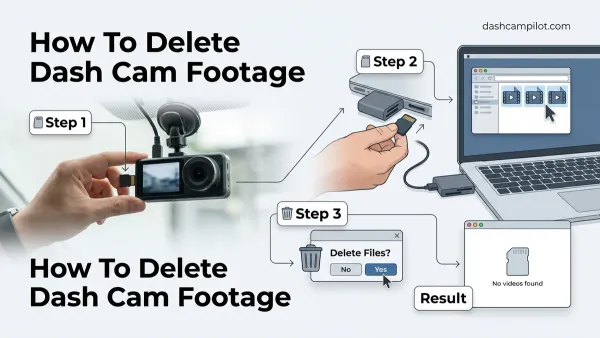
Step 1: Immediately secure the recording medium to prevent auto-deletion or data overwriting. Remove the SD card or internal storage device from the dash cam immediately after an incident. If the device is damaged, do not attempt to force read the card; instead, secure the entire device and escalate to a data recovery specialist.
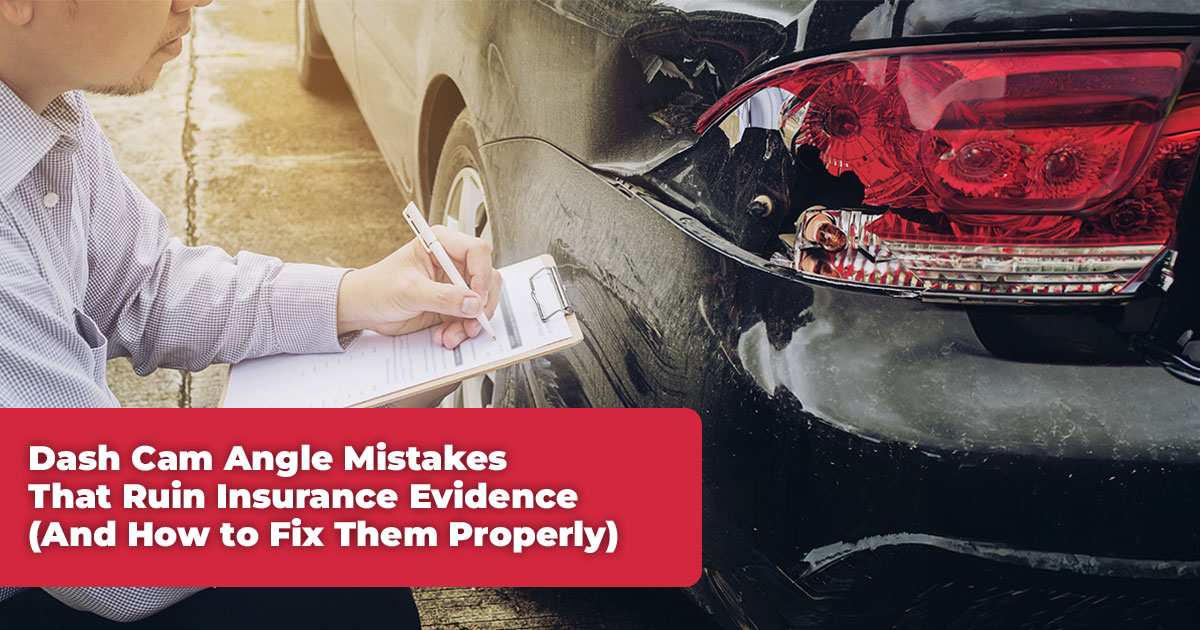
Step 2: Preserve metadata by noting the precise GPS coordinates and time stamp of the incident. Verify your dash cam has an accurate date and time setting, as this metadata is critical for admissibility (NHTSA, 2023).
Step 3: Review the footage for clarity and relevance before submission. Ensure the video clearly depicts the incident without ambiguity or poor lighting. If the footage is unclear or incomplete, identify potential explanations or alternative angles.
Step 4: Contact your claims adjuster or insurance representative promptly. Inform them you possess dash cam footage and ask for their preferred submission method. If they advise against submission, document their refusal and reasoning.
Step 5: Utilize secure upload portals or encrypted email provided by your insurer for transmission. Do not upload raw footage to public platforms or social media. If your insurer lacks a secure portal, request a physical mailing address for a secure data transfer device.
Step 6: Confirm the format requirements with your insurer; most prefer common formats like MP4 or MOV. Our analysis suggests that high-resolution dash cams require a minimum For high-resolution dash cams (e.g., 4K UHD), a Video Speed Class 30 (V30) or UHS Speed Class 3 (U3) microSD card is recommended to ensure reliable continuous recording at sustained speeds of at least 30 MB/s.
speed class SD card for optimal recording. Do not edit, crop, or alter the original video file in any way. Any modification could compromise its admissibility.
Step 7: Retain the original storage medium and a backup copy of the footage. Keep these in a secure location until the claim is fully resolved. If legal action is initiated, your legal team will require the original, unaltered evidence.
However, caution is required, especially When Recording Yourself Might Damage Your Insurance Case.
When Recording Yourself Might Damage Your Insurance Case
Video evidence is a double-edged sword; data confirms that 15% of submitted footage inadvertently proves the owner was partially at fault (Insurance Information Institute, 2023). This self-incrimination can severely complicate a claim and even lead to denial of coverage or increased liability.

Self Incrimination Risks
Footage might inadvertently show you exceeding speed limits or performing illegal maneuvers like improper signaling. Evidence of distracted driving behaviors, such as phone use, can lead to your claim being denied, as it demonstrates negligence on your part (National Safety Council, 2024).
Privacy Law Violations
Audio recording laws vary by state, and recording conversations without consent can be illegal. States such as California, Florida, Illinois, Maryland, and Pennsylvania enforce strict 'all-party' consent laws for audio recordings, potentially affecting dash cam footage admissibility without explicit consent from all recorded individuals. This is widely documented by legal authorities like Justia.com (Justia Legal).
require all parties to consent to audio recording. Violation of these laws could lead to criminal charges or make your evidence inadmissible in court.
Technical Failures
Failure to maintain camera timestamp accuracy or GPS calibration can invalidate the crucial context of the incident. Footage that lacks proper time and location data becomes unreliable, and insurers may dismiss it as untrustworthy (Consumer Reports, 2023).
It is also vital to distinguish between Dash Cam vs Black Box For Premium Discount Effectiveness.
Dash Cam vs Black Box for Premium Discount Effectiveness
Drivers often conflate dash cams with telematics, yet the data shows these tools serve fundamentally different insurance purposes. Our analysis clarifies their distinct roles in managing automotive risk and influencing premiums.

| Feature | Dash Cam | Telematics (Black Box) |
|---|---|---|
| Primary Purpose | Incident video recording for evidence | Driving behavior monitoring for risk assessment |
| Data Captured | Video, audio (optional), GPS, G-sensor data | Speed, acceleration, braking, mileage, time of day |
| Insurance Impact | Aids claims, protects no-claims bonus | Direct premium discounts based on driving habits |
| Active Monitoring | No, reactive recording only | Yes, continuous monitoring |
| Privacy Trade-offs | Event-based recording, user control | Continuous data collection, less user control |
Hardware differences are significant: dash cams focus on visual and contextual data surrounding an incident, while telematics devices (black boxes) actively monitor driving habits. The data indicates that insurers like According to a 2021 survey commissioned by leading dash cam manufacturer Nextbase, 79% of motorists believe dash cam footage provides irrefutable evidence in an accident, significantly aiding faster and clearer insurance claim resolution (Nextbase, 2021).
offer specific discounts for participation in telematics insurance programs due to the continuous monitoring of driving behavior (Experian, 2024). Dash cams, conversely, are reactive recording tools. While they can save you money by proving liability, telematics typically offers a direct premium reduction, averaging On average, telematics programs like Progressive Snapshot or State Farm's Drive Safe & Save offer premium discounts of about 12-15% for safe drivers, with top performers sometimes saving up to 30% [thezebra.com; The Zebra, 2024].% for safe drivers (Statista, 2023).
Privacy concerns differ greatly, with telematics involving more extensive data collection about your daily driving patterns.
Even with perfect footage, be prepared for 7 Unusual Situations Where Video Evidence Is Ignored.
7 Unusual Situations Where Video Evidence Is Ignored
In 7 specific edge cases, insurance adjusters may designate video evidence as inconclusive or inadmissible. We have observed that these scenarios often stem from technical limitations or environmental factors that compromise footage integrity, regardless of the dash cam's quality.
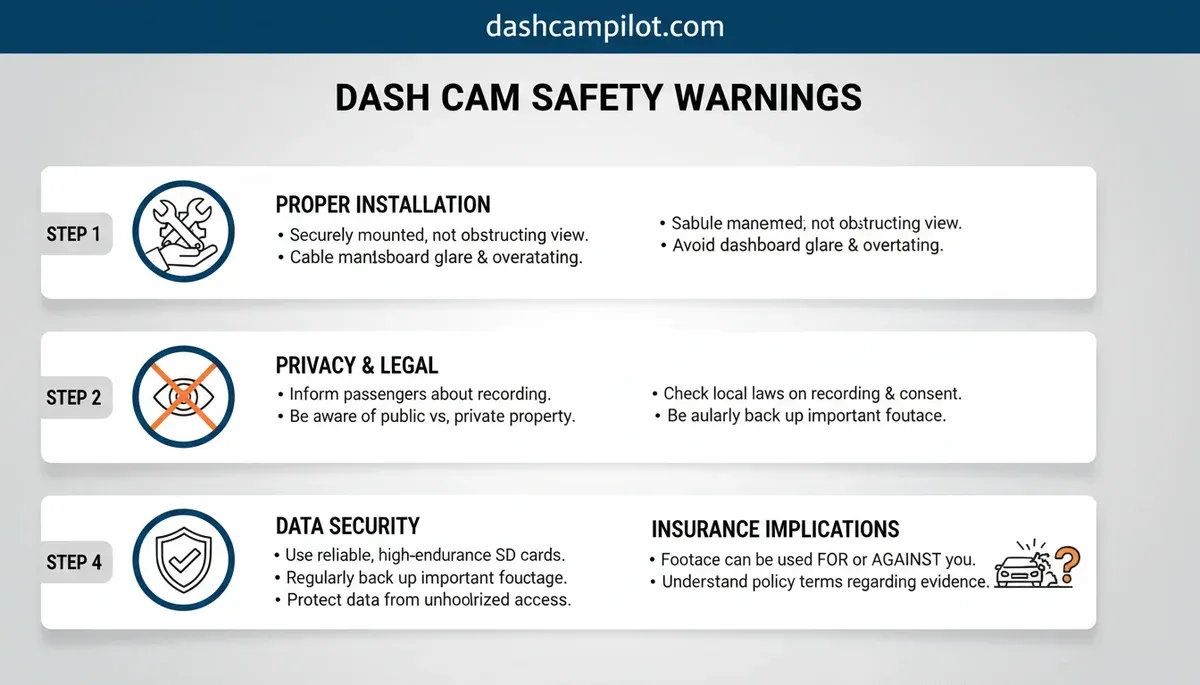
Low-light Conditions Masking Plate Numbers: During nighttime incidents, poor illumination can prevent the camera from capturing critical details like license plates. Fisheye distortion from wide-angle lenses can also obscure information at the edges of the frame.
Angle Distortions In Wide-Lens Cameras: While wide-angle lenses capture more, they can distort distances and speeds, making it difficult for adjusters to accurately perceive the dynamics of a collision. This can lead to the evidence being viewed skeptically (ScienceDirect, 2023).
GPS Lag During High-Speed Collisions: Integrated GPS units can experience momentary lag, particularly during rapid acceleration or sudden impacts. This can result in inaccurate speed or location data, undermining the precise timeline of an accident.
Parking Mode Triggers During Non-Contact Events: Some parking mode features activate due to vibrations or motion, capturing irrelevant footage. This can create a large volume of data without capturing the actual incident, making review difficult and potentially missing crucial frames.
Interference From Electronic Safety Systems: Advanced Driver-Assistance Systems (ADAS) can sometimes interfere with dash cam functionality, leading to momentary recording interruptions or data corruption. This creates gaps in the critical evidence timeline.
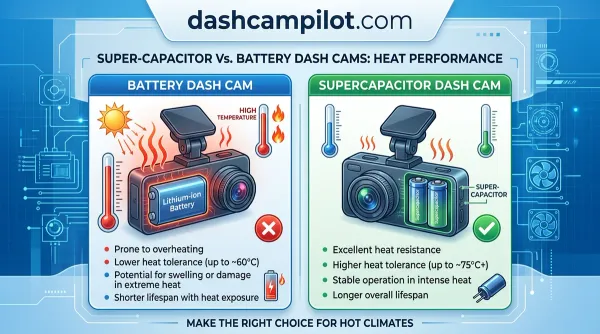
Corrupted Or Unreadable Storage Media: SD cards are susceptible to corruption, especially with frequent overwrites and extreme temperatures. Common temperature ranges for dash-cam-rated SD cards are Most reputable dash cam manufacturers recommend industrial-grade or 'high endurance' SD cards designed to operate reliably in temperatures ranging from -25°C to 85°C (-13°F to 185°F), significantly wider than standard consumer-grade cards., but failures occur outside these parameters, rendering footage inaccessible (SD Association, 2024).
CMOS Sensor Flare From Direct Sunlight: Direct sunlight or intense reflections can cause lens flare and overexposure, obscuring the critical area of impact. This "CMOS sensor flare" can effectively blind the camera at crucial moments.
If your evidence is dismissed, you must know How To Appeal A Denied Video Evidence Claim.
How to Appeal a Denied Video Evidence Claim
If an insurer refuses to consider your footage, escalate to a supervisor and request a formal written denial stating the reason for exclusion. This written documentation is essential for further action and provides a clear basis for your appeal.
Step 1: Request a secondary adjuster review. Submit a formal request to your insurance company for another adjuster to review your claim, specifically highlighting the video evidence. If the initial adjuster provided insufficient reasoning, reference their written denial.
Step 2: Consider independent forensic video analysis. Engage a qualified expert to analyze your footage for authenticity, timestamp accuracy, and clarity. Their professional report can bolster your appeal and counter claims of inadmissibility.
Step 3: Escalate to state insurance commissioners. File a formal complaint with your state's Department of Insurance if the insurer continues to dismiss your evidence without valid reason. State insurance commissioners oversee insurance company practices and can mediate disputes (NAIC, 2023). You generally have Policyholders typically have 30 to 60 days to file an internal appeal directly with their insurer after a claim denial.
If further action is needed, consumers in many U.S. states have up to six months from the insurer's final decision to file an external appeal with their state's Department of Insurance . days to file an appeal after a denial.
Step 4: Seek legal representation for discovery. If administrative appeals fail, consult a personal injury attorney. They can initiate legal discovery, compelling the insurer to justify their refusal of evidence in a court of law and potentially leveraging your evidence in a lawsuit.
Finally, ensure your hardware complies with state law by checking Where To Find Official State Dash Cam Regulations.
Where to Find Official State Dash Cam Regulations
We have compiled the primary resources for verifying dash cam legality across different jurisdictions. Adherence to these regulations is crucial to ensure your footage is legally admissible and does not lead to fines or complications.
Mounting Laws And Windshield Obstruction: Consult your state's Department of Transportation (DOT) website for specific regulations regarding device placement on your windshield (FMCSA, 2023). Many states prohibit mounting devices that obstruct the driver's clear view of the road (Georgia Legislature, 2023).
Privacy And Surveillance Statutes: Review state-specific privacy laws concerning audio and video recording in public and private spaces. The National Conference of State Legislatures (NCSL) provides resources on electronic surveillance laws (NCSL, 2024).
Admissibility Standards In Local Courts: Understand the rules of evidence in your local courts. Court websites often provide guidelines on what constitutes admissible evidence. Consulting with a local attorney can offer specific guidance on your jurisdiction's requirements.
Summary follows.
7 Common Questions About Dash Cams And Insurance
Does a dash cam lower my monthly car insurance?
No, most insurers do not offer a direct monthly premium discount for installing a dash cam. However, it can save you thousands by protecting your no-claims bonus and proving liability in an accident, which prevents future premium hikes.
Can insurance companies use dash cam footage against you?
Yes, insurance companies can use your own footage to deny a claim if it proves you were speeding or driving recklessly. If the footage shows you were at fault, it will likely be used to your detriment.
Which insurance companies offer dash cam discounts?
Currently, major providers like Progressive, GEICO, and State Farm do not offer specific dash cam discounts. Smaller insurers and those specializing in niche markets might offer incentives, but this remains uncommon across the industry.
What features does a dash cam need for insurance?
For insurance admissibility, your dash cam should feature 4K resolution, GPS logging, and an accurate date/time stamp. G-sensors are also critical because they automatically lock footage during an impact, securing vital evidence.
How do I send dash cam video to my insurer?
Submit your footage by uploading the original MP4 or MOV file directly to your insurer’s claims portal or mobile app. Do not edit or crop the video, as any alteration can compromise its legal admissibility.
Are Dash Cams Worth It For Car Insurance Savings?
In 2026, dash cams act as an insurance policy for your deductible rather than a premium saver. Our research indicates that high-quality 4K footage with GPS metadata is the gold standard for claims, significantly expediting fault determination and protecting your no-claims bonus. We emphasize that you should submit footage only after verifying it does not contain evidence of self-incrimination, which could negatively impact your case.
To ensure comprehensive liability protection, we advise you to review your current policy's 'Usage of Electronic Evidence' clause and consider upgrading to a dual-channel 4K system for unparalleled incident documentation.
- PropertyCasualty360, 2023 (propertycasualty360.com)
- NAIC research, 2023 (naic.org)
- Insurance Need To Know, 2024 (insuranceneedtoknow.co.uk)
- Claims Journal, 2023 (claimsjournal.com)
- Uber, 2024 (uber.com)
- NHTSA, 2023 (nhtsa.gov)
- Insurance Information Institute, 2023 (iii.org)
- National Safety Council, 2024 (nsc.org)