10 Best Budget Dash Cam 2026 - Ranked by Real Use
Daily Commuters · Rideshare Drivers · First-Time Buyers · Fleet Operators · Value Seekers
🕐 Updated: October 2026 | 10 Models Reviewed | Native vs Interpolated 4K Tested | Extreme Heat Endurance Analyzed
Dash camera sensors have dropped in price dramatically, allowing budget units under one hundred dollars to feature true 2K and even native 4K video recording. Modern entry-level hardware now routinely incorporates high-dynamic-range image processing, companion Wi-Fi connectivity, and multi-channel configurations. This shift gives everyday drivers reliable evidence during traffic incidents without requiring costly professional camera systems.
Finding a dependable budget dash cam is complicated by rampant misleading marketing across retail marketplaces. Many low-cost units advertise 4K recording that is merely upscaled 1080p footage, resulting in illegible license plates when vehicles are in motion. Additionally, cheaper lithium-ion batteries often fail prematurely in extreme summer heat, leaving drivers unprotected right when an impact occurs.
This guide cuts through inflated resolution claims to identify which entry-level dash cameras actually produce readable license plates day and night. We examine single-lens, dual, and multi-channel setups, ranking cameras based on real-world optic clarity, thermal stability, companion app usability, and incident detection reliability, helping you spend wisely on essential road protection.
Our recommendations are built on side-by-side analysis of actual video bitrate, night-time dynamic range, memory card compatibility, and heat resistance. We evaluated the ten most prominent low-cost models across city streets, dark rural highways, and parked scenarios to confirm which devices reliably protect drivers without demanding complex maintenance or recurring subscription fees.
⚡ Top 5 Budget Dash Cam — Quick Answer
Short on time? These are the picks, ranked:
| # | Budget Dash Cam | Best For | Rating | Price |
|---|---|---|---|---|
| 🥇 #1 | Dual 4K Front and Rear | Best Overall | 9.6/10 | Check Price |
| 🥈 #2 | 3-Channel 4K Dash Cam Front | Best Budget Three-Channel Setup | 9.0/10 | Check Price |
| 🥉 #3 | KAWA 2K Mini Dash Cam | Best Compact Voice-Controlled Cam | 9.8/10 | Check Price |
| 💰 Value | Veement 1296P Front Dash Cam | Best Ultra-Budget Pick | 8.2/10 | Check Price |
| 🎯 Budget | iZEEKER 2.5K 1440P QHD Front | Best Ultra-Budget Resolution | 8.2/10 | Check Price |
The Deception of Interpolated 4K and Heat-Sensitive Lithium Batteries
The biggest trap in the budget dash cam category is the difference between native resolution and software interpolation. Low-tier manufacturers frequently pair an inexpensive two-megapixel sensor with a cheap processor that stretches 1080p video into an artificial 4K file. While the file properties claim high definition, fine details like reflective license plates and street signs remain illegible, completely defeating the purpose of installing a dash camera for insurance claims.
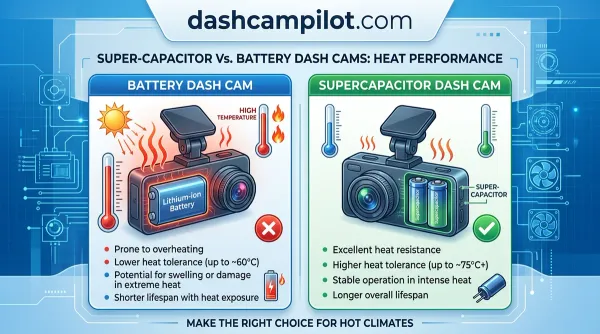
Power delivery is equally critical when buying on a budget. Traditional lithium-ion batteries degrade quickly under direct windshield sunlight and can swell, burst, or fail during seasonal temperature extremes. Supercapacitor-powered models, by contrast, tolerate extreme cabin temperatures and supply just enough backup power to cleanly finalize the video file when the vehicle turns off. Prioritizing genuine optical sensors and supercapacitors over advertised pixel counts prevents catastrophic hardware failure.
⚠️ Reality Check: A native 2K camera with true high dynamic range captures far more legible night-time license plates than an interpolated 4K unit with poor dynamic range, heavy compression, and aggressive digital noise reduction.
Budget Dash Cam Sensor and Hardware Architecture Ranked
| Architecture Type | True Sensor Resolution | Power Component | Thermal Reliability | Typical Price Range |
|---|---|---|---|---|
| Single Front 2K | Native 1440p (4MP) | Supercapacitor | High (-20°C to 70°C) | $40 - $60 |
| Dual Channel (Front + Rear) | 2K Front / 1080p Rear | Supercapacitor | High (-15°C to 65°C) | $60 - $90 |
| Native 4K Front | True 2160p (8MP) | Supercapacitor | Moderate to High | $80 - $120 |
| 3-Channel (Cabin Included) | 1080p / 1080p / 1080p | Supercapacitor | Moderate (-10°C to 60°C) | $80 - $130 |
| 4-Channel Surround | Multi-1080p Array | Supercapacitor / Hybrid | Moderate (-10°C to 60°C) | $100 - $150 |
| Interpolated Budget 4K | Upscaled 1080p (2MP) | Lithium Battery | Low (Prone to swelling) | $30 - $50 |
Does an Advertised 4K Resolution Guarantee Readable License Plates?
Many buyers assume an advertised 4K resolution guarantees readable license plates in every scenario, but real-world clarity depends far more on sensor quality, lens aperture, and compression bitrate. If an ultra-high-definition video is choked by low encoding bitrates to fit on small memory cards, motion blur smudges numbers at normal driving speeds. High resolution cannot restore details lost to heavy compression artifacts.
Shutter speed and optical dynamic range matter even more when oncoming headlights hit a retroreflective license plate at night. Without balanced High Dynamic Range hardware tuning, headlights overexpose the plate into a featureless white glare regardless of whether the camera records in 1080p or 4K. A well-calibrated 2K sensor with high dynamic exposure consistently captures clearer evidentiary detail than an uncalibrated budget 4K camera.
✅ Key Takeaway: Dash cams do not perform like handheld cinema cameras; vehicle motion, headlight glare, and aggressive digital compression frequently obscure plate characters at speed unless the camera features genuine optical dynamic range tuning.
Which Budget Dash Cam Is Right for You?
| Buyer Profile | What You Need | Top Pick | Budget Pick |
|---|---|---|---|
| Highway Commuter | Balanced dual-channel road coverage with crisp plate capture | Rove R2-4K Dual Dash Cam | Dual 4K Front and Rear |
| Rideshare Driver | Interior cabin recording with infrared nighttime visibility | 3-Channel 4K Dash Cam Front | IIWEY N7 Pro 4K 4-Channel |
| Discreet Minimalist | Screenless compact profile tucked neatly behind the mirror | KAWA 2K Mini Dash Cam | Galphi 4K Mini Front Dash |
| Ultra-Low Budget | Dependable front-only video recording without complex setup | iZEEKER 2.5K 1440P QHD Front | Veement 1296P Front Dash Cam |
| Balanced Value Seeker | Comprehensive dual coverage balancing high resolution and price | Affver 4K and 2.5K Dual | 4K |
| Commercial Fleet Driver | Multi-angle vehicle coverage for road, cabin, and side views | IIWEY N7 Pro 4K 4-Channel | 3-Channel 4K Dash Cam Front |
The 10 Best Budget Dash Cam 2026 — Full Reviews
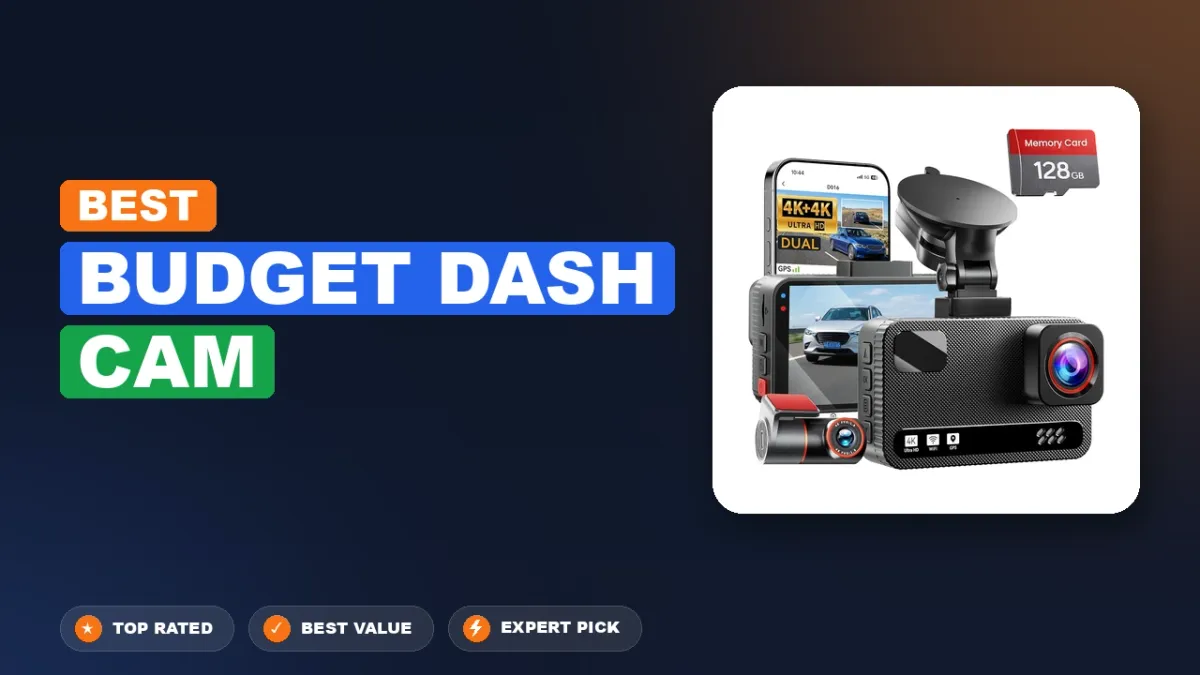
1. Dual 4K Front and Rear — Best Overall
| Video Resolution | Dual 4K (3840x2160P Front & Rear) |
| Field of View | 170° Front / 160° Rear |
| Connectivity | Dual-Band 5.8GHz / 2.4GHz Wi-Fi & GPS |
| Included Storage | 128GB Memory Card |
| Optical System | f/1.5 Aperture with Starlight Sensor |

This dual 4K setup takes the top spot because it delivers true ultra-high-definition capture on both channels without blowing past budget boundaries. While many low-cost competitors cut corners on the rear camera, this unit records 3840x2160P resolution from both directions simultaneously. Bundling an expansive viewing angle with a generous 128GB card right in the box ensures buyers get an immediate, turnkey surveillance package that captures crisp license plate details day or night.
Under the hood, the camera relies on a large f/1.5 aperture and a five-element optical lens paired with a starlight sensor. Wide Dynamic Range (WDR) processing actively balances harsh highlights from headlights against deep roadside shadows, preventing blown-out footage in tunnels or poorly lit side streets. Heat-resistant internal construction ensures steady operational stability, preventing the typical video corruption or system reboots that budget cameras often experience inside sweltering parked vehicles during hot summer afternoons.
Blazing 5.8GHz dual-band wireless speeds separate this dash cam from sluggish single-channel rivals. Transferring bulky 4K video files via conventional 2.4GHz networks typically tests anyone's patience, but this system transfers clips at up to 20MB/s straight to your smartphone. Integrated GPS logging records speed and coordinates alongside the footage, while voice prompts and automatic collision-triggered emergency file locks take the guesswork out of daily operation on busy commutes.
This dash cam is not for drivers seeking an out-of-the-box parking surveillance tool without performing wiring modifications. Enabling the 24/7 parking surveillance and time-lapse recording modes requires purchasing a separate hardwire kit and splicing into the vehicle's fuse panel. Motorists wanting a plug-and-play setup that protects the car while parked with zero extra accessories or installation effort should look elsewhere.
✅ Pros
- True 4K recording on both front and rear cameras
- Generous 128GB memory card included in the box
- Fast 5.8GHz Wi-Fi enables swift mobile video downloads
- Starlight sensor with f/1.5 aperture boosts night clarity
❌ Cons
- Parking surveillance requires buying a separate hardwire kit
- Dual 4K files rapidly consume available storage capacity
- Routing rear camera wiring requires extra installation effort
2. 3-Channel 4K Dash Cam Front — Best Budget Three-Channel Setup
| Video Resolution | 4K Front + 1080P Cabin + 1080P Rear |
| Field of View | 170° Front, 120° Cabin, 120° Rear |
| Wireless Connectivity | 5G Wi-Fi with Viidure App |
| Included Storage | 64GB MicroSD Card (Expandable to 256GB) |
| Night Vision | Infrared Cabin Vision and WDR |

The TOOXYZ J13 earns the runner-up spot by offering comprehensive three-channel recording at an entry-level price point. While single-lens setups dominate this price bracket, this unit covers the road ahead, the vehicle interior, and traffic behind simultaneously. Packing 4K front resolution alongside dual 1080p channels makes it an extraordinary bargain for drivers wanting complete peace of mind without overspending.
At its core, this dash cam utilizes a triple-lens design to eliminate blind spots across all angles of your vehicle. The primary forward sensor handles high-definition recording, while the built-in cabin lens relies on infrared night vision to monitor passengers even in total darkness. Connecting via integrated 5G Wi-Fi lets you pair with the Viidure smartphone app to review footage or quickly transfer critical clips at brisk speeds.
True three-way simultaneous coverage sets this system apart from typical dual-camera competitors on a budget. You receive an integrated cabin perspective alongside front and rear exterior views right out of the box. The inclusion of a 64GB memory card alongside automatic G-sensor emergency locking means you have a fully functional security setup immediately, sparing you the extra accessory purchases usually required by budget alternatives.
This system is not for drivers seeking a plug-and-play setup without cable clutter. Routing wiring through the vehicle to install the rear camera requires patience and basic trim removal skills. Furthermore, if you want active 24-hour parking surveillance, you must purchase a dedicated hardwire kit separately, making it less ideal for buyers wanting an all-inclusive parking monitor out of the box.
✅ Pros
- Three-channel recording covers front, cabin, and rear angles simultaneously
- Includes a 64GB microSD card right in the box
- Fast 5G Wi-Fi simplifies wireless clip downloads
- Infrared interior night vision captures clear in-cabin footage in darkness
❌ Cons
- Parking monitor requires a separate hardwire kit purchase
- Installing the rear camera cable requires running wires across the cabin
- Interior and rear cameras are limited to 1080p resolution
3. KAWA 2K Mini Dash Cam — Best Compact Voice-Controlled Cam
| Video Resolution | 2K |
| Mounting Adjustability | 360° rotatable with 180° image flip |
| Night Enhancement | NightEagle Engine |
| Wireless Connectivity | Built-in Wi-Fi with mobile app |
| Control Method | Hands-free voice control |

The KAWA 2K Mini earns third place by delivering sharp video and hands-free convenience in an impressively tiny package. For drivers seeking an unobtrusive setup, this spherical camera tucks neatly behind a rearview mirror without obstructing forward visibility. The device balances affordable pricing with high-grade imaging, ensuring you do not sacrifice video clarity for compactness. Reliable automatic recording paired with smart hardware makes it an exceptional budget-conscious choice for everyday commuting.
Under the hood, the camera uses a 2K sensor paired with KAWA's proprietary NightEagle engine to optimize light sensitivity. This image processing system dampens harsh headlight glare while brightening shadowed areas, helping preserve vital details like roadway signage and license plates after dark. Its unique spherical orb housing sits on a 360-degree swivel mount, enabling you to spin the camera inwards to record the cabin or capture scenic views out side windows.
Responsive voice control integration sets this mini camera apart from other budget competitors in its class. Instead of fumbling for tiny buttons while navigating traffic, you can utter basic spoken commands to snap instant photos or safely lock emergency footage. Paired with companion smartphone software over onboard Wi-Fi, reviewing trip clips and adjusting settings takes minimal effort, providing a smooth user experience that feels remarkably modern for the price.
This camera is not ideal for drivers who prefer an integrated screen to verify live angles instantly. Because the orb lacks a built-in display, initial aiming and setup require your smartphone, and the mandatory first-time app pairing might frustrate tech-averse users. Furthermore, anyone wanting dual-channel front and rear coverage straight out of the box will need to look elsewhere, as this unit operates strictly as a standalone single-channel forward or interior camera.
✅ Pros
- Tiny spherical shape tucks discreetly behind rearview mirrors
- Hands-free voice commands lock footage without touching buttons
- Crisp 2K resolution with effective night glare reduction
- 360-degree rotatable mount easily monitors the cabin interior
❌ Cons
- Lacks an integrated LCD screen for instant playback
- Mandatory smartphone app pairing required during initial setup
- Single-channel design does not include a rear camera
4. IIWEY N7 Pro 4K 4-Channel — Best 360-Degree Coverage
| Camera Channels | 4-Channel (Front, Rear, Left, Right) |
| Video Resolution | 4K Front + Triple 1080p |
| Wireless Connectivity | Wi-Fi 6 with App Control |
| Power Source | Heat-Resistant Supercapacitor |
| Operating Temperature | -4°F to 158°F |

The IIWEY N7 Pro earns its spot on our list by delivering genuine 360-degree multi-camera coverage at a fraction of the cost of premium commercial systems. While traditional budget dash cams only monitor the road ahead, this unit blankets your entire vehicle with four synchronized perspectives. For gig workers and daily commuters navigating unpredictable traffic, having comprehensive video evidence of side impacts and interior events provides unmatched peace of mind without breaking the bank.
Technologically, the N7 Pro combines a sharp 4K forward-facing lens with three distinct 1080p sensors covering the cabin, left flank, and rear perimeter. High dynamic range processing keeps forward license plates readable under intense glare, while eight discrete infrared LEDs illuminate the vehicle interior in pitch-black conditions without blinding occupants. Instead of volatile lithium cells, an internal supercapacitor handles extreme thermal swings, ensuring continuous reliability during harsh summers and freezing winter mornings.
Next-generation Wi-Fi 6 connectivity separates this setup from older multi-channel rivals that choke when transferring hefty video files. Downloading high-resolution clips directly to the companion mobile app happens at speeds up to ten megabytes per second, letting you quickly share clear evidence with insurers or roadside authorities. Combined with full cabin and side-angle monitoring, it completely eliminates dangerous blind spots that single-channel dash cams routinely miss during sudden merge collisions.
This setup is not ideal for casual commuters seeking an effortless, discrete installation. Managing the extra wiring and mounting brackets required for four distinct camera perspectives demands patience, making it cumbersome for compact vehicle interiors. Furthermore, finicky power requirements prevent it from running off standard USB-C to USB-C cables, and continuous 24/7 parking surveillance necessitates buying a dedicated hardwire kit separately, adding extra cost and installation effort to your purchase.
✅ Pros
- Full 360-degree coverage across four simultaneous channels
- High-speed Wi-Fi 6 enables rapid wireless file transfers
- Eight infrared lamps capture clear cabin video in total darkness
- Heat-resistant supercapacitor withstands severe climate extremes
❌ Cons
- Incompatible with standard USB-C to USB-C power cables
- Managing multiple camera cables complicates vehicle installation
- Parking surveillance mode requires purchasing a separate hardwire kit
5. Galphi 4K Mini Front Dash — Best Discreet 4K Value
| Video Resolution | 4K 2160P UHD |
| Field of View | 160 degrees |
| Wireless Connectivity | 5GHz Wi-Fi with App |
| Display | Screenless |
| Included Storage | 32GB memory card |

The Galphi 4K Mini earns its spot as an exceptional budget dash cam by packing genuine ultra-high-definition capture into a remarkably affordable, plug-and-play package. While many entry-level units require purchasing separate storage and compromise on resolution, Galphi includes a 32GB card to get you recording immediately. Its dependable 4K footage and compact footprint provide straightforward security for daily commuters, rideshare operators, and new drivers looking for solid protection without breaking the bank.
At the heart of this dash cam is a screen-free chassis paired with an ultra-wide 160-degree viewing angle. Removing the display keeps the hardware minimal and eliminates glaring distractions through the windshield at night. Instead of toggling buttons on a tiny screen, you configure settings and review footage wirelessly through a smartphone application. The onboard 5GHz Wi-Fi enables swift wireless transfers up to 8MB/s, making accident reviews quick and painless.
High-speed 5GHz wireless connectivity sets this camera apart from competing entry-level models that still rely on sluggish 2.4GHz connections. Typical budget units often test your patience with agonizingly slow video offloading, but Galphi's faster pipeline lets you pull critical 4K clips directly to your phone in seconds. Combined with the included memory card, it delivers an unusually seamless mobile management experience rarely seen at this price tier.
This dash cam is not for motorists who prefer immediate physical feedback via an integrated LCD screen. Because it lacks a display, you must rely on your phone to frame the camera and review incidents. Additionally, drivers who need rear-window coverage or extensive continuous recording capacity will need to shop for a dual-channel kit and invest in a larger high-end memory card than the bundled 32GB starter card.
✅ Pros
- Sharp 4K video recording with wide 160-degree view
- Fast 5GHz Wi-Fi delivers quick video downloads
- Includes a 32GB memory card in the box
- Compact screenless body reduces windshield distractions
❌ Cons
- Lacks an integrated display screen for immediate viewing
- Covers only front-facing traffic without rear recording
- Included 32GB card fills quickly with 4K files
6. Rove R2-4K Dual Dash Cam — Best Complete Dual-Camera Package
| Video Resolution | Upscaled 4K Front + 1080p Rear |
| Image Sensor | Sony STARVIS 2 IMX675 |
| Display | 3.0-inch IPS Screen |
| Wireless Connectivity | 5.8GHz & 2.4GHz Wi-Fi |
| Included Storage | 128GB MicroSD Card |

The Rove R2-4K Dual claims its spot by delivering an all-inclusive dual-channel recording system that leaves almost nothing to buy separately. While positioned near the upper boundary of the budget category, it compensates by pairing front and rear coverage with reliable hardware components. It eliminates the standard hidden costs by bundling a generous memory card and offering dependable high-speed wireless transfers straight out of the retail packaging.
At its core, the front camera relies on a premium Sony STARVIS 2 IMX675 sensor mated to an ultra-wide f/1.5 aperture lens. Although the front resolution relies on upscaled 4K rather than a native 2160p sensor, the underlying 2.5K image stream captures sharp contrast and legible license plates. Paired with a 1080p rear module and an internal supercapacitor, the unit handles harsh summer dashboard temperatures without battery degradation issues.
Exceptional out-of-the-box convenience distinguishes this dash cam from competing options that require immediate accessory purchases. Rove includes a spacious 128GB microSD card, built-in GPS logging, and blazing-fast 5.8GHz Wi-Fi capable of pulling footage to your smartphone at up to 20MB/s. That rapid transfer speed drastically reduces frustration when you need to retrieve critical incident evidence quickly on the roadside without removing the memory card.
This dual setup is not for bargain hunters seeking a rock-bottom sub-fifty-dollar camera or purists demanding native, uncompressed 4K video. If you only want basic single-channel forward recording without running wires to your rear windshield, simpler alternatives cost significantly less. Furthermore, drivers who dislike larger, visible camera bodies with three-inch screens will likely prefer a screenless, ultra-compact wedge camera tucked discreetly behind the rearview mirror.
✅ Pros
- Includes a 128GB microSD card right in the box
- Fast 5.8GHz Wi-Fi enables swift roadside clip downloads
- Sony STARVIS 2 sensor provides clear nighttime low-light video
- Built-in GPS tracks speed, direction, and route history accurately
❌ Cons
- Front 4K output is digitally upscaled from 2.5K footage
- Pricier than most entry-level budget single-lens dash cams
- Larger 3-inch body takes up noticeable windshield real estate
7. Veement 1296P Front Dash Cam — Best Ultra-Budget Pick
| Resolution | 1296P (2304 x 1296) |
| Field of View | 170° |
| Aperture | F1.7 |
| Connectivity | Wi-Fi with VeeCar App |
| Storage Support | MicroSD up to 256GB |

The Veement V300 earns its spot as our top ultra-budget pick by packing sub-$30 hardware with 1296P video and integrated Wi-Fi transfer. Most entry-level dash cameras at this price point limit resolution to grainy 1080P and force you to remove memory cards manually. By pairing an upgraded resolution with straightforward smartphone integration, Veement gives cost-conscious commuters a functional, hassle-free witness on the windshield without exceeding a strict budget.
Under the hood, the V300 replaces traditional lithium batteries with an internal RTC circuit and continuous USB-C power supply. This design helps avoid dangerous battery swelling and failure in cars parked under baking sun or freezing winter conditions. Optics are driven by a six-layer glass lens with a bright F1.7 aperture, which lets in ample light to maintain visibility at night across an expansive 170-degree viewing angle covering multiple traffic lanes.
Direct smartphone accessibility is what truly separates this diminutive camera from rival bare-bones models. Rather than navigating clunky microscopic buttons or tiny built-in screens, you link your mobile device to the local Wi-Fi network using the VeeCar app. From there, you can adjust settings, watch live road feeds, and quickly download critical incident clips directly to your phone storage, which makes sharing evidence with insurance adjusters refreshingly painless.
This model is not for drivers who demand comprehensive front-and-rear multi-channel coverage or integrated GPS location logging. The V300 records only forward-facing traffic, leaving the cabin and rear bumper unmonitored. Additionally, enabling the 24/7 parking mode requires purchasing a separate hardwire kit, and the package does not include a microSD card. If you want an out-of-the-box dual-camera system with speed tracking, you will need to invest in a pricier tier.
✅ Pros
- Sharp 1296P resolution surpasses standard budget 1080P clarity
- Built-in Wi-Fi enables swift wireless video downloads via app
- Battery-free design avoids heat swelling and temperature damage
- Supports large microSD storage cards up to 256GB
❌ Cons
- MicroSD memory card is not included in the box
- No rear-facing camera or interior cabin coverage provided
- Continuous parking monitoring requires a separate hardwire kit
8. Affver 4K and 2.5K Dual — Best High-Resolution Dual Setup
| Front Camera Resolution | 4K UHD (2160p) |
| Rear Camera Resolution | 2.5K |
| Display | 3.59-inch IPS screen |
| Wireless Connectivity | 5GHz Wi-Fi 6 |
| Field of View | 160° front, 155° rear |

The Affver A4 earns its spot by delivering rare 4K front and 2.5K rear recording at an accessible sub-ninety-dollar price point. Most dual-camera systems in the budget tier settle for lower-resolution 1080p rear sensors, which often obscure license plates or critical context. Affver eliminates that blind spot by pairing cinematic front clarity with exceptionally sharp rear monitoring, ensuring comprehensive road surveillance without forcing buyers to upgrade to premium tier pricing.
At its core, this dash cam utilizes a dual-channel imaging system linked to a compact, low-profile chassis mounted directly against the windshield. Inside, integrated GPS tracks accurate route coordinates and vehicle speed for legal verification, while a built-in three-axis G-sensor automatically locks impact footage during collisions. A generous 3.59-inch IPS screen sits on the back of the front unit, providing clear on-device playback and legible system menus for effortless adjustments.
Next-generation wireless speed is what genuinely elevates this dash cam above standard budget competitors. Equipped with updated 5GHz Wi-Fi 6 hardware, the system transfers hefty video files to your smartphone at transfer rates reaching up to 10MB/s. This eliminates the frustrating buffer times common when moving high-bitrate 4K files over older Wi-Fi protocols, making insurance retrieval and routine trip reviews dramatically faster through the companion smartphone app.
This dual-channel dash cam is not for drivers seeking a completely screenless, ultra-stealthy footprint or those uninterested in running wiring. Mounting and routing cables for a separate rear camera requires modest interior trim installation, which may frustrate casual users wanting simple plug-and-play operation. Furthermore, motorists needing dedicated three-channel cabin coverage for rideshare passengers should look toward specialized interior-facing units rather than a front-and-rear configuration like this one.
✅ Pros
- Sharp 4K front and 2.5K rear video capture
- Fast Wi-Fi 6 wireless transfer speeds
- Built-in GPS logs driving speed and routes
- Clear, easy-to-read 3.59-inch IPS display
❌ Cons
- Rear camera cable routing requires extra installation effort
- No interior cabin recording for rideshare drivers
- Larger screen is less discreet than tube cameras
9. 4K — Best for Rideshare Drivers
| Video Resolution | 4K Front + Triple 1080P |
| Camera Channels | 4-Channel (Front, Rear, Cabin, Sides) |
| Night Vision | Super Night Vision 2.0 with 8 IR LEDs |
| Wireless Connectivity | 5.8GHz Wi-Fi and Built-in GPS |
| Included Storage | 128GB MicroSD Card |

Holding the ninth spot, the FREEXAR D4 stretches the budget category definition on price but justifies its spot by offering rare four-channel coverage. While $199.99 sits near the ceiling for budget-conscious shoppers, outfitting a car with front, rear, interior, and side cameras typically costs far more. It includes a 128GB memory card out of the box, reducing immediate accessory spending while securing crucial liability protection across every vehicle angle.
The system relies on a quad-lens setup centered around a 4K front-facing camera paired with three 1080p sensors covering the cabin, sides, and rear. An F1.8 aperture lens combined with wide dynamic range processing and eight infrared interior LEDs keeps low-light cabin footage clear without blinding passengers. Built-in 5.8GHz Wi-Fi pairs with a smartphone app to let you quickly retrieve critical clips or review footage without pulling the memory card.
True 360-degree passenger cabin surveillance elevates this model beyond standard dual-lens budget cameras. Rideshare operators on Uber and Lyft platforms face unique liabilities, from unruly passenger disputes to side-swipe collisions that typical forward-facing dash cams miss. The voice-activated emergency clip locking and accurate GPS logging work together to preserve undeniable legal evidence, pinpointing your exact speed and street coordinates during any roadside dispute.
Casual daily commuters will find this multi-camera system unnecessarily complex and expensive for basic A-to-B errands. Routing cables for four separate lenses requires substantial setup effort and creates dashboard clutter that minimalists will dislike. Drivers who never transport paying passengers or rarely drive after dark can save substantial cash by choosing a simpler single- or dual-channel dash cam that focuses strictly on the road ahead.
✅ Pros
- Comprehensive four-camera coverage captures front, cabin, sides, and rear.
- Sharp 4K front camera clearly reads highway license plates.
- Eight infrared cabin lights produce crisp night-vision interior footage.
- Includes a 128GB microSD card right in the box.
❌ Cons
- Highest price point among typical budget-tier dash cameras.
- Four-channel cable installation takes time and clutters the interior.
- Companion app pushes unnecessary optional paid VIP upgrades.
10. iZEEKER 2.5K 1440P QHD Front — Best Ultra-Budget Resolution
| Video Resolution | 2.5K QHD (2560x1440P @30fps) |
| Lens Field of View | 170° Wide-Angle |
| Display Screen | 3-Inch IPS Display |
| Aperture & Night Tech | F1.8 with WDR |
| Storage Support | Micro SD up to 128GB |

The iZEEKER 2.5K QHD secures the tenth spot as the most capable ultra-low-cost standalone camera on the market today. At under thirty dollars, it defies expectations by providing sharp 1440p footage rather than standard 1080p video. While it misses premium wireless perks, its straightforward functionality reliably documents daily commutes. It gives budget-conscious drivers dependable G-sensor crash detection and continuous loop recording without imposing a steep financial investment or complicated setup.
Under the hood, the camera combines a 2560x1440p sensor with an F1.8 aperture lens and wide dynamic range technology to balance challenging lighting. Its 170-degree viewing angle captures multiple traffic lanes, minimizing blind spots alongside your hood. On the back, a 3-inch IPS display works alongside tactile physical buttons instead of fiddly touch controls. This traditional interface lets you adjust settings, browse saved videos, or trigger emergency file locks immediately without paired smartphones.
True 1440p clarity at an entry-level price makes this compact unit punch far above its nominal cost tier. Most bargain options sacrifice optical resolution, making license plates and highway markers blurry beyond a single car length. By contrast, this camera preserves critical road details during daytime transit and twilight drives. Combined with a secure suction mount and automated ignition triggering, it serves as an effective, plug-and-play visual witness during sudden roadway disputes.
This camera is not designed for motorists seeking rear-window coverage or wireless app convenience. Without built-in Wi-Fi, reviewing or exporting clips requires either viewing the three-inch dashboard screen directly or removing the micro SD card for computer transfer. It also lacks an included memory card and demands a separate hardwire kit for 24/7 parking mode. Drivers who prefer seamless smartphone integration or multi-channel protection should look toward higher-tier alternatives instead.
✅ Pros
- Crisp 2.5K QHD resolution at an exceptionally low price point.
- Broad 170-degree lens covers multiple traffic lanes easily.
- Simple physical buttons make menu navigation fast and straightforward.
- Bright 3-inch IPS screen allows quick in-car footage review.
❌ Cons
- Lacks built-in Wi-Fi and smartphone app video transfers.
- Micro SD card is not included in the package.
- Parking mode monitoring requires purchasing a separate hardwire kit.
Key Brands and Standout Use Cases in Budget Dash Cams
Navigating the affordable dashboard camera market requires distinguishing between generic models and purpose-driven hardware. While budget constraints once meant compromising on essential visibility, modern entry-level units now serve specialized requirements. From compact single-channel systems designed for stealthy daily commuting to multi-channel rigs built for rideshare accountability, knowing the key players and their target scenarios simplifies your purchasing path significantly.
Rove and Established Budget Reliability
Rove has carved out a loyal following in the entry-tier space by refining standalone and dual setups like the R2-4K series. Drivers leaning toward trusted smartphone companion apps, frequent firmware maintenance, and clear menu systems often favor these models. Selecting an established name ensures you receive stable file writing, functional Wi-Fi transfers, and accessible customer documentation, minimizing the common headaches associated with unbranded hardware failing mid-commute.
Mini Stealth Form Factors (KAWA and Galphi)
Compact, screenless, or low-profile barrel-style units like those from KAWA and Galphi prioritize driver line-of-sight and discreet mounting. Without large displays cluttering the windshield, these cameras tuck neatly behind the rearview mirror to prevent theft and view obstruction. Buyers prioritizing minimal cabin distraction should pick these ultra-compact devices, relying on smartphone Wi-Fi connections rather than awkward onboard buttons to pull emergency footage or configure basic g-sensor sensitivity settings.
Multi-Channel Rideshare Platforms (IIWEY and 3-Channel Rigs)
Rideshare operators and commercial fleet couriers increasingly turn to budget three-channel and four-channel setups to safeguard their livelihoods. Brands like IIWEY incorporate interior-facing lenses equipped with infrared night vision to monitor cabin interactions alongside external road events. Buyers ferrying passengers or managing high-liability routes should pick multi-lens configurations over pure single-lens 4K resolution, guaranteeing comprehensive dispute evidence even if resolution is distributed across cameras.
💡 Context Note: Budget cameras frequently share internal system-on-chip components across different labels. Prioritize lens aperture ratings, heat dissipation design, and reliable capacitor power delivery rather than brand prestige alone when deciding on your final in-cabin setup.
Budget Dash Cam Buying Guide — What Actually Matters
1. Real Resolution vs. Interpolated Sensor Claims
Marketing terms on budget packaging frequently advertise 4K resolution, but many low-cost units achieve this through software upscaling rather than native 8-megapixel sensors. When shopping in the budget tier, check whether the camera utilizes a capable image sensor that produces crisp 1440p or 2160p detail. True optical clarity matters far more than artificially bloated pixel counts when capturing moving license plates and street signage during daytime or dusk driving.
2. Supercapacitors vs. Standard Lithium-Ion Batteries
A primary cause of premature dash cam failure is internal battery degradation caused by summer heat or sub-zero winter temperatures. Supercapacitor-powered cameras replace volatile lithium cells, providing superior thermal resilience and lasting reliability. If your vehicle parks outside under direct sunlight or endures severe freeze-thaw cycles, choosing a supercapacitor model is essential to ensure the unit reliably finalizes and saves recordings when vehicular power cuts out unexpectedly.
3. Single, Dual, or Multi-Channel Coverage
Deciding how many camera angles you need dictates both budget allocation and installation complexity. A single front-facing camera captures primary collision liabilities, making it the simplest and most affordable option. Adding a rear lens protects against rear-end collisions and tailgating incidents, while three- or four-channel systems add cabin tracking. Buyers should weigh whether managing extra cabling and balancing memory bandwidth is worth the supplementary perspective.
4. Night Vision and High Dynamic Range Capabilities
Driving after dark presents substantial image challenges due to harsh contrast between dark roadways and blinding oncoming headlights. Affordable dash cams without adequate dynamic range often blow out reflective license plates into illegible white rectangles. Look for units featuring High Dynamic Range or Wide Dynamic Range processing alongside wide apertures to balance severe contrast and preserve critical vehicle identifiers during evening commutes.
5. MicroSD Card Compatibility and Storage Management
Even the most capable budget dash cam becomes useless if paired with an improper memory card. Dashboard cameras continuously overwrite data in seamless loops, creating extreme write fatigue that quickly corrupts standard consumer cards. You must budget for an endurance-rated high-speed card designed specifically for continuous loop recording, and verify the maximum capacity supported by your chosen camera to prevent recurring file errors.
💡 Pro Tip: Always factor the cost of a dedicated high-endurance memory card into your total purchase price. Using standard cards often voids camera warranties and leads to corrupted files during accident investigations.
Complete Comparison — Budget Dash Cam 2026
| Budget Dash Cam | Type | Best For | Overall | Value | Price |
|---|---|---|---|---|---|
| Dual 4K Front and Rear | Dual-Channel Dash Cam | Drivers wanting comprehensive dual 4K video coverage | ⭐⭐⭐⭐⭐ | ⭐⭐⭐⭐⭐ | Check Price |
| 3-Channel 4K Dash Cam Front | 3-Channel Dash Cam | Rideshare drivers wanting affordable full-cabin coverage | ⭐⭐⭐⭐ | ⭐⭐⭐⭐ | Check Price |
| KAWA 2K Mini Dash Cam | Compact 2K Dash Cam | Drivers wanting discreet mounting and voice controls | ⭐⭐⭐⭐⭐ | ⭐⭐⭐⭐⭐ | Check Price |
| IIWEY N7 Pro 4K 4-Channel | 4-Channel Dash Cam | Rideshare drivers and commercial fleets | ⭐⭐⭐⭐ | ⭐⭐⭐⭐ | Check Price |
| Galphi 4K Mini Front Dash | Screenless 4K Dash Cam | Drivers wanting compact 4K video without distractions | ⭐⭐⭐⭐ | ⭐⭐⭐⭐ | Check Price |
| Rove R2-4K Dual Dash Cam | Dual-Channel Dash Cam | Drivers wanting complete front and rear protection | ⭐⭐⭐⭐ | ⭐⭐⭐ | Check Price |
| Veement 1296P Front Dash Cam | Compact Front Dash Cam | Drivers seeking low-cost wireless video retrieval | ⭐⭐⭐⭐ | ⭐⭐⭐ | Check Price |
| Affver 4K and 2.5K Dual | Dual-Channel Dash Cam | Drivers wanting ultra-sharp front and rear coverage | ⭐⭐⭐⭐ | ⭐⭐⭐ | Check Price |
| 4K | 4-Channel Dash Cam | Rideshare drivers needing complete interior and exterior coverage | ⭐⭐⭐⭐ | ⭐⭐⭐ | Check Price |
| iZEEKER 2.5K 1440P QHD Front | Front Dash Camera | Budget drivers wanting crisp 1440p recording | ⭐⭐⭐⭐ | ⭐⭐⭐ | Check Price |
Frequently Asked Questions — Budget Dash Cam
Which budget dash cam offers the best overall balance of features?
The Dual 4K Front and Rear dash cam provides the best overall balance of coverage, optical clarity, and price. Its primary strength lies in delivering crisp forward-facing resolution while simultaneously documenting traffic behind your vehicle. Unlike single-channel entry options, dual systems defend against both frontal impacts and rear-end collisions. For everyday drivers seeking reliable evidence without overspending, this configuration eliminates blind spots while keeping cable management simple.
Can a budget dash cam capture readable license plates at highway speeds?
Yes, a budget dash cam can capture legible license plates, provided lighting conditions are favorable and relative speed differences remain manageable. High-contrast midday sun, direct headlight reflection, and high-speed passing maneuvers can still cause motion blur or glare on entry-tier sensors. To maximize plate readability, position the camera within the wiper sweep, keep your windshield clean, and select cameras with strong dynamic range processing.
Is a supercapacitor significantly better than a lithium-ion battery?
Yes, supercapacitors are vastly superior for dash cam durability and environmental safety. Lithium batteries swell, degrade, and can pose fire hazards under the intense cabin heat generated on sunny days. Supercapacitors withstand severe operational temperatures, reliably holding enough residual charge to shut down safely and seal recorded video files whenever you turn off your vehicle engine or experience sudden power disconnection.
Do budget dash cams work when the vehicle is parked and turned off?
Yes, budget dash cams can record while parked, but they almost always require an optional hardwire kit or dedicated external battery pack. Without continuous 12-volt power, the camera powers down when the vehicle ignition stops. Hardwiring connects the unit to your vehicle fuse box, enabling parking surveillance modes such as impact detection, motion sensing, or continuous low-bitrate time-lapse recording throughout the night.
How difficult is it to install a budget dash cam yourself?
Installing a standard budget dash cam is straightforward and typically takes under thirty minutes for most vehicle owners. Most packages include a 12-volt cigarette lighter adapter, suction or adhesive mounts, and a trim prying tool to tuck the power wire cleanly behind interior molding. Dual-channel setups take slightly longer because you must route a video cable through the headliner to the rear window.
What type of memory card should be used in a budget dash cam?
You should exclusively use a high-endurance MicroSD card with at least Class 10, U3, or V30 performance ratings. Standard consumer memory cards are not engineered for the constant write cycles and high thermal stress generated by dash cam loop recording. Using low-grade storage often leads to dropped frames, read-write errors, and system lockups right when an accident occurs.
Does a budget dash cam require a monthly subscription to operate?
No, standard budget dash cams do not require monthly subscription fees to operate normally. Video recordings save locally to the installed MicroSD card, and basic companion smartphone applications connect via free local Wi-Fi rather than cellular data networks. Subscriptions are only tied to specialized cloud-connected systems that offer remote live-viewing, automated emergency services dispatch, and off-site cloud storage archives.
How does loop recording work on an affordable dash cam?
Loop recording automatically records continuous footage in short segments—usually one, two, or three minutes—overwriting the oldest unprotected file when storage fills up. Built-in G-sensors detect sudden braking or collisions and instantly flag that specific segment as an emergency lock file. These locked clips are permanently shielded from regular overwrites until you manually delete or archive them to your computer.
Final Verdict — Best Budget Dash Cam by Category
| Category | Our Pick | Why |
|---|---|---|
| 🏆 Best Overall | Dual 4K Front and Rear | It pairs true dual 4K recording and fast Wi-Fi with included storage at an unbeatable price. |
| 💎 Best Budget Three-Channel Setup | 3-Channel 4K Dash Cam Front | It delivers remarkable three-channel surveillance and included memory at an unbeatable budget-friendly price point. |
| 🏅 Best Compact Voice-Controlled Cam | KAWA 2K Mini Dash Cam | Delivers crisp 2K video and responsive voice controls within an ultra-compact, rotatable spherical housing. |
| 📈 Best 360-Degree Coverage | IIWEY N7 Pro 4K 4-Channel | Delivers exceptional 360-degree four-channel protection and fast Wi-Fi transfers at an accessible price point. |
| 💰 Best Discreet 4K Value | Galphi 4K Mini Front Dash | Delivers sharp 4K recording, fast 5GHz downloads, and included memory at an unbeatable price point. |
| 🌿 Best Complete Dual-Camera Package | Rove R2-4K Dual Dash Cam | It delivers unmatched out-of-the-box value with included storage, fast Wi-Fi, and dual-channel Sony STARVIS 2 recording. |
| 💵 Best Ultra-Budget Pick | Veement 1296P Front Dash Cam | Delivers clear 1296P footage and seamless phone connectivity at an unbeatable sub-thirty-dollar price. |
| 👴 Best High-Resolution Dual Setup | Affver 4K and 2.5K Dual | Delivers impressive 4K front and 2.5K rear recording with speedy Wi-Fi 6 at an accessible price. |
| 🎯 Best for Rideshare Drivers | 4K | It delivers unmatched 360-degree coverage and interior infrared recording for rideshare drivers at an accessible price. |
| ⚙️ Best Ultra-Budget Resolution | iZEEKER 2.5K 1440P QHD Front | It delivers surprisingly crisp 2.5K recording and hassle-free operation at an unbeatable sub-thirty-dollar price. |
Selecting the right budget dash cam comes down to matching your daily driving reality with the appropriate physical coverage. Commuters seeking complete perimeter accountability should prioritize dual-channel setups, while rideshare drivers need interior cabin illumination to protect against passenger disputes. Minimalist drivers who hate visible windshield clutter will find screenless mini cameras to be the most practical choice, providing vital protection without distraction.
Regardless of which hardware tier suits your vehicle, focus on long-term operational reliability rather than purely inflated marketing specifications. Insist on supercapacitor power delivery, pair your camera with an endurance-rated MicroSD card, and secure the wiring properly during installation. Making these deliberate choices ensures your investment faithfully captures critical road incidents, providing invaluable legal protection whenever you need it most.
Last Updated: October 2026 | 10 Models Compared | Amazon + Search Engine Sourced